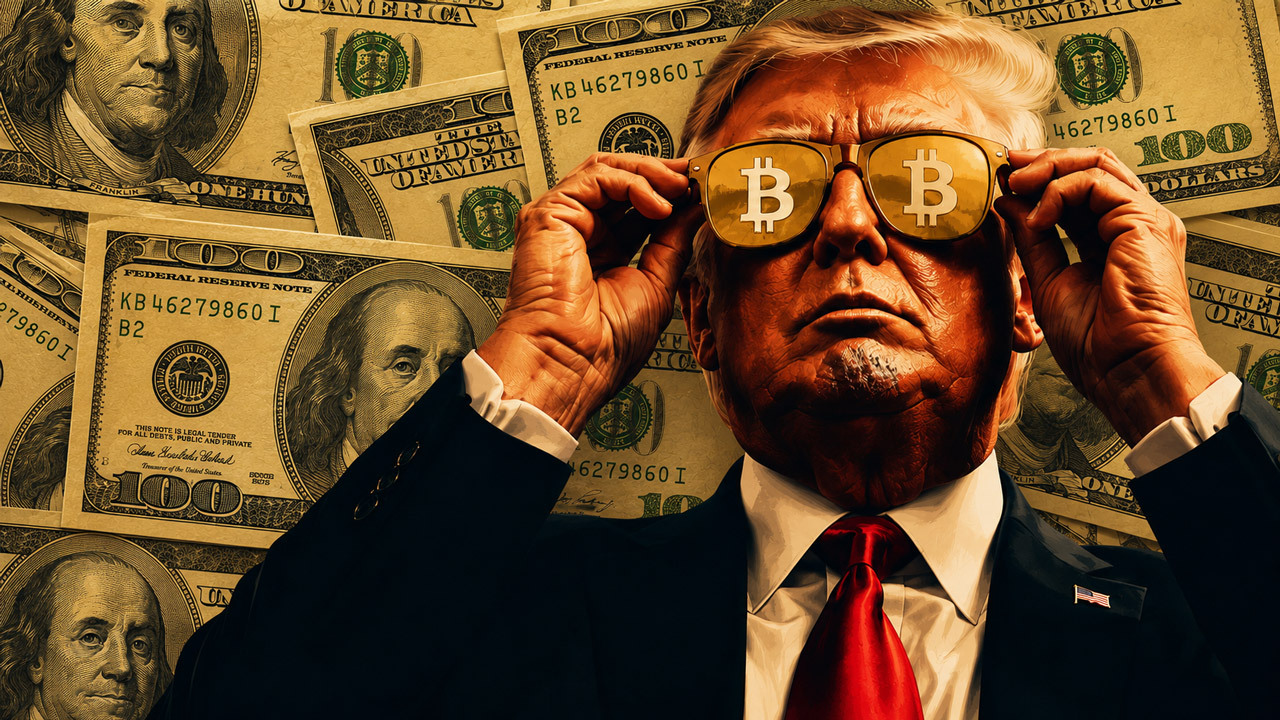
Donald Trump's recent financial disclosures have revealed a massive cryptocurrency portfolio, signaling a paradigm shift where presidential influence and digital asset markets directly collide in real-time.
Donald Trump's latest financial disclosures reveal a multi-million dollar cryptocurrency portfolio, highlighting a new era where presidential power and digital asset markets are inextricably linked.
The latest filing submitted to the Federal Election Commission (FEC) shows the former President holds millions in digital assets. For American investors, this isn't just about one politician's wealth; it represents a new governance challenge. Political power is now being tokenized, and the markets are reacting instantly.
The Multi-Million Dollar Trump Crypto Portfolio
The disclosures reveal that Trump holds between $1 million and $5 million in Ethereum (a decentralized software network). Additionally, he has earned millions from his branded NFT (Non-Fungible Token) licensing deals. These digital collectibles have become a significant source of passive income for the campaign season.
This marks a sharp turn from his 2019 stance when he called Bitcoin "highly volatile" and "based on thin air." Today, his financial interests are tied directly to the health of the crypto ecosystem. US investors are left wondering how this affects his potential policy decisions if re-elected to the White House.
Tokenizing Political Influence and Access
The emergence of World Liberty Financial, a DeFi (Decentralized Finance) project associated with the Trump family, takes this a step further. Unlike traditional real estate or golf courses, crypto tokens trade 24/7 on global exchanges. Their value can fluctuate wildly based on a single campaign speech or a regulatory rumor.
This creates an "institutional problem" where political access is converted into market value. If a candidate promises to fire a regulator, the tokens associated with their brand may see immediate gains. According to data tracked by CoinGecko, the broader market remains highly sensitive to political headlines and sentiment shifts.
"We are entering an era where the boundary between public policy and private digital wealth is becoming non-existent, creating unprecedented transparency challenges for the U.S. government."
Why Regulatory Speed Matters
Traditional ethics rules were designed for slow-moving assets like stocks or bonds. Digital assets move at the speed of the internet. A policy change can affect a portfolio's value in milliseconds, often before oversight committees can even convene.
What This Means for USA Investors
For the average American investor, the “Trump Effect” on crypto brings both opportunity and risk. If you are trading on US-based platforms like Coinbase or Kraken, you need to be aware of the following implications:
- Increased Volatility: Political news cycles will drive sharp price swings in Bitcoin and Ethereum.
- Regulatory Shifts: A shift in the SEC (Securities and Exchange Commission) leadership could favor certain digital assets held by political figures.
- Tax Implications: The IRS (Internal Revenue Service) treats crypto as property, meaning every gain from political volatility is subject to capital gains tax.
US investors should maintain a diversified strategy. Relying on political sentiment is risky, as regulatory stances can change after an election is won. Keep a close eye on the CFTC (Commodity Futures Trading Commission) as they vie for control over digital commodity regulation.
The Ethics of Digital Asset Disclosures
Ethical guidelines for the executive branch are currently under the microscope. The current system relies on reporting ranges (e.g., $1M–$5M) rather than exact amounts. This lack of precision makes it difficult to track exactly how much a candidate profits from a specific market move.
- Candidates must disclose holdings to the FEC.
- Public scrutiny increases as tokens are linked to family members.
- Markets price in the likelihood of favorable legislation.
- Oversight bodies struggle to define "insider trading" in a decentralized market.
Navigating the New Political Crypto Landscape
As the 2024 election approaches, Bitcoin has effectively become the "Trump Trade" for many on Wall Street. However, beginners should be cautious. The intersection of presidential power and personal finance creates a complex web of incentives that the US legal system hasn't fully addressed.
Whether you support the former President or not, his portfolio proves that crypto is no longer a fringe asset. It is now a core component of American political power and a primary driver of modern financial discourse.
Key Takeaways
- Analyze the impact of political figures launching private crypto projects while seeking public office.
- Identify how markets price the perceived value of political access through branded digital tokens.
- Evaluate the potential conflict-of-interest risks for US regulatory agencies like the SEC.
- Monitor how presidential campaign promises influence real-time price action in Bitcoin and Ethereum.