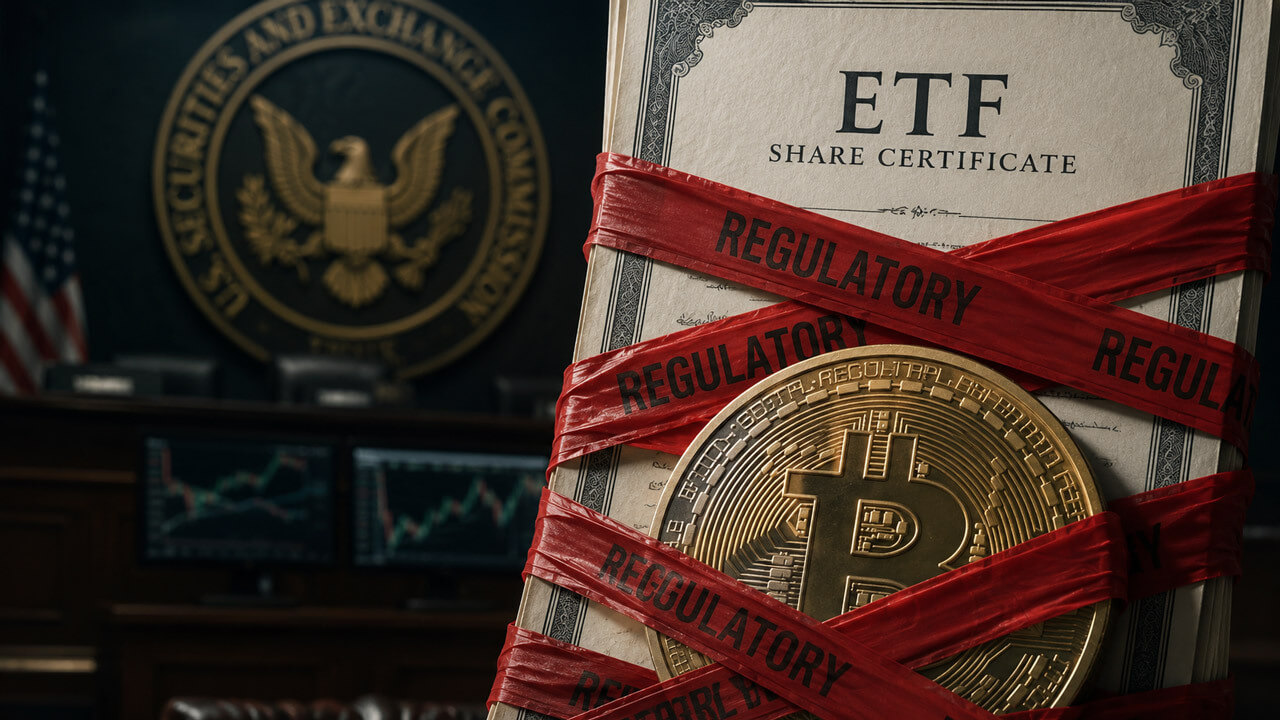
The Securities and Exchange Commission (SEC) is currently questioning if the rapid expansion of Crypto ETFs has outpaced existing investor protections, signaling a potential shift toward stricter oversight.
While the approval of Bitcoin and Ethereum ETFs marked a historic win for crypto, the SEC is now expressing concerns over whether these products have integrated too deeply into traditional finance, potentially leading to new restrictive measures.
After a decade of denials, the United States finally opened the floodgates for Spot Bitcoin ETFs (Exchange-Traded Funds) in early 2024. These financial vehicles allow regular investors to buy crypto through their standard brokerage accounts, just like they would buy shares of Apple or Disney.
However, the sheer speed of adoption has startled regulators in Washington D.C. What began as a hard-fought legal victory for the industry has now transformed into a massive experiment in market integration. For the SEC, the concern is no longer whether these products should exist, but whether they have become too powerful too quickly.
The ETF Power Engine and Retail Access
ETFs are one of Wall Street's most successful distribution tools because they simplify complex assets. Instead of managing private keys (long alpha-numeric passwords) or dealing with offshore exchanges, Americans can now get exposure to digital assets via a ticker symbol.
This convenience has bridged the gap between "degen" (speculative crypto) culture and the conservative world of 401(k) plans. Because ETFs trade on major exchanges like the NYSE and Nasdaq, they carry a sense of legitimacy that the SEC now fears might be misleading for those who don't understand crypto volatility.
Why Wall Street Loves the Wrapper
- Liquidity: ETFs make it easy to buy and sell large amounts of Bitcoin without moving the market price significantly.
- Tax Reporting: All gains and losses are consolidated on a single 1099 form, simplifying IRS filings.
- Custody: Institutional providers like Coinbase Custody handle the storage, removing the risk of personal hacks.
The SEC's New Skepticism
Regulators are currently examining if the current structure of these funds provides enough transparency. The core issue lies in "market surveillance," or the ability for officials to spot and stop price manipulation within the underlying crypto markets.
While the initial approvals were based on the correlation between Bitcoin futures and spot prices, the SEC is reportedly looking at how these funds interact with the broader financial system. There is growing concern that a major crypto crash could bleed into traditional retirement accounts through these ETF products.
"The wrapper provides a layer of comfort, but the underlying asset remains one of the most volatile commodities in the world, and that tension is where the SEC is focusing its gaze today."
Monitoring these trends is vital for investors. Data from CoinGecko shows that Bitcoin's market presence remains dominant, but the growth of ETF inflows is now a primary driver of daily price movement.
What This Means for USA Investors
For the American investor using platforms like Coinbase, Kraken, or Gemini, this regulatory scrutiny could result in a cooling period for new product launches. We may see a slowdown in the approval of Solana ETFs or more complex leveraged crypto products.
From a tax perspective, the IRS treats Bitcoin and Ethereum as property. Using an ETF does not change the fact that you owe Capital Gains Tax on your profits. However, the SEC's potential new rules could lead to higher management fees if funds are forced to implement more rigorous compliance measures.
- Expect increased volatility news from D.C. as the SEC and CFTC (Commodity Futures Trading Commission) debate jurisdictions.
- Watch for changes in how "staking" (earning rewards on crypto) is handled within ETFs, as this remains a hot-button issue.
- Ensure your brokerage statements accurately reflect the cost basis to avoid future IRS audits.
Looking Ahead: The Future of Crypto on Wall Street
The genie is out of the bottle, and it is unlikely that the SEC will attempt to rescind existing ETF approvals. However, the "Goldilocks period" of easy approvals may be coming to an end. Investors should prepare for a more surgical approach from regulators.
As the U.S. presidential and congressional cycles move forward, the political pressure on the SEC will likely intensify. Whether the agency moves toward more restrictive guidance or maintains the status quo will define the next leg of the crypto bull market for American retail participants.
Key Takeaways
- Identify why the SEC is shifting from initial approval to active caution regarding retail risk.
- Recognize the convenience of ETFs as the primary driver for massive US institutional capital entry.
- Evaluate how potential new SEC rules could limit the variety of future crypto-linked products.
- Understand the impact of Wall Street's distribution power on local crypto market volatility.