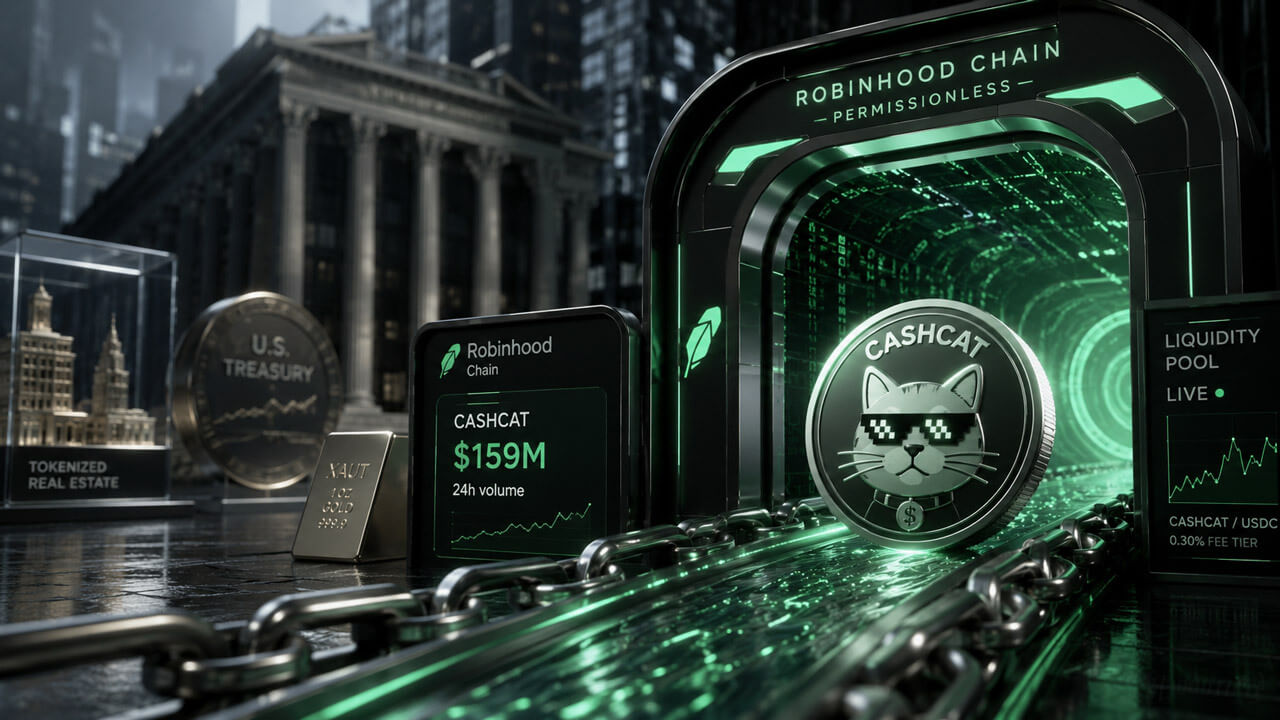
Robinhood has officially expanded its ecosystem into the blockchain infrastructure space with the public mainnet launch of Robinhood Chain, a specialized Layer 2 network.
Robinhood has officially launched its public mainnet for Robinhood Chain, a Layer 2 network built on Arbitrum, which is currently seeing its first major surge from a cat-themed memecoin named CASHCAT.
The California-based fintech giant released Robinhood Chain this month, marking a pivotal shift from being a simple brokerage to a decentralized infrastructure provider. Built atop Arbitrum, a popular scaling solution for Ethereum, the network aims to bridge the gap between traditional Wall Street finance and decentralized finance (DeFi). For US investors, this move represents one of the most significant integrations of Real-World Assets (RWAs)—digitized versions of traditional assets like stocks—into a retail-friendly crypto environment.
The Technical Foundation: Arbitrum and Layer 2 Scaling
Robinhood Chain is built as a Layer 2 (a secondary framework built on top of an existing blockchain to improve speed and lower costs) using Arbitrum’s technology. This allows for nearly instant transactions with fees that are significantly lower than those found on the main Ethereum network. By choosing a permissionless (open to anyone without needing prior approval) design, Robinhood is signaling a commitment to the open-web ethos, even as it targets institutional-grade finance.
The network is optimized for several key sectors of the digital economy:
- Tokenized Stocks: Bringing traditional equity trading into a 24/7 blockchain environment.
- DeFi Lending: Allowing users to borrow or lend assets without a centralized intermediary.
- AI-Native Finance: Integrating automated intelligence for portfolio management.
- Real-World Assets (RWAs): Digitizing physical assets like real estate or treasury bills.
The Unexpected Rise of the CASHCAT Memecoin
While Robinhood envisioned a sophisticated "Wall Street on-chain," retail investors had other immediate plans. Within the first week of the launch, a memecoin (a cryptocurrency based on an internet joke or cultural trend) called CASHCAT became the network's standout performer. CASHCAT was inspired by a discarded internal name previously considered by Robinhood’s branding team, and it quickly reached a staggering $150 million market valuation.
This phenomenon follows a pattern seen on other major networks like Coinbase’s Base chain, where speculative retail interest often precedes institutional adoption. Tracking these trends on platforms like CoinGecko shows that community-driven tokens often provide the initial liquidity (the ease with which an asset can be converted to cash) necessary for a new blockchain to survive.
"The launch of Robinhood Chain proves that even the most 'corporate' networks cannot escape the power of community-driven retail speculation in the early stages of a mainnet release."
Strategic Goals for Tokenized Assets
Despite the memecoin frenzy, Robinhood's long-term vision is strictly professional. The company aims to simplify the process of onboarding (the act of bringing new users into a system) for the millions of Americans who already use the Robinhood app for stocks. By integrating the chain directly into the existing user interface, they remove the technical hurdles often associated with setting up a crypto wallet (a digital tool used to store and trade cryptocurrency).
- Seamless Integration: Moving funds from a brokerage account to the L2 chain.
- Lower Entry Barriers: Making complex DeFi tools accessible to the average retail trader.
- Institutional Support: Providing a secure environment for banks to experiment with tokenization.
What This Means for USA Investors
For US-based users, the Robinhood Chain launch carries specific implications regarding regulation and taxes. Robinhood operates under the strict oversight of the SEC (Securities and Exchange Commission), which means the assets listed on their commercial interface likely face more vetting than those on offshore exchanges. However, since the chain is permissionless, investors should be aware that non-custodial (user-controlled) wallets used on the chain may not offer the same protections as the Robinhood brokerage app.
Tax and Regulatory Considerations
The IRS (Internal Revenue Service) treats every crypto-to-crypto trade as a taxable event in the United States. This includes swapping your ETH for CASHCAT on the new Robinhood Chain. US investors should utilize portfolio trackers to ensure they are recording the USD value of every transaction at the time it occurs. Additionally, while Robinhood is a US-regulated entity, the individual tokens launched by third parties on their chain are not necessarily registered securities.
The Future of Retail DeFi in America
The marriage of a major US brokerage with a high-performance Layer 2 network could be the catalyst for the next wave of crypto adoption. If Robinhood successfully transitions its 20+ million users toward on-chain activity, it could challenge the dominance of established exchanges like Coinbase and Kraken. Whether the network remains a playground for cat-themed tokens or evolves into a serious hub for global finance depends on how quickly developers (the people who build software and apps) migrate their projects to the platform.
Key Takeaways
- Identify Robinhood Chain as a new Layer 2 (L2) network built on the Arbitrum ecosystem.
- Recognize the shift toward tokenizing real-world assets like stocks and bonds on-chain.
- Monitor CASHCAT, the first viral memecoin on the network with a $150M valuation.
- Evaluate the regulatory implications for US-based retail investors using Robinhood's L2.