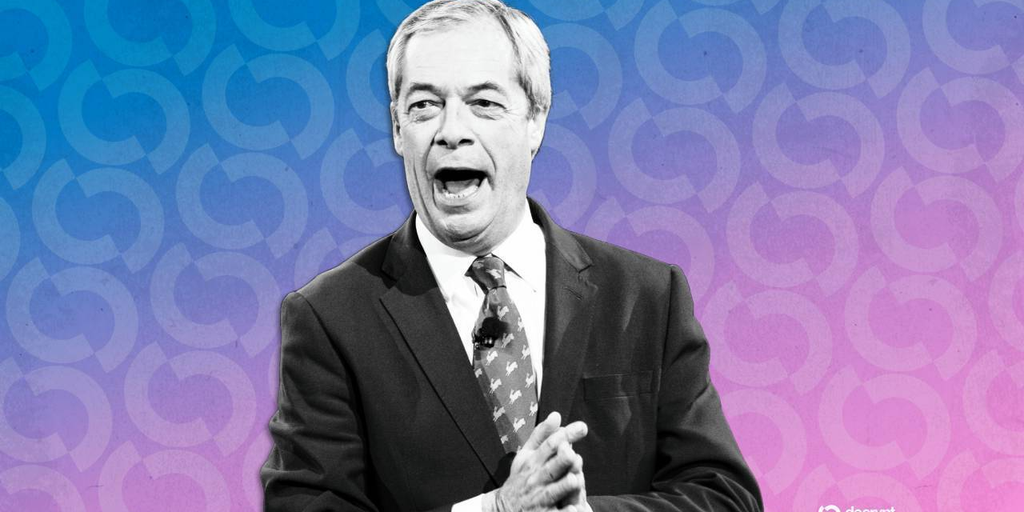
Nigel Farage is facing a formal ethics investigation by the UK parliamentary standards watchdog over allegations that he lobbied the Bank of England on behalf of interests tied to his largest financial donor.
Nigel Farage has been reported to the UK standards watchdog after allegations that he pressured the Bank of England on policies that could benefit a major crypto donor.
A Labour Member of Parliament (MP) recently filed a complaint against Farage, the leader of the Reform Party in the United Kingdom. The core of the issue involves Farage reportedly pressing central bankers on policies related to stablecoins (digital assets pegged to a steady value like the US Dollar). This matters to US investors because the donor in question is a major stakeholder in companies linked to Tether (USDT), the world's most widely traded crypto asset.
The Allegations Behind the Lobbying Probe
The controversy centers on whether Farage used his political platform to influence the Bank of England (the UK version of the Federal Reserve). According to the complaint, Farage's outreach coincided with his receipt of substantial donations from a prominent crypto investor. This has raised red flags regarding transparency and the potential for a conflict of interest.
Regulators are looking into whether Farage breached the code of conduct for lawmakers by failing to disclose the nature of his requests. In the UK, as in the US, public officials must declare any financial ties that could color their policy positions. The investigation will determine if Farage’s advocacy for specific crypto regulations was commercially motivated.
"The integrity of financial regulation rests on the independence of central banks from targeted political pressure, especially when tied to private donors."
The Connection to Tether and Stablecoins
The donor at the heart of the story has significant ties to Tether. Tether is a stablecoin, meaning it is intended to always be worth exactly $1.00. Use of these assets is critical for liquidity (the ease with which assets can be bought and sold) in the global crypto market.
If a high-profile politician is seen as trying to bend the rules for a specific stablecoin issuer, it creates systemic risk for the entire market. US investors should note that stablecoins are currently under a microscope by US regulators as well. Understanding these digital assets is essential, as noted in this Investopedia NFT explainer which touches on the broader digital collectible and asset ecosystem.
Current Regulatory Environment
- Transparency Requirements: Global regulators are demanding clearer audits of stablecoin reserves.
- Banking Access: Farage has previously campaigned for better banking access for crypto firms.
- Legal Precedent: This case could set a new standard for how politicians interact with digital asset lobbyists.
Why This Matters for International Markets
While this investigation is taking place in London, the ripple effects are felt on Wall Street. The Bank of England and the US Federal Reserve often coordinate on financial stability standards. Any scandal involving a major stablecoin like Tether can lead to increased volatility (rapid price changes) across the entire crypto sector.
Farage’s defense suggests his actions were in the interest of making the UK a "crypto hub." However, critics argue that the lack of disclosure undermines the credibility of the industry. This mirrors ongoing debates in Washington D.C. regarding how much influence crypto PACs (Political Action Committees) should have on American legislation.
What This Means for USA Investors
For those trading in the United States, this news highlights several critical themes in current crypto investing:
- IRS Scrutiny: The IRS views crypto as property; any gains from stablecoin-to-altcoin trades are taxable events for US citizens.
- SEC Posture: The Securities and Exchange Commission (SEC) continues to debate whether certain stablecoins should be classified as securities.
- Exchange Stability: Major US exchanges like Coinbase, Kraken, and Gemini often adjust their listings based on global regulatory heat.
- USD Parity: Since most stablecoins are pegged to the USD, international political drama can affect the perceived safety of these digital dollars.
US investors should keep a close eye on the outcome of this investigation. If it leads to stricter rules for stablecoin issuers in the UK, the US may likely follow suit with similar requirements for reserves and disclosure.
The Future of Crypto Lobbying
This incident is part of a larger trend where the crypto industry is spending millions to influence lawmaking. In the US, companies like Ripple and Coinbase have spent heavily to reach members of Congress. The Farage case serves as a cautionary tale about the ethical boundaries of these modern lobbying efforts. As crypto becomes more mainstream, the intersection of private money and public policy will remain a high-stakes area for investors to watch.
Key Takeaways
- Investigate the formal complaint filed against Farage regarding potential conflicts of interest.
- Monitor the influence of major crypto donors, specifically those linked to the Tether ecosystem.
- Evaluate the pressure applied to the Bank of England regarding digital asset regulatory frameworks.
- Assess how international political scandals impact US sentiment toward stablecoin transparency.
- Track the intersection of populist politics and the global cryptocurrency market.