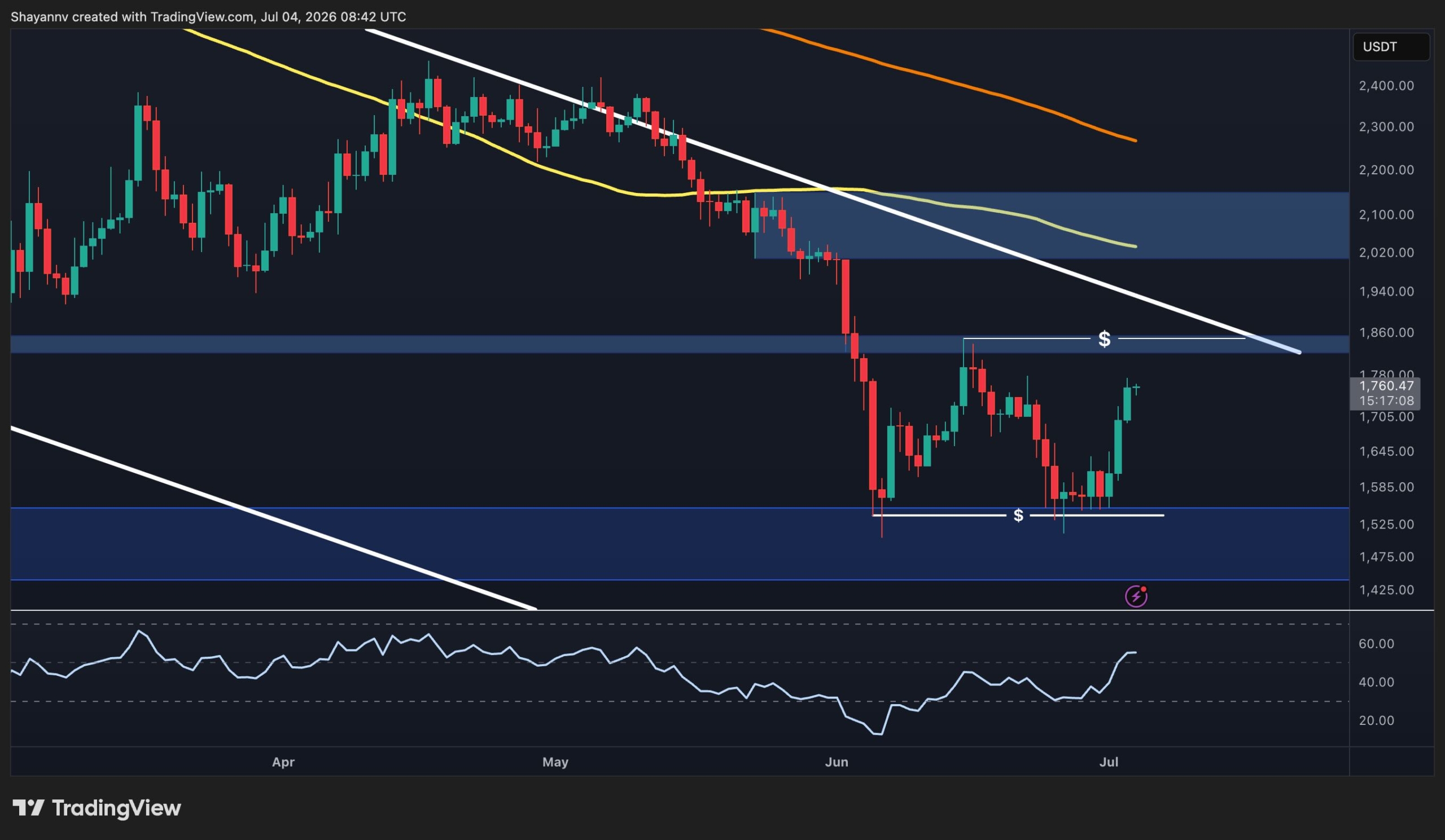
Ethereum is currently challenging a critical confluence resistance area, with technical indicators suggesting that a break above $2,200 could spark a major trend reversal for the second-largest cryptocurrency.
Ethereum is currently testing a major resistance zone near $2,200; a successful breakout could signal a long-term trend reversal, while a rejection might lead to further consolidation.
After weeks of sideways movement, Ethereum (ETH) has finally shown signs of life, breaking out of its narrow consolidation range. This recovery comes as US investors look for stability in the broader digital asset market. For those holding ETH in American brokerage accounts or digital wallets, the current price action represents a pivotal moment between a short-term relief rally and a sustained bull run.
Testing Critical Resistance Levels
Ethereum is currently hammering away at a heavy resistance zone. In technical analysis (the study of price charts to predict future moves), a resistance zone is a price level where selling pressure historically outweighs buying pressure. If ETH can clear this hurdle, the path toward $2,200 becomes significantly clearer.
Short-term sentiment among traders has improved, largely driven by a decrease in selling pressure from large institutional holders. However, the market remains cautious. We are seeing a "wait and see" approach as the price approaches the 200-day moving average (a technical indicator showing the average price over the last 200 days), which often acts as a line in the sand for long-term trends.
The Role of Decentralized Finance
One of the primary drivers of Ethereum's value is its utility in the world of Investopedia DeFi explainer. Decentralized Finance, or DeFi (financial services built on blockchain without traditional banks), relies heavily on the Ethereum network. As more users engage with these protocols, the demand for ETH typically rises.
Current data suggests that Total Value Locked (the total amount of assets deposited in DeFi protocols) is stabilizing. This stabilization provides a fundamental floor for the price, even when the overall market feels shaky. For a sustained move to $2,200, we likely need to see an uptick in network activity and transaction volume.
"The shift from a relief rally to a structural uptrend requires more than just high prices; it requires a fundamental increase in network participation and whale accumulation."
Key Metrics to Watch
Investors should keep a close eye on several key factors that will dictate the next move for Ethereum. These include:
- Relative Strength Index (RSI): A momentum indicator that measures if an asset is overbought or oversold.
- Exchange Inflows: High amounts of ETH moving onto exchanges often signal an intent to sell.
- On-chain Volume: The actual amount of ETH being transferred across the blockchain network.
If these metrics align with a price breakout, the likelihood of ETH sustaining its gains increases. Conversely, if the price rises while volume stays low, it may be a "bull trap" (a false signal showing a declining trend has reversed when it hasn't).
What This Means for USA Investors
For investors in the United States, the potential move to $2,200 carries specific implications. Most US residents trade ETH on regulated platforms like Coinbase, Kraken, or Gemini, where liquidity is high but regulatory oversight is strict. Ensure your exchange accounts are secure as volatility increases.
From a regulatory standpoint, the SEC (Securities and Exchange Commission) continues to examine the status of various tokens, though Ethereum is generally treated as a commodity by the CFTC (Commodity Futures Trading Commission). This provides some level of comfort for long-term holders compared to newer, more speculative altcoins (any cryptocurrency other than Bitcoin).
Tax Considerations for US Residents:
- Capital Gains: Selling ETH for a profit triggers a taxable event. If you held for over a year, you qualify for lower long-term capital gains rates.
- Tax Loss Harvesting: If the price fails to break $2,200 and you sell at a loss, you may be able to offset other capital gains on your IRS filing.
- Record Keeping: Use software to track your trades in USD values at the time of the transaction to satisfy IRS requirements.
Looking Ahead: Is $2,200 Realistic?
While the technical setup looks promising, Ethereum does not exist in a vacuum. Its price is often heavily correlated with Bitcoin (the first and largest cryptocurrency). If Bitcoin stays stable or climbs, Ethereum has a much higher chance of breaking its current downtrend. US investors should watch for macro signals, such as Federal Reserve interest rate decisions, which often impact the appetite for "risk-on" assets like crypto.
In conclusion, Ethereum is at a crossroads. A break above the resistance could validate the recovery, while a failure to do so might see the price return to previous support levels (price points where buying interest usually prevents further drops) near $1,800. Proper risk management remains the most important tool for any beginner or intermediate investor navigating these waters.
Key Takeaways
- Monitor the $2,200 resistance level as a primary indicator for a potential bullish breakout.
- Evaluate short-term sentiment improvements against the backdrop of long-term macro trends.
- Track trading volume on major US exchanges like Coinbase to confirm buying pressure.
- Prepare for tax implications if selling ETH for a profit following a price surge.