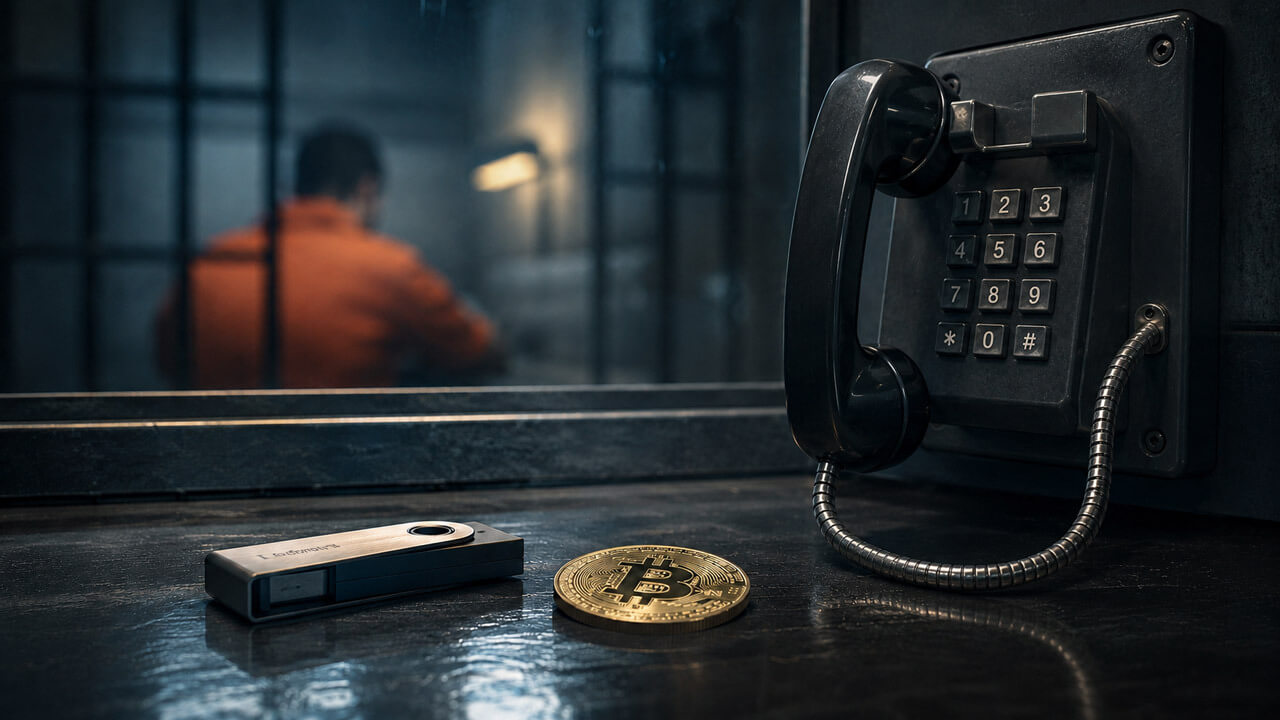
The U.S. Department of Justice (DOJ) faces a massive security lapse as nearly $2 million in digital assets, previously ordered for forfeiture, was transferred to unknown wallets while the owner remained in federal prison.
Despite being under a federal forfeiture order, nearly $2 million in cryptocurrency linked to a convicted scammer has been moved to unknown private wallets because the Department of Justice failed to secure the private keys.
Government authorities in the United States are grappling with a complex technical failure following the conviction of a major crypto scammer. Although the court issued a forfeiture order (a legal demand to turn over assets), the physical control of the digital coins was never established by federal agents. This allowed the funds to be moved on the blockchain without government authorization.
The Gap Between Law and Technology
The situation highlights a fundamental misunderstanding of self-custody (holding your own digital keys) within some government sectors. While a judge can order a criminal to hand over their assets, the decentralized nature of cryptocurrency means the funds cannot be moved unless someone has the private keys (the alphanumeric password used to authorize transactions).
In this instance, the assets remained sitting in the scammer's original wallets for months after the conviction. Because the DOJ did not transfer these assets to a hardware wallet (a physical device for secure storage) under their own control, the system remained vulnerable to whoever else might have had access to those digital keys.
"The failure to secure these funds highlights a critical vulnerability in how federal agencies manage digital evidence versus physical property like cash or cars."
How the Unauthorized Transfer Occurred
According to blockchain data, several large transactions moved the funds into new, unidentifiable addresses. This has raised questions about whether the prisoner had outside help or if they managed to access a device from within the facility. US investigators are now tracking these movements across the blockchain (the public digital ledger where all transactions are recorded).
The assets involved included popular tokens that are frequently tracked on platforms like CoinGecko to determine real-time market value. At the time of the transfer, the missing funds represented a significant portion of the restitution intended for the victims of the original scam.
- Asset Type: High-liquidity altcoins and stablecoins.
- Target Destination: Unidentified "cold" wallets.
- Current Status: Assets are currently on the move, bypassing federal oversight.
Steps for Recovering Stolen Crypto
The process of recovering these assets now involves a multi-agency effort focusing on the following steps:
- Monitoring centralized exchanges (platforms like Coinbase or Kraken where crypto is traded for USD).
- Issuing subpoenas to internet service providers to trace the IP addresses of the transfer.
- Coordinating with international law enforcement to freeze the funds if they touch a regulated entity.
What This Means for USA Investors
For US investors, this case serves as a sharp reminder of the IRS tax implications and the legal definition of ownership. If you are a victim of a scam, the IRS allows for certain losses, but the recovery of those losses through government forfeiture is never guaranteed until the government actually holds the keys.
Furthermore, the Securities and Exchange Commission (SEC) and the CFTC often use these lapses to argue for stricter regulations on how digital assets are stored by third parties. Investors using US-based exchanges like Coinbase or Gemini are generally safer because these entities have strict custody protocols that the government itself is still learning to replicate in its enforcement actions.
The Future of Federal Crypto Seizures
We should expect the DOJ to update its protocol for digital asset management. The move will likely involve hiring more specialist "crypto marshals" who understand that a court order is not the same as a smart contract (a self-executing piece of code) that automatically transfers funds. This shift will influence how crypto-related crimes are prosecuted across all 50 states.
Key Takeaways
- Understand that a legal seizure order does not physically move crypto without the private keys.
- Recognize the critical delay between federal sentencing and the actual securing of digital assets.
- Monitor how the DOJ manages digital custody to prevent unauthorized transfers from prison.
- Acknowledge the immutable nature of the blockchain which allowed the transfer to happen despite the law.