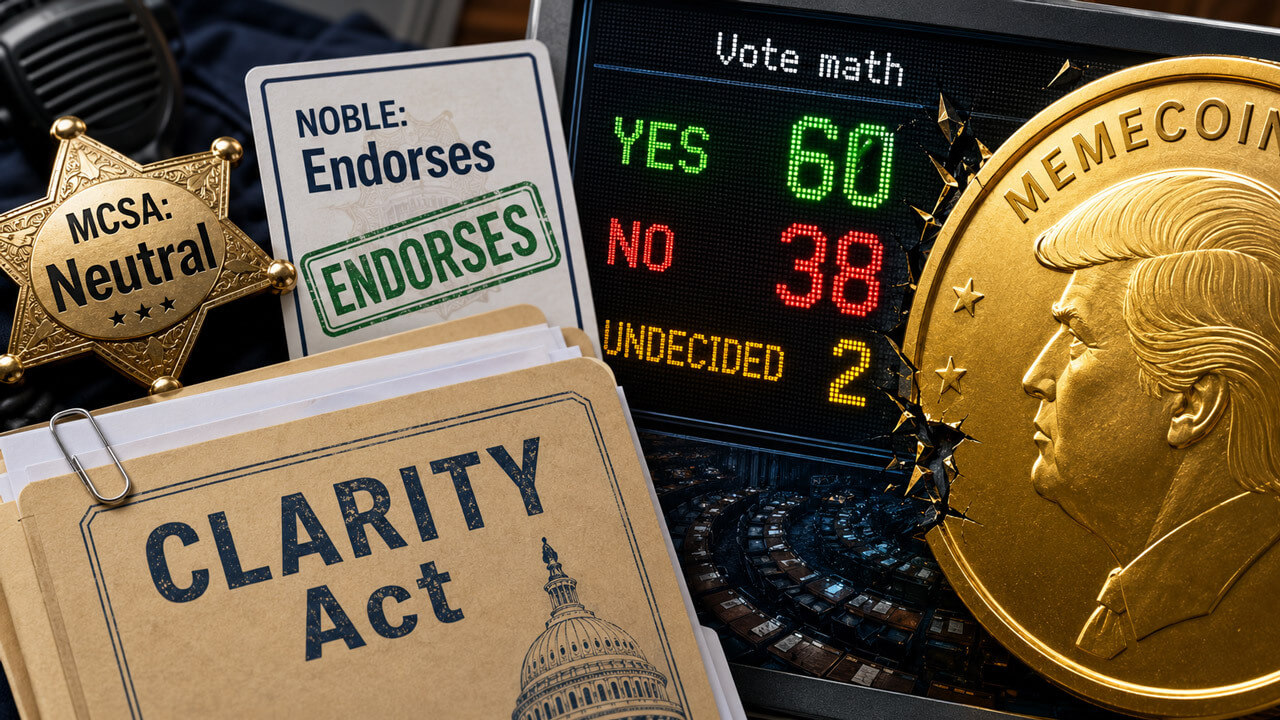
The CLARITY Act remains caught in a legislative tug-of-war as newly raised ethical concerns over Trump-themed memecoins create a fresh stalemate in Washington D.C.
The CLARITY Act's path to becoming law remains uncertain as a fierce debate over ethics and potential conflicts of interest regarding Trump-themed memecoins offsets a decrease in opposition from law enforcement agencies.
Lawmakers are currently debating the CLARITY Act, a significant piece of legislation designed to provide a clear regulatory framework for digital assets in the United States. While traditional opposition from law enforcement groups has begun to dissipate, a new battleground has emerged regarding the ethics of political figures and their ties to volatile memecoins (cryptocurrencies based on internet jokes or cultural trends). For US investors, the outcome of this vote will determine the safety and legality of their future crypto holdings.
The Shift in Law Enforcement Opposition
For months, the biggest hurdle for the CLARITY Act was resistance from federal law enforcement agencies. These groups expressed concerns that clearer regulations might inadvertently provide loopholes for bad actors using blockchain (a digital, decentralized ledger) for illicit activities. However, those concerns are now starting to crack as lawmakers revise the bill's language to strengthen anti-money laundering protections.
This softening of the law enforcement stance initially led many observers to believe the bill would sail through the voting process. Prediction markets had previously estimated a 50/50 chance of the act becoming law by 2026. The reduction in friction from the DOJ and FBI was seen as a major win for the industry, yet a new obstacle has appeared on the horizon that is proving just as difficult to navigate.
The Trump Memecoin Ethics Controversy
The latest delay stems from a heated argument over ethics and conflicts of interest. Specifically, the rise of Trump-themed memecoins has sparked concerns about how high-profile political figures might influence or profit from specific digital assets. Critics argue that without strict disclosures, the CLARITY Act could be manipulated by those with vested interests in the very tokens the bill aims to regulate.
This ethical fight has polarized the committee, with some members calling for explicit bans on lawmakers holding specific types of speculative assets.
"The intersection of political branding and decentralized finance creates a unique challenge that traditional ethics rules weren't built to handle,"noted one policy analyst during the hearings. This tension has effectively frozen floor time for the bill as the two sides struggle to find a middle ground on transparency requirements.
Current Status of Legislative Momentum
Despite the ethical standoff, the underlying mechanics of the bill remain popular among pro-innovation groups. The goal is to move beyond the current "regulation by enforcement" model and provide a statutory roadmap for tokens. Here is what is currently on the table for the CLARITY Act:
- Jurisdictions: Defining which assets fall under the SEC versus the CFTC.
- Stablecoin Rules: Creating a federal framework for stablecoins (cryptocurrencies pegged to the US Dollar).
- Consumer Protection: Mandating that exchanges maintain higher capital reserves.
What This Means for USA Investors
For the average American investor using platforms like Coinbase or Kraken, the CLARITY Act is the difference between market uncertainty and institutional stability. If passed, the IRS would likely have a clearer mandate on how these assets are taxed, potentially simplifying the reporting process for capital gains (profits made from flipping assets).
Currently, many US traders utilize tools like CoinGecko to track the wild volatility of memecoins. Under the proposed act, the SEC (Securities and Exchange Commission) might gain more power to delist tokens that fail to meet strict disclosure standards. This could reduce the number of "rug pulls" or scams that frequently plague the decentralized finance (DeFi) ecosystem in the states.
The Road to 2026: What Happens Next?
The path forward for crypto regulation in America generally follows a specific legislative cycle. To reach the President's desk, the CLARITY Act must clear several hurdles:
- The House Financial Services Committee must finalize the ethics language.
- A full vote in the House of Representatives is required to gauge bipartisan support.
- The Senate must review and potentially amend the bill to include stricter oversight.
- A joint committee must reconcile the differences between the two versions.
While the "memecoin ethics" fight is the headline of the day, it reflects a broader struggle to integrate 21st-century technology into an 18th-century legislative process. For now, US investors should remain cautious and continue to monitor the USD price of their assets, as legislative delays often lead to short-term market volatility.
Key Takeaways
- Identify the CLARITY Act as a pivotal bill seeking to define federal oversight for the crypto market.
- Monitor how memecoin ethics are causing political friction among US lawmakers during the voting process.
- Note the shift in law enforcement sentiment as agencies begin to soften their stance on the legislation.
- Evaluate the impact of potential conflicts of interest on the bill's predicted 2026 passage timeline.
- Understand how this regulation could change the legal status of digital assets for American retail buyers.