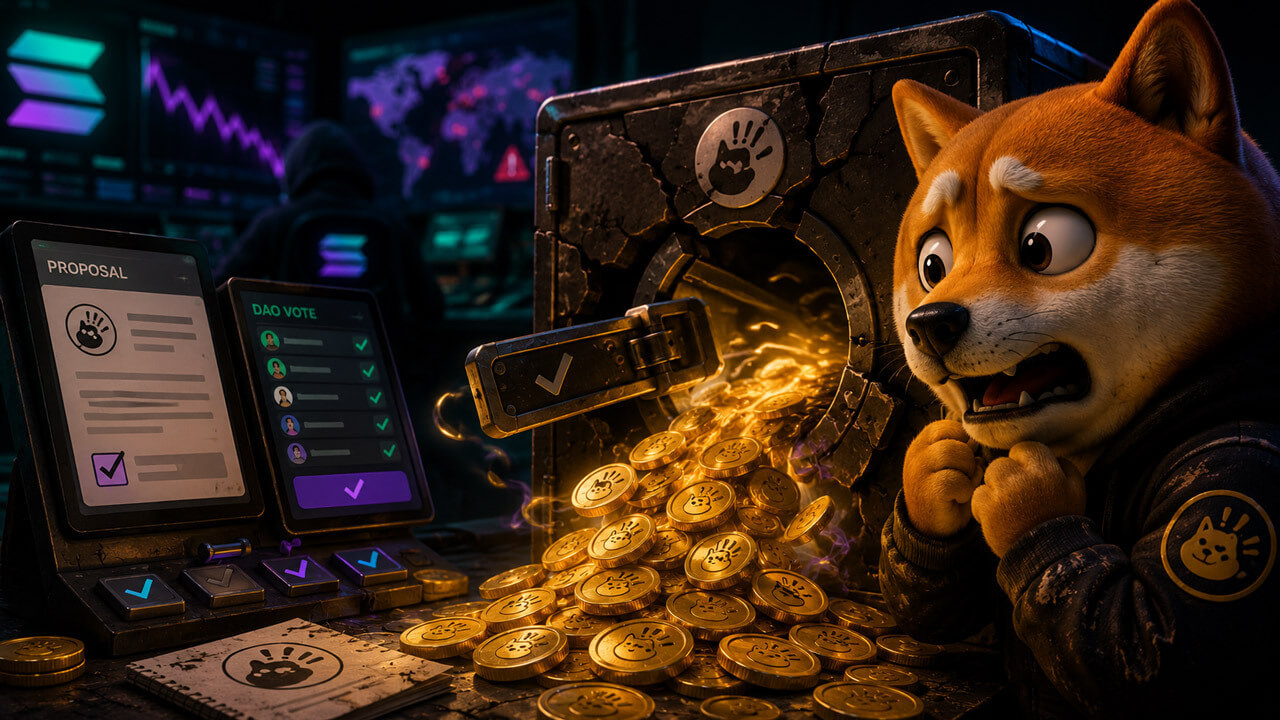
A sophisticated attempt to drain $20 million from the Bonk DAO treasury has exposed a fundamental security flaw in how memecoin communities manage their shared digital assets.
An estimated $20 million vulnerability in Bonk DAO occurred because malicious actors exploited simple token-weighted voting to attempt a treasury drain, highlighting critical security gaps in memecoin governance.
During the second week of June 2024, the largest memecoin project on the Solana blockchain, BONK, faced a governance crisis. A malicious proposal was introduced to the Bonk DAO (Decentralized Autonomous Organization—an entity led by code and community votes rather than a CEO) that sought to transfer a massive portion of the collective treasury to an outside wallet. For American investors holding BONK on exchanges like Coinbase or Kraken, this event serves as a stark reminder that the "decentralized" nature of these assets can be a double-edged sword when security protocols are thin.
How a Simple Vote Almost Led to a $20M Heist
The core of the problem lies in token-weighted voting (a system where the more coins you hold, the more power your vote carries). An attacker or a small group of large holders can theoretically submit a proposal to send themselves funds and then vote "yes" using their own massive supply of tokens. In this instance, the proposal was masked as a routine ecosystem development fund.
Because many retail investors do not actively monitor governance portals, these proposals can pass with very little public scrutiny. This specific event highlighted that if a DAO lacks a veto period or a "guardian" council to oversee transactions, the treasury is essentially an open vault for anyone with enough voting power.
The Mechanics of Memecoin Governance Risks
Most memecoins start as jokes, but projects like BONK have grown into multi-billion dollar ecosystems. However, their security infrastructure often lags behind their market cap. Many of these projects utilize simplified DAO structures that do not require multi-signature (multi-sig) approval (a security requirement where multiple independent people must sign off on a transaction) for every withdrawal.
"The reality of DAO governance is that it is often less about democracy and more about who owns the largest share of the voting supply, making treasuries ripe for internal raids."
According to data from CoinGecko, BONK remains one of the top dog-themed tokens by market valuation, yet this incident shows that even top-tier tokens face smart contract risks (the danger of flaws in the automated code that runs the blockchain). Investors should be aware that:
- Apathy is dangerous: If 90% of holders don't vote, a 5% holder can control the entire outcome.
- Proposal masking: Malicious actors use technical jargon to hide the true intent of a fund transfer.
- Flash loans: Sometimes attackers borrow tokens just to vote, then return them immediately after the heist.
Securing Decentralized Treasuries
To prevent future drains, experts suggest that DAOs must implement more rigorous checks. These include timelocks (a mandatory waiting period before a vote becomes final) and reputation-based voting rather than just token-count voting. Without these controls, the "community chest" of a memecoin is only as safe as its most powerful holder is honest.
- Establish a Security Council to vet all outgoing financial proposals.
- Require a higher quorum (the minimum number of voters needed for a vote to be valid).
- Implementing on-chain monitoring tools that alert the community to suspicious spending.
What This Means for USA Investors
For US-based crypto participants, the BONK DAO incident carries unique weight. From a tax perspective, the IRS (Internal Revenue Service) generally views crypto losses from hacks differently than market losses, and claiming a theft loss can be complex under current tax law. If a treasury is drained, the value of your tokens could plummet instantly, yet you may not be able to deduct the full loss on your tax return.
Furthermore, the SEC (Securities and Exchange Commission) has been closely watching DAOs to determine if they are functioning as unregistered investment contracts. Events where treasuries are "raided" give regulators more ammunition to argue that DAOs need stricter federal oversight and centralized accountability. Most US investors use Coinbase or Kraken to trade BONK, and while these exchanges provide a safe place to trade, they do not participate in DAO voting for you. You must take personal responsibility for the governance of the protocols you support.
Future Outlook for Solana Memecoins
As the Solana ecosystem continues to grow, treasury security will become a primary metric for long-term viability. The BONK community is now discussing enhanced security layers to ensure this $20 million scare doesn't become a permanent loss. For the average investor, the lesson is clear: don't just look at the price chart; look at how the treasury is protected. A project with a massive treasury but weak voting rules is a major red flag for any portfolio.
Key Takeaways
- Identify how token-weighted voting allows whale wallets to manipulate decentralized treasury funds.
- Recognize that low-voter turnout makes memecoin DAOs vulnerable to sudden, hostile proposals.
- Assess the security risks of holding Solana-based memecoins that lack multi-signature safeguards.
- Understand why US investors must vet DAO structures before committing long-term capital.
- Monitor active governance proposals to prevent unauthorized withdrawals from shared coin pools.