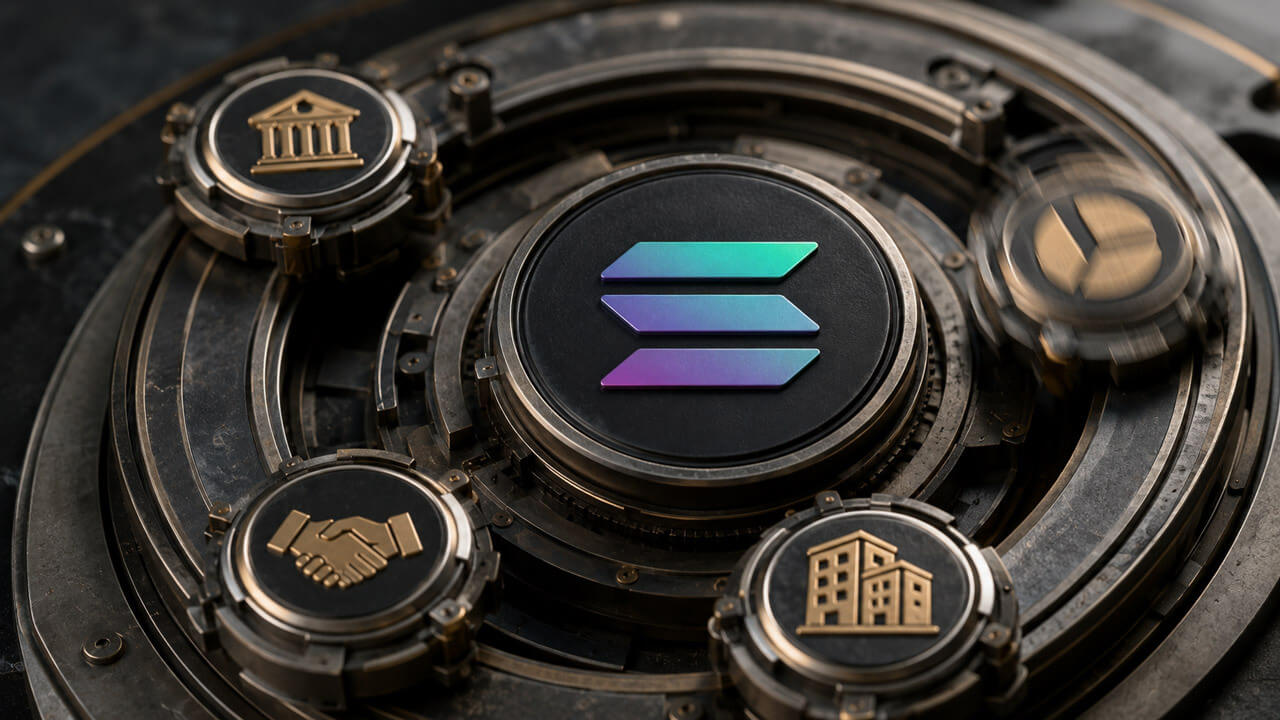
The Solana network recently processed a massive $8.7 billion in Real World Asset (RWA) transfer volume, marking a pivotal shift toward the active usage of tokenized financial products.
Solana has reached a massive milestone in Real World Assets (RWAs) with monthly transfer volumes hitting $8.7 billion, signaling a shift from holding assets to active utilization.
This surge in activity represents a doubling of volume within a single 30-day window. For American investors, this transition from simply "minting" assets to actually "moving" them signals that blockchain technology is finally integrating with traditional finance. As the Solana (SOL) ecosystem matures, US-based institutions are looking closely at how these digital representations of physical assets can improve market efficiency.
Understanding the RWA Revolution on Solana
Real World Assets, or RWAs (blockchain-based digital tokens representing physical assets like gold, real estate, or Treasury bills), are becoming the cornerstone of the next crypto bull market. Unlike speculative meme coins, these assets carry intrinsic value from the outside world.
The recent data highlights a significant change in market behavior. Previously, the metric for success was Total Value Locked (the total amount of funds held in a protocol). However, the new $8.7 billion figure focuses on transfer volume—how often these assets are traded or used in decentralized finance (DeFi).
"The velocity of capital on Solana suggests that tokenized assets are no longer just sitting idle in digital vaults; they are being utilized as active collateral and payment tools."
Why Solana is Winning the Tokenization Race
Solana has emerged as a preferred destination for RWAs due to its high throughput (the number of transactions a network can handle per second) and low fees. In the United States, where high-frequency trading is a staple of Wall Street, these technical advantages are critical.
- Scalability: Solana can process thousands of transactions per second, rivaling traditional payment processors.
- Low Cost: Transaction fees often cost less than a penny, making small-scale RWA transfers viable.
- Liquidity: A growing pool of active traders makes it easier to buy or sell assets without moving the price.
By checking real-time data on CoinGecko, investors can see that Solana’s market capitalization is increasingly supported by these high-utility institutional projects rather than retail speculation alone.
The Shift from Value to Usage Quality
In the past, critics argued that tokenized assets were "ghost towns" with no actual utility. The recent $8.7 billion surge debunks this theory. This volume suggests that users are increasingly using stablecoins (cryptocurrencies pegged to the US Dollar) and tokenized credit to participate in global markets.
- Tokenized Treasuries: US investors are moving into digital versions of government bonds for on-chain yield.
- Credit Markets: Private lending is moving onto Solana to bypass traditional banking delays.
- Real Estate: Fractional ownership of property is becoming more liquid through frequent secondary market trading.
Institutional Participation in the USA
Large American financial firms are no longer just experimenting; they are deploying. The ability to settle a trade in seconds rather than the traditional two-day (T+2) banking cycle is a massive incentive for US-based hedge funds and asset managers.
What This Means for USA Investors
If you are an investor based in the United States, the Solana RWA surge isn't just a technical stat; it has real-world implications for your portfolio. Most US-compliant exchanges like Coinbase and Kraken already support Solana, making it highly accessible for domestic retail investors.
From a tax perspective, the IRS (Internal Revenue Service) treats the exchange of one tokenized asset for another as a taxable event. This means moving from a tokenized bond to a stablecoin may trigger capital gains taxes. US investors should keep meticulous records of these high-velocity transfers using automated tax software.
Furthermore, the SEC (Securities and Exchange Commission) is still clarifying which RWAs qualify as securities. While stablecoins are under intense scrutiny, the growth of RWA volume on Solana suggests that the market is moving forward regardless of regulatory lag, betting on eventual clarity and institutional-grade compliance tools built directly into the Solana code.
Future Outlook for Tokenized Assets
As we move deeper into 2024 and 2025, the focus will remain on whether Solana can maintain this momentum. If the $8.7 billion monthly volume becomes the new baseline, Solana could disrupt the traditional custodial system (the financial entities that hold assets for safekeeping).
For the intermediate investor, watching the RWA sector is a way to hedge against crypto volatility. While Bitcoin and Ethereum remain dominant, Solana's specialized role in the RWA space provides a unique value proposition that is becoming increasingly hard for Wall Street to ignore.
Key Takeaways
- Analyze the $8.7 billion surge in Solana's Real World Asset transfer volume.
- Monitor the transition from passive asset storage to active on-chain usage.
- Evaluate Solana's competitive edge in speed and cost for institutional finance.
- Consider the tax implications for US investors trading tokenized assets.
- Track major institutional partnerships driving RWA liquidity on Solana.