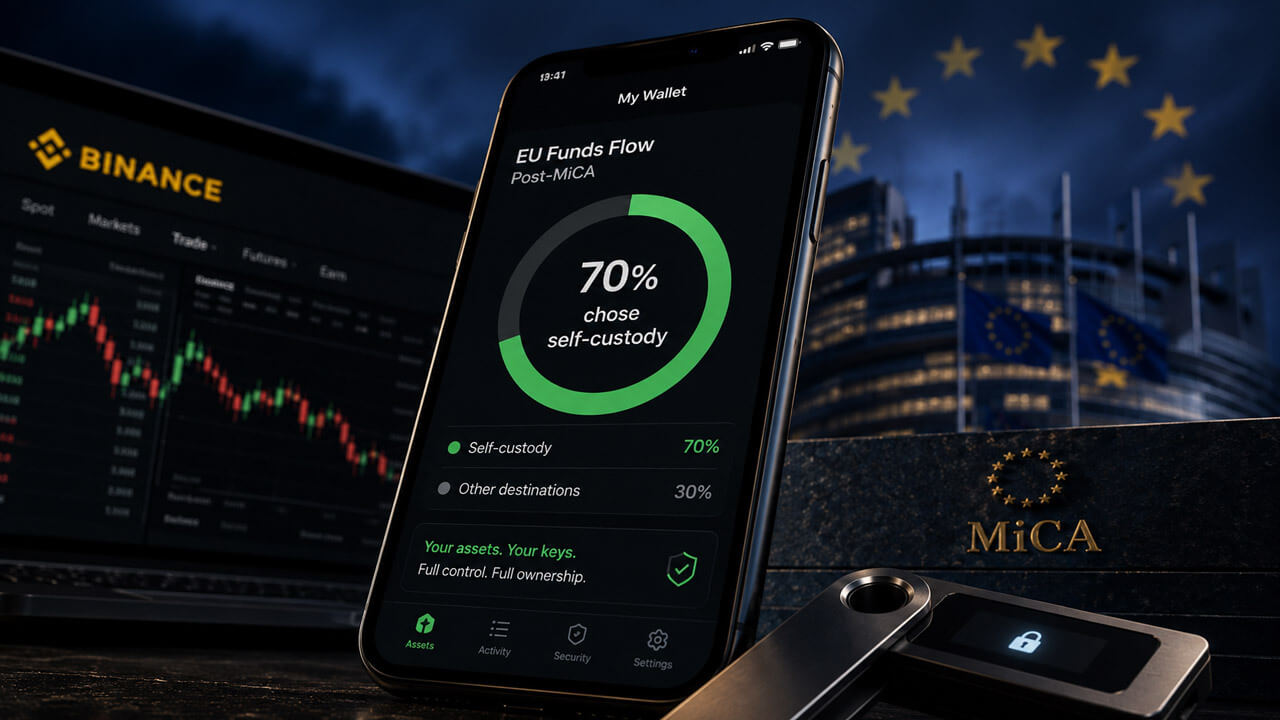
European Binance users are increasingly choosing self-custody over regulated competitors as new MiCA (Markets in Crypto-Assets) rules take effect across the continent.
Following the implementation of the MiCA regulatory deadline, the majority of departing Binance users chose self-custody wallets over migrating to other licensed centralized exchanges.
As the primary deadlines for Europe's landmark crypto framework arrived this month, data indicates a massive migration of capital. However, instead of moving funds to other compliant centralized platforms, investors are choosing to take full control of their private keys. For American investors, this shift offers a preview of how strict regulation might impact the domestic market and the liquidity of global exchanges.
The Great Migration to Self-Custody
Recent reports indicate that roughly 70% of funds withdrawn from Binance following the regulatory shifts moved directly into self-custody wallets (private digital wallets where the user holds the unique recovery phrase). This trend suggests that investors value sovereignty over the convenience of a supervised intermediary.
By bypassing other licensed platforms, users are signaling a lack of appetite for the restrictive measures often found on highly regulated exchanges. These measures frequently include stricter KYC (Know Your Customer) protocols and monitoring of transactional data. Many traders feel that if they must leave their preferred platform, they would rather exit the centralized ecosystem entirely.
"The shift toward self-custody highlights a growing realization among retail investors that 'not your keys, not your coins' is more than just a slogan; it is a defensive strategy against regulatory flux."
Understanding the Impact of MiCA
The MiCA (Markets in Crypto-Assets) regulation is a comprehensive legal framework designed to harmonize crypto rules across the European Union. It introduces strict requirements for stablecoin issuers and exchange operators. While intended to provide consumer protection, the initial result appears to be a fragmentation of the user base.
According to tools like CoinGecko, market volatility often increases when large amounts of capital move from exchange order books to private storage. This is because assets in cold storage (offline wallets) are not readily available for immediate trading, potentially leading to lower liquidity and higher slippage on remaining platforms.
Why Investors Are Avoiding Supervised Rivals
- Privacy Concerns: New rules often require exchanges to share more granular user data with government authorities.
- Asset Selection: Compliant exchanges often list fewer altcoins (any cryptocurrency other than Bitcoin) due to strict vetting requirements.
- Security Sovereignty: Holding assets in a hardware wallet removes the risk of an exchange hack or a platform-wide freeze.
The Tech Behind the Move
The transition to self-custody has been facilitated by an explosion in user-friendly wallet technology. Investors are no longer required to be computer scientists to manage their own funds. Instead, they utilize specialized hardware devices or secure mobile applications that act as a gateway to the blockchain.
This movement is not just about avoiding rules; it is about utilizing the core technology of DeFi (Decentralized Finance). By holding their own assets, users can interact directly with smart contracts without needing permission from a centralized bank or broker. This is a fundamental shift in how the modern financial world operates.
What This Means for USA Investors
While MiCA is a European initiative, its ripples are being felt across the Atlantic. The SEC (Securities and Exchange Commission) and the CFTC (Commodity Futures Trading Commission) are closely watching how these rules impact market behavior. US investors should note several key points:
- Regulatory Mirroring: US lawmakers often look to Europe as a testing ground for digital asset policy. If self-custody remains popular, the US may introduce specific reporting rules for private wallets.
- Tax Implications: Moving funds from Coinbase or Kraken to a private wallet is generally not a taxable event in the eyes of the IRS (Internal Revenue Service), but it does require meticulous record-keeping for future capital gains calculations.
- Exchange Availability: As regulations tighten, certain tokens may only be available on decentralized platforms, making self-custody a necessity for diversified American portfolios.
- USD Stablecoins: New rules regarding USD-pegged stablecoins in Europe could influence how US-based companies like Circle (USDC) operate globally.
Future Outlook for Centralized Exchanges
The fact that users didn't flock to competitors is a wake-up call for the industry. It suggests that brand loyalty in crypto is often tied to the specific features or liquidity of a platform. Once those are compromised by regulation, the "sticky" nature of the customer disappears.
As we move into 2025, the battle between regulated convenience and decentralized freedom will intensify. For the intermediate investor, maintaining a balance between a reputable US exchange and a secure self-custody solution remains the gold standard for risk management. Understanding the localized impact of global rules like MiCA is essential for navigating the evolving American crypto landscape.
Key Takeaways
- Identify that 70% of withdrawals from Binance moved to private self-custody wallets rather than competitors.
- Recognize that MiCA regulations are driving a shift toward user-controlled digital asset storage.
- Assess how the lack of intermediary trust is fueling the growth of hardware and software wallet adoption.
- Monitor how strict European standards serve as a blueprint for future US-based crypto regulations.
- Understand the tax and security implications of moving assets off centralized trading platforms.