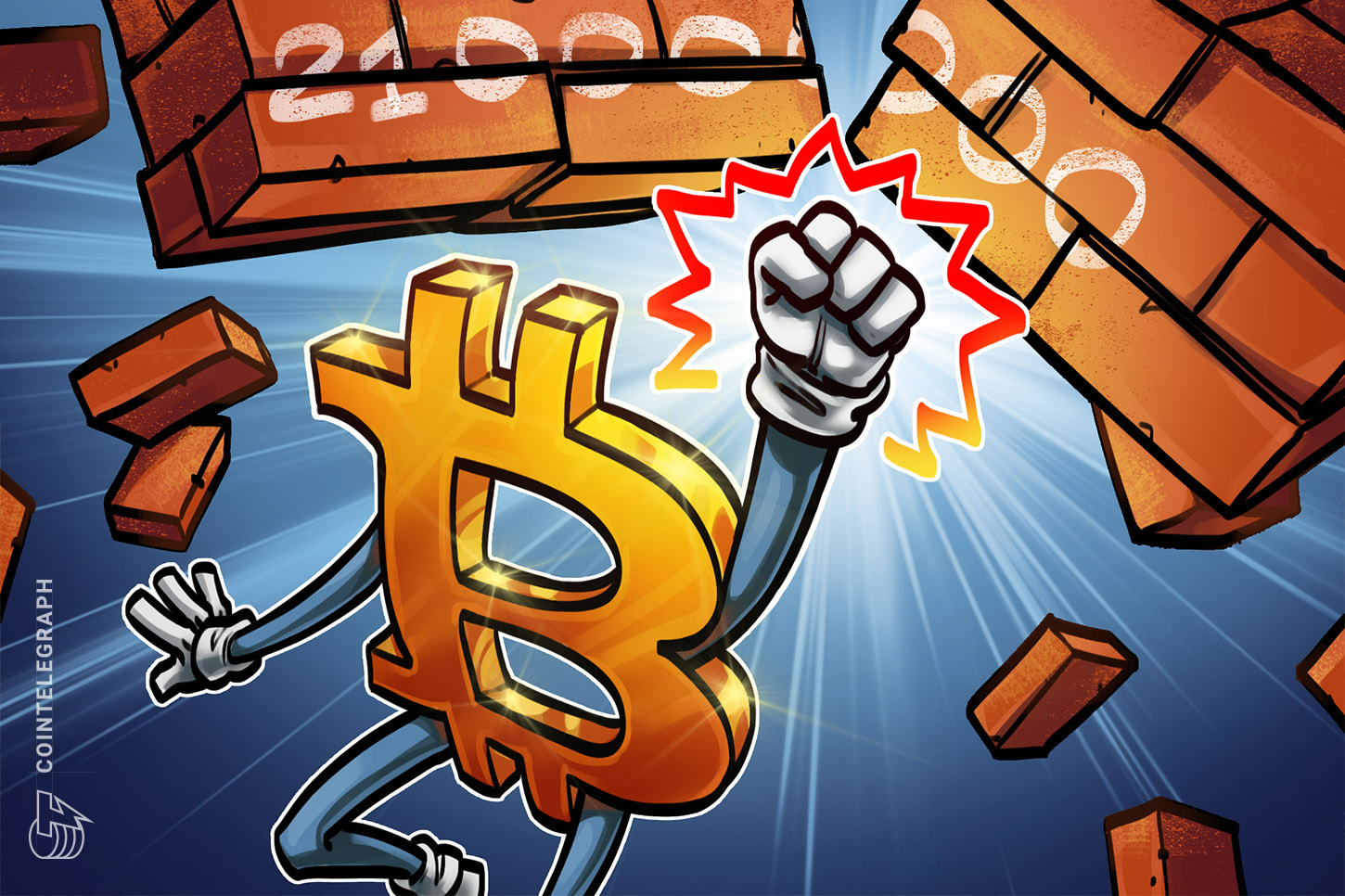
The proposed change to Bitcoin's supply would introduce a 4% annual issuance rate to offset the permanent loss of coins due to forgotten passwords and destroyed hardware.
StarkWare CEO Eli Ben-Sasson has proposed introducing a 4% annual inflation rate to Bitcoin to replace coins lost over time, challenging the cryptocurrency's famous 21 million supply limit.
Eli Ben-Sasson, the CEO of StarkWare, recently sparked a firestorm in the American crypto community by suggesting that Bitcoin (BTC) should move away from its fixed 21 million supply cap. This cap is the bedrock of Bitcoin's value proposition for millions of U.S. investors who view it as a hedge against the inflating U.S. Dollar. The debate comes at a crucial time as institutional adoption in the States reaches record highs through Spot ETFs.
The Argument for Constant Bitcoin Inflation
The core of Ben-Sasson's argument rests on the reality of lost private keys (the digital signatures required to spend crypto). Over the last fourteen years, millions of BTC have been sent to "burn addresses" or lost on discarded hard drives. Ben-Sasson suggests that without a small amount of new issuance, the total usable supply of Bitcoin will eventually dwindle to zero.
By implementing a 4% annual inflation rate, the network could theoretically replace these lost assets. This would ensure there is always enough liquidity—the ease with which an asset can be turned into cash—to facilitate global trade and payments. However, this idea flies in the face of the Bitcoin Halving, a pre-programmed event that cuts the reward for mining new blocks in half every four years.
Why Bitcoin's Scarcity Matters to Investors
For most American retail investors, the main draw of Bitcoin is its deflationary nature. Unlike the Federal Reserve, which can print more USD, Bitcoin’s code is currently immutable (unchangeable). If the supply cap were removed, Bitcoin could lose its status as "digital gold." According to data from CoinGecko, Bitcoin remains the dominant market force precisely because of this mathematical certainty.
"Bitcoin is the first global, decentralized, digital money with a capped supply. Changing that cap would violate the social contract that millions of users signed up for."
Technical Hurdles to Changing the Cap
- Consensus: Over 51% of the network nodes (computers running the software) must agree to the change.
- Hard Fork: If only some users agree, Bitcoin would split into two different versions, creating market chaos.
- Mining Rewards: Miners currently rely on block rewards; a permanent 4% inflation would drastically change their long-term revenue models.
The Impact of Lost Coins on Liquidity
While the fixed supply creates value, it also creates a "ghost economy." Estimates suggest that nearly 20% of the currently circulating 19.7 million BTC may be lost forever. Ben-Sasson argues that a fixed issuance model is more sustainable for a global currency than a strictly dwindling one.
- Initial coins are mined to secure the network.
- Private keys are lost or owners pass away without leaving instructions.
- The remaining supply becomes more concentrated and less liquid.
- High volatility increases as smaller trades move the price more significantly.
What This Means for USA Investors
If Bitcoin were to ever adopt an inflationary model, the IRS tax treatment could become even more complex. Currently, U.S. investors benefit from the long-term capital gains treatment of an appreciating scarce asset. High inflation could stabilize the USD price but might reduce the explosive growth potential that U.S. traders expect on platforms like Coinbase and Kraken.
Furthermore, the SEC (Securities and Exchange Commission) has largely viewed Bitcoin as a commodity because of its decentralized and capped nature. Any move to a controlled inflation model dictated by a small group of developers could potentially re-open the debate on whether Bitcoin should be classified as a security. For now, the 21 million cap remains the "gold standard" of the crypto world, and most American holders appear unwilling to let that go.
Future Outlook: Will the Code Change?
The likelihood of this change occurring in the near term is virtually zero. The Bitcoin community is notoriously resistant to "hard forks" (major software updates that aren't backward compatible). Most experts believe that the Lightning Network—a secondary layer for faster, cheaper payments—will solve the liquidity issues without needing to print more coins.
For the average HODLer (a person who holds crypto long-term), this debate serves as a reminder to secure your seed phrase (a series of 12-24 words used to recover a wallet). As long as coins continue to be lost, the remaining supply becomes statistically rarer, potentially driving the value higher for those who keep their keys safe.
Key Takeaways
- Analyze the potential impact of changing Bitcoin's core 'hard money' supply mechanics.
- Evaluate why lost private keys could lead to a liquidity crunch for global BTC users.
- Understand the technical difficulty of overwriting the Bitcoin consensus code.
- Recognize the risks inflation poses to Bitcoin's status as a 'digital gold' store of value.