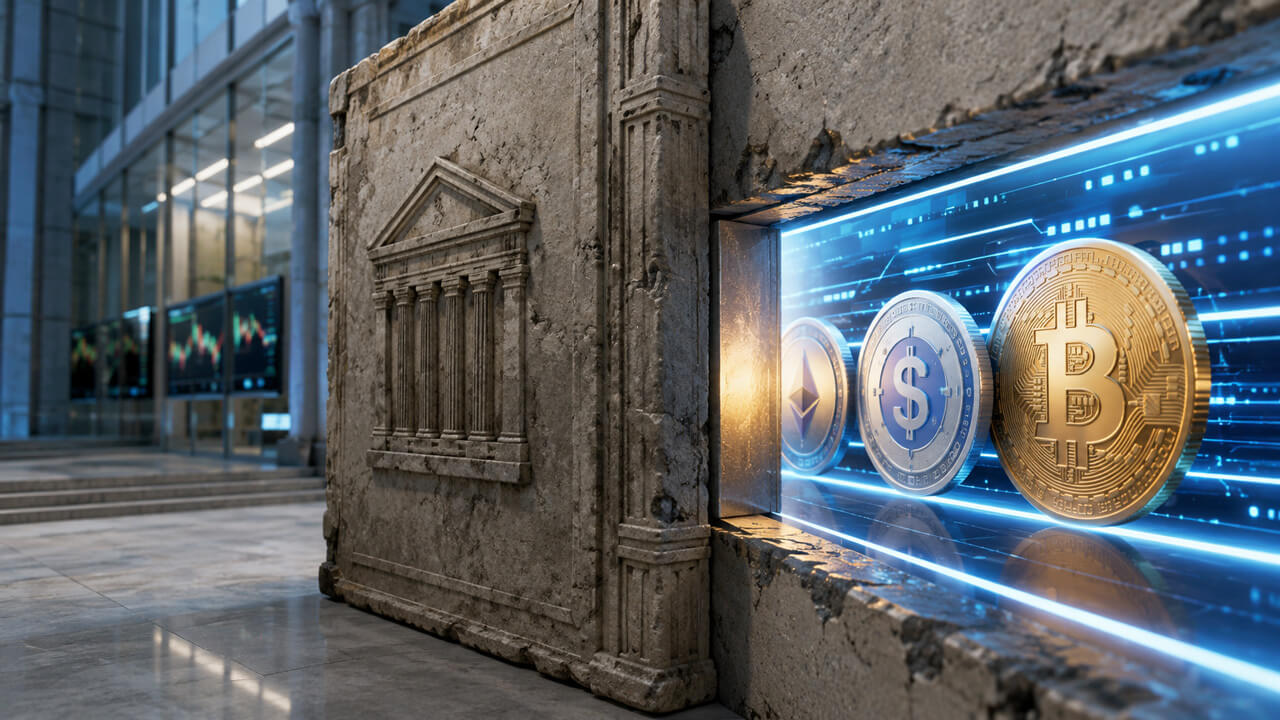
Traditional financial institutions are legally allowed to handle digital assets, but outdated global banking standards make holding crypto nearly impossible for most US banks.
While US banks now have legal permission to custody Bitcoin and issue stablecoins, strict capital requirement rules treat digital assets as high-risk, making it too expensive for many traditional lenders to enter the market.
As of late 2024, the path for American banks to offer Bitcoin custody or settle tokenized funds is officially open. However, a major hurdle remains: the international capital rulebook known as the Basel Committee standards. These rules dictate how much cash a bank must keep in reserve for every dollar of an asset they hold.
The High Cost of Holding Bitcoin
The Basel Committee on Banking Supervision has categorized crypto into two groups. Group 1 assets include tokenized traditional assets and some stablecoins (digital coins pegged to the US Dollar). These are treated similarly to stocks or bonds.
However, Bitcoin and Ethereum fall into Group 2 assets. Under current rules, these carry a 1,250% risk weighting. This means for every $100 of Bitcoin a bank holds, they might be required to hold nearly $100 in capital reserves. This makes the service extremely expensive for banks to operate.
"The current capital framework treats a Bitcoin position as something close to a guaranteed loss from a regulatory perspective, even if the market value is surging."
According to data tracked by CoinGecko, the total crypto market cap remains highly volatile, which is exactly why regulators are hesitant to lower these guardrails. For a US bank, this volatility requires a massive financial cushion that could be used more profitably elsewhere.
How This Impacts Institutional Access
Because the cost of holding these assets is so high, major US institutions like JPMorgan or Bank of America have been slow to offer direct crypto custody (secure storage of digital keys). While you can buy a Spot Bitcoin ETF (Exchange Traded Fund) through a brokerage, your local bank likely won't let you store your actual Bitcoin in their vault yet.
This creates a divide in the market:
- Retail investors use exchanges like Coinbase or Kraken.
- Wealthy individuals use specialized trust companies.
- Institutional players remain trapped by capital efficiency problems.
The Role of Tokenization
Banks are much more interested in tokenization (putting traditional assets like real estate on a blockchain). Because tokenized assets fall into Group 1, they don't face the same 1,250% penalty. This is why we see more focus on "private blockchains" than on public networks like Bitcoin.
What This Means for USA Investors
For the average American investor, these rules mean that traditional banking integration is still years away. While the SEC (Securities and Exchange Commission) has allowed ETFs, they have not yet pressured the Federal Reserve to relax Basel III or IV standards for banks.
- Taxes: The IRS treats crypto as property. If your bank held your crypto, they would likely handle the 1099-B reporting for you, much like a stock account.
- Security: Without bank involvement, you are responsible for your own private keys or must trust a third-party exchange.
- Regulation: Until the SEC and CFTC (Commodity Futures Trading Commission) align with international bank regulators, the status quo will remain.
Most US investors will continue to use centralized exchanges (CEXs) for the foreseeable future. While banks are legally "allowed" to enter the space, the math simply doesn't add up for them to join the party just yet.
Looking Ahead: Regulatory Shifts
There is growing pressure from the US Congress to change SAB 121 (Staff Accounting Bulletin 121), an SEC rule that mirrors these international hurdles. If SAB 121 is overturned or modified, it could provide a loophole for US banks to bypass the strictest parts of the Basel framework.
Investors should watch for updates from the Office of the Comptroller of the Currency (OCC). The OCC has the power to clarify how national banks can manage digital wallets, which could eventually lower the barrier for traditional finance to embrace decentralized technology.
Key Takeaways
- Identify why 'Group 2' crypto assets face a 1,250% risk weighting under the current Basel framework.
- Recognize that high capital costs prevent banks from offering competitive crypto custody services.
- Understand the disconnect between legal permission to hold crypto and the financial feasibility of doing so.
- Evaluate how these rules may push US investors toward retail-focused platforms like Coinbase or Kraken.
- Monitor how the SEC and Federal Reserve might adjust these global standards for American soil.