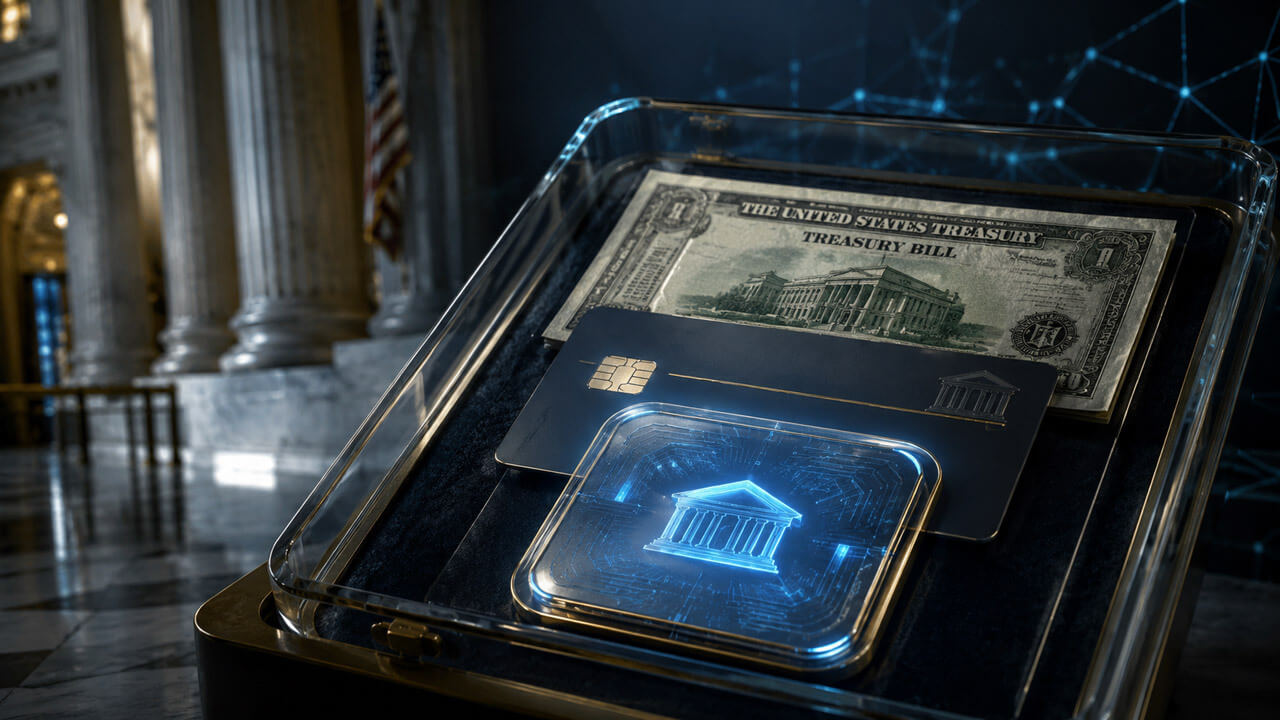
Wall Street is building a bridge between traditional finance and blockchain by turning $407 million of US Treasury debt into tokenized collateral that can be used directly in the crypto market.
Wall Street is successfully transforming $407 million in US Treasury funds into digital tokens, creating a stable and regulated collateral layer that connects traditional government debt with decentralized finance.
A significant shift is happening in how the financial world views digital assets. Major financial institutions across the United States are no longer just looking at Bitcoin; they are busy tokenizing (converting a physical asset into a digital record on a blockchain) government bonds.
This $407 million movement represents a turning point for US investors. It transforms Treasury bills, the world's safest asset, into liquid tokens that can move instantly across global networks. This solves a major problem: the lack of high-quality, regulated collateral in the decentralized finance space.
The Rise of Tokenized Sovereign Debt
For years, the idea of putting government debt on a blockchain felt like a distant experiment. Today, it is a functional reality. Institutional players are creating on-chain ownership records that provide a transparent view of who owns what at any given second.
These funds are not just static accounts. They use programmable transfer rails (software code that automates how money moves) to ensure transactions happen without the need for manual bank processing. This allows for 24/7 movements that traditional US banking hours simply cannot support.
By using CoinGecko to monitor the growing market cap of Real World Assets (RWAs), investors can see that this sector is quickly becoming a foundational pillar of the modern crypto economy.
Why Collateral Matters for Digital Markets
In the world of finance, collateral is the security you pledge to back a loan. Historically, crypto markets relied on volatile assets like Ethereum or highly centralized stablecoins. This created massive risks during market crashes.
By introducing US Treasuries (debt issued by the American government) as collateral, the industry gains a stabilizer. These tokenized funds allow investors to earn a yield—the interest paid by the government—while simultaneously using that value to participate in other digital opportunities.
"The integration of Treasury yield into the digital asset ecosystem is the missing link that brings institutional confidence to the blockchain."
Current developments suggest that the 'missing collateral layer' of crypto is finally being filled by the same assets that back the global financial system. This creates a more robust and less speculative environment for long-term participants.
How Institutional Rails Work
The process of tokenizing debt involves several specific steps designed to keep the system secure and compliant with US regulations:
- Asset Custody: A regulated bank holds the actual US Treasury bonds in a secure vault.
- Token Minting: A digital token is issued on a blockchain, representing a 1:1 share of that specific bond fund.
- Verification: Smart contracts verify that every token in circulation is 100% backed by real-world assets.
This structure provides a level of transparency that traditional brokerage accounts often lack. In the old system, it could take days to settle a trade; in the new system, it happens in seconds.
What This Means for USA Investors
For American investors, the tokenization of Treasuries brings several unique considerations. First, the IRS tax treatment of these assets is generally consistent with traditional funds, where interest earned is treated as taxable income, even if it stays on the blockchain.
From a regulatory standpoint, the SEC (Securities and Exchange Commission) and the CFTC (Commodity Futures Trading Commission) maintain strict oversight of these products. Most of these $407 million in funds are currently restricted to "accredited investors"—those with high net worth—though retail access via major platforms like Coinbase or Kraken is expected to grow as laws evolve.
- Check if your preferred US exchange offers RWA (Real World Asset) tokens.
- Consult a tax professional about how on-chain yield is reported on Form 1040.
- Verify that the token issuer is registered to operate within your specific US state.
The Future of On-Chain Finance
As more money moves into these tokenized funds, we expect to see a decrease in stablecoin (crypto assets pegged to the US Dollar) volatility. When a stablecoin is backed by actual US Treasuries rather than opaque commercial paper, trust in the system increases.
This $407 million is just the beginning. As Wall Street builds out these layers, the line between your E*TRADE account and your crypto wallet will likely disappear. The ultimate goal is a unified financial system where USD-denominated assets move freely between the old world and the new.
Summary of the Shift
We are seeing the professionalization of the crypto industry. By utilizing the $27 trillion US Treasury market as backstop, these new funds provide a level of security that was previously impossible. For the intermediate investor, this is a signal that the "Wild West" era of crypto is being replaced by a more stable, institutional-led era.
Key Takeaways
- Identify how tokenized government debt provides a stable 'risk-free' yield for on-chain portfolios.
- Recognize the shift from speculative assets to institutional-grade collateral in the DeFi ecosystem.
- Evaluate the role of programmable transfer rails in making traditional finance faster and 24/7.
- Understand the impact of major financial institutions moving real-world assets into the crypto space.
- Assess the growing demand for transparent, blockchain-based ownership records for sovereign debt.