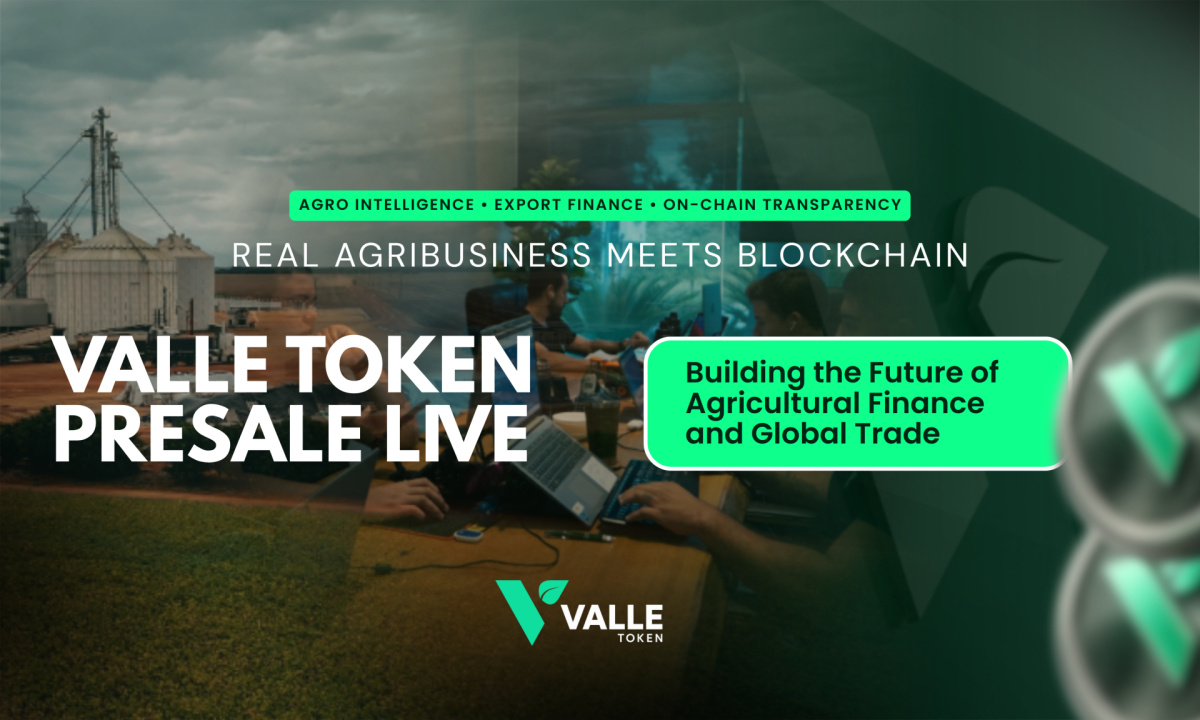
Valle Capital Token is a decentralized ecosystem that enables the tokenization of Real World Assets (RWA) specifically focused on the global agribusiness sector.
Valle Capital Token is a new blockchain ecosystem designed to bridge the gap between traditional agribusiness and digital finance through the tokenization of Real World Assets (RWA).
As the digital finance landscape evolves, a new player has emerged to connect the soil with the blockchain. Valle Capital recently launched its native token, signaling a major shift in how investors view Real World Assets (RWA)—digital tokens that represent physical assets like property, gold, or in this case, agricultural production. For U.S. investors navigating a volatile market, this launch represents an attempt to back volatile digital assets with the stability of food production and land value.
Understanding Real World Assets in Agribusiness
The concept of RWA tokenization (the process of converting physical assets into digital tokens on a blockchain) is gaining massive traction. By digitizing agricultural yields and land value, Valle Capital allows for fractional ownership (owning a small piece of a larger asset rather than the whole thing). This allows smaller participants to enter markets that were previously reserved for institutional giants.
In the agribusiness context, this means that the value of a token is tied to tangible factors like crop yields, livestock, or land appreciation. This creates a bridge between DeFi (decentralized finance, which uses code to replace banks) and the physical world. For a deeper dive into these concepts, you can check out this Investopedia DeFi explainer to see how smart contracts power these systems.
The Tech Stack Behind Valle Capital
The Valle Capital ecosystem relies on a robust technological framework to ensure transparency and security. By using blockchain ledgers, the project provides an immutable (unchangeable) record of asset ownership and productivity. This is vital for supply chain verification, ensuring that the agricultural products backing the tokens actually exist and meet quality standards.
"Tokenizing real-world commodities like agriculture represents the next multi-trillion dollar frontier for blockchain, providing liquidity to illiquid markets."
The system uses Smart Contracts (self-executing code with the terms of the agreement directly written into lines of code). These contracts automatically distribute rewards or yields to token holders based on the performance of the underlying agricultural assets. This automation reduces the need for middle-men and lowers administrative costs for the end investor.
How the Ecosystem Benefits Global Markets
Agribusiness is often plagued by high entry barriers and a lack of liquidity (the ease with which an asset can be converted to cash). Valle Capital aims to solve this by creating a global marketplace for agricultural value. Key benefits of this ecosystem include:
- 24/7 Market Access: Unlike traditional commodity exchanges, crypto markets never close.
- Increased Transparency: Every transaction and asset backing is visible on a public ledger.
- Global Liquidity: Farmers can access capital from worldwide investors instantly.
- Lower Barriers: Small-scale investors can participate in large-scale farming yields.
What This Means for USA Investors
For American investors, the launch of an RWA project like Valle Capital brings several unique considerations. First, the IRS (Internal Revenue Service) treats crypto-assets as property. Any gains made from RWA tokens are subject to capital gains taxes, just like stocks or Bitcoin. It is essential to track the USD price basis at the time of purchase to ensure accurate tax reporting.
From a regulatory standpoint, the SEC (Securities and Exchange Commission) and the CFTC (Commodity Futures Trading Commission) are closely watching the RWA space. If a token is marketed as an investment in a common enterprise with an expectation of profit, it may be classified as a security under the Howey Test (the legal standard used in the US to determine if an asset is a security).
Currently, American users should check for availability on major platforms like Coinbase, Kraken, or Gemini. While many RWA tokens start on decentralized exchanges (DEXs), institutional-grade assets often seek US-regulated on-ramps to tap into the American capital market. Always check your specific state laws, as states like New York have stricter "BitLicense" requirements.
Future Outlook for Tokenized Agriculture
The path forward for Valle Capital involves expanding the types of agribusiness assets available for tokenization. This journey typically follows a specific lifecycle:
- Asset Identification: Selecting high-yield agricultural projects.
- Legal Layering: Wrapping the physical asset in a legal structure that permits tokenization.
- Token Issuance: Minting the digital tokens on a blockchain for investors.
- Market Integration: Listing tokens on exchanges for secondary market trading.
As the Total Value Locked (TVL)—the amount of capital held in a protocol—grows, these projects become more stable. For the intermediate investor, watching the RWA sector is a way to diversify a portfolio away from purely speculative meme coins and toward assets with intrinsic, real-world utility.
Key Takeaways
- Connects traditional agricultural productivity with decentralized finance liquidity.
- Utilizes Real World Asset (RWA) tokenization to provide transparency and fractional ownership.
- Offers a structured ecosystem for investors to participate in global food supply chain growth.
- Provides a digital alternative to traditional agricultural commodities trading through blockchain tech.