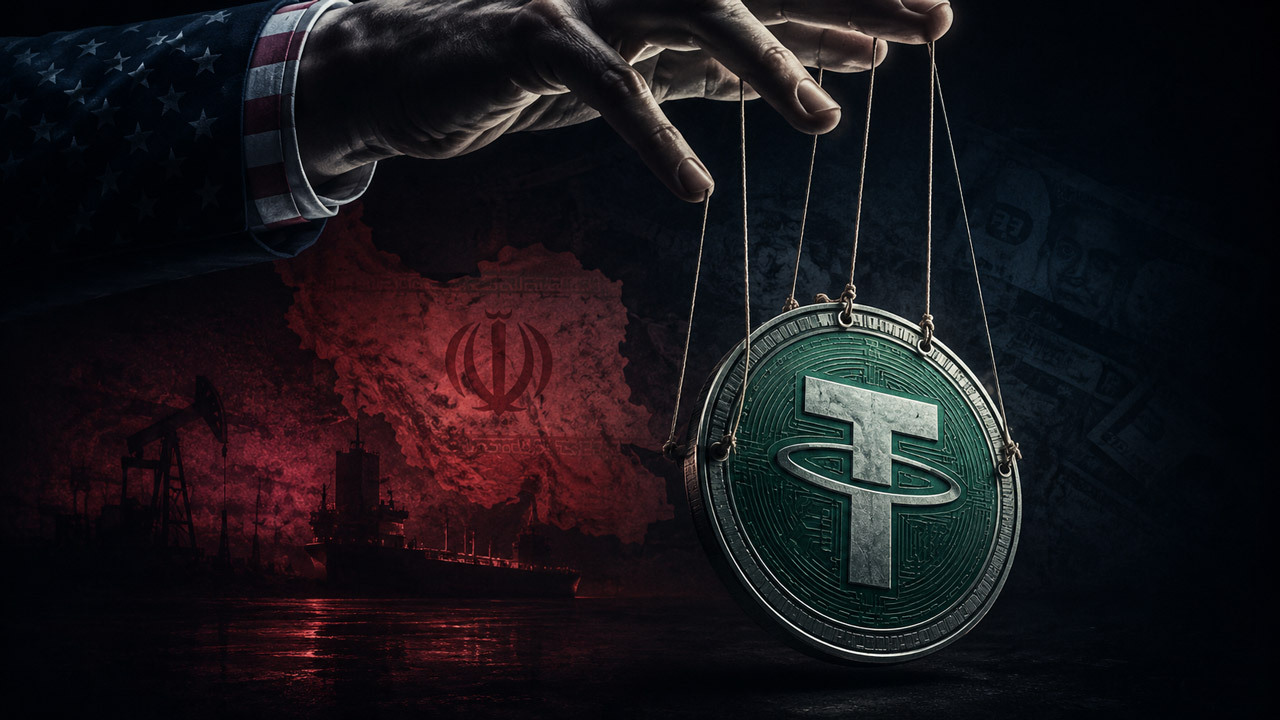
The US government is now effectively using the Tether (USDT) stablecoin as a strategic financial tool to enforce international sanctions and freeze hundreds of millions of dollars in illicit funds.
The United States government has successfully pressured Tether to freeze nearly $500 million in USDT linked to Iran, signaling a massive shift in how federal agencies enforce international sanctions using blockchain technology.
American federal authorities have coordinated with Tether to freeze approximately $475 million worth of assets tied to Iran over the last three months. This development highlights a major evolution in how the US Treasury monitors digital money. This isn't just about global politics; for US investors, it clarifies that 'centralized' tokens are subject to the same rules as traditional bank accounts.
The $500 Million Freeze: How It Happened
The latest enforcement action reached a fever pitch on July 14, when the US government sanctioned four specific digital wallets on the Tron blockchain. These wallets held roughly $131 million in USDT (a stablecoin pegged 1-to-1 with the US dollar).
By compelling the issuer of the token to blacklist these addresses, the funds become effectively 'dead' and cannot be moved or traded. This strategy allows the US to project power far beyond the borders of the traditional Swift banking system.
"The ability to freeze assets on a public ledger demonstrates that centralized stablecoins are not a loophole for evading US financial oversight."
Federal Oversight of the Tron Network
While many investors associate crypto with Bitcoin or Ethereum, much of the world's stablecoin volume moves across the Tron network. This network is popular for its low fees but has increasingly come under the microscope of US investigators. According to data from CoinGecko, Tether remains the largest stablecoin by market cap, making it a primary target for regulatory compliance.
The US government’s ability to track these movements suggests that on-chain analytics (software used to trace blockchain transactions) have become incredibly sophisticated. Federal agents can now trace funds from sanctioned entities to specific smart contracts (self-executing code on the blockchain) in real-time.
Key Facts About Recent USDT Freezes:
- Total Frozen: Nearly $500 million in a 90-day window.
- Target Entities: Wallets linked to Iranian state interests and prohibited trade.
- Network Focus: Predominantly addresses on the Tron blockchain.
- Collaboration: Direct cooperation between Tether and the US Department of Justice.
The Weaponization of Stablecoins
The term "financial weaponization" refers to using access to the US dollar as a way to influence foreign policy. Because Tether is backed by US Treasuries (government debt), the company has a strong incentive to stay on the good side of American regulators.
This creates a paradox for crypto users. While the technology is decentralized, the issuance of the currency is not. If a US agency flags a wallet, Tether has the technical ability to "freeze" those specific digital tokens globally, rendering them worthless to the holder.
What This Means for USA Investors
For the average American investor using platforms like Coinbase, Kraken, or Gemini, this news carries several important implications. First, it reinforces that the SEC (Securities and Exchange Commission) and CFTC (Commodity Futures Trading Commission) view dollar-linked tokens as high-priority assets for oversight.
Second, from a tax perspective, the IRS tracks these movements closely. If your wallet interacts with a sanctioned address—even unknowingly—your account could be frozen at the exchange level. Always ensure you are practicing "clean" wallet hygiene and avoiding unverified P2P (peer-to-peer) trades.
- Wallet Security: Understand that centralized stablecoins like USDT and USDC are not "censor-proof."
- Compliance: US-based exchanges will likely increase their scrutiny of incoming Tron-based USDT deposits.
- USD Dominance: The US dollar's role in crypto is actually strengthening through these enforcement actions.
The Future of Decentralized Finance (DeFi)
As centralized coins like Tether become more transparent to the government, some investors are looking toward DeFi (decentralized finance) alternatives. However, even these protocols often use USDT for liquidity, meaning the reach of the US government is pervasive throughout the entire ecosystem.
Moving forward, US investors should expect more "integrated enforcement" where the lines between crypto companies and federal agencies continue to blur. Your digital dollars are only as private as the company that issues them allows them to be.
Key Takeaways
- Identify how the US government neutralized $475 million in Iranian USDT in under 90 days.
- Recognize Tether's growing compliance with US Treasury and law enforcement requests.
- Understand the vulnerability of centralized stablecoins to government-ordered wallet freezes.
- Assess the implications for privacy-focused US investors in the current regulatory climate.