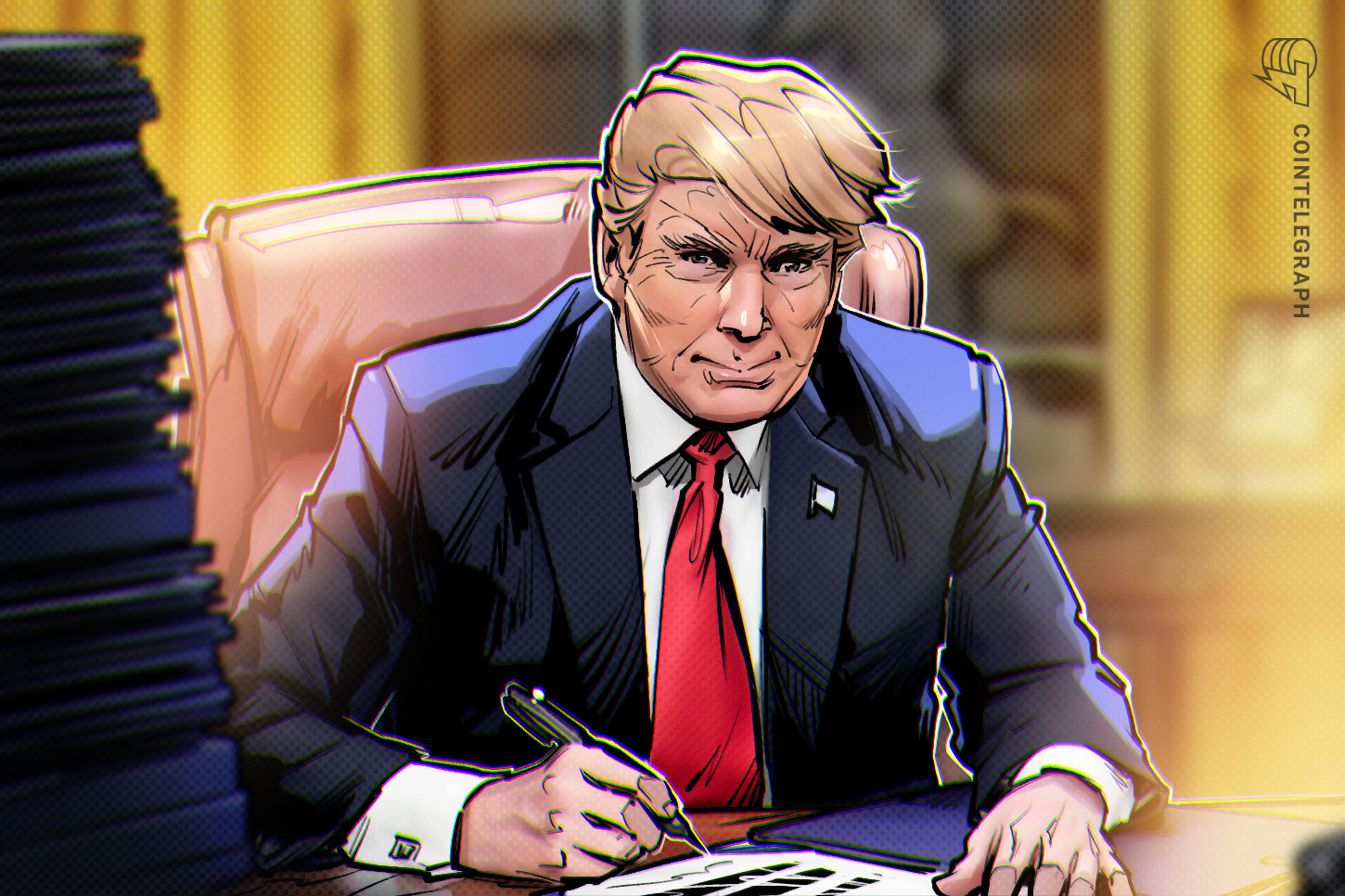
President Trump is convening a high-stakes meeting with US Senators this Thursday to push the CLARITY Act toward a final vote before the legislative summer break.
President Trump is meeting with key US Senators this Thursday to finalize negotiations on the CLARITY Act, a landmark bill designed to create a federal regulatory framework for stablecoins before the August recess.
The meeting represents a pivotal moment for American digital asset policy. As the Senate approaches its August recess, negotiators are working around the clock in Washington, D.C., to bridge the gap between partisan interests and industry needs. For US investors, this signals that the federal government is moving closer to formalizing the status of stablecoins (cryptocurrencies designed to stay at a fixed value, usually $1.00).
Inside the CLARITY Act Negotiations
The CLARITY Act focuses primarily on how stablecoins are issued and backed within the United States. The bill aims to ensure that every digital dollar issued is backed by safe, liquid assets like US Treasuries. This meeting between the executive branch and Senate leaders suggests that the White House is ready to put its weight behind the proposal to ensure it clears the finish line.
Legislators are dealing with complex questions regarding who can issue these tokens. Currently, many stablecoins operate in a legal gray area without a clear federal regulator. According to data from CoinGecko, the stablecoin market represents over $160 billion in total value, making it a systemic piece of the global financial puzzle that the US government can no longer ignore.
"The goal is to create a framework that protects consumers without stifling the innovation that makes the American fintech sector the envy of the world."
Why Uniform Regulation Matters for Your Wallet
For the average investor using platforms like Coinbase or Kraken, the CLARITY Act could mean more safety but also more rules. Regulatory clarity often leads to increased institutional adoption, as big banks feel more comfortable holding assets that have a clear legal definition. This could potentially increase the liquidity (the ease of buying or selling an asset without changing its price) of the entire crypto market.
The bill likely includes provisions for:
- Mandatory Audits: Issuers must prove they actually have the dollars they claim to hold.
- Operational Standards: Strict rules on the technology and cybersecurity used by token issuers.
- Consumer Protection: Procedures for what happens to your money if a stablecoin issuer goes bankrupt.
The Push for the August Recess Deadline
Timing is everything in Washington. The Senate's August recess is a hard deadline where legislative momentum often dies. By meeting this Thursday, the Trump administration is signaling that this is a top-tier economic priority. If the bill passes the Senate, it would move to the House of Representatives, where similar crypto-friendly legislation has already seen bipartisan support.
- The President and Senators agree on final bill language.
- The Senate Banking Committee holds a formal markup session.
- A full floor vote is scheduled before the second week of August.
Overcoming Partisan Hurdles
While there is broad agreement that stablecoins need rules, the friction lies in "who" gets to be the primary cop on the beat. Some lawmakers want the Federal Reserve (the US central bank) to have total control, while others prefer state-level regulators to maintain their existing authority over many financial companies.
What This Means for USA Investors
For US-based investors, this legislation will directly impact how you interact with USD-pegged assets. The IRS treats stablecoins as property, meaning every time you swap a stablecoin for Bitcoin, it is technically a taxable event. The CLARITY Act may not change tax law, but it will certainly change the reporting requirements for exchanges like Gemini and Robinhood.
Furthermore, the SEC (Securities and Exchange Commission) and the CFTC (Commodity Futures Trading Commission) have long debated whether stablecoins are securities or commodities. This bill seeks to provide a definitive answer, likely cooling the aggressive enforcement actions seen over the last few years. If you hold USDC or USDT, these laws ensure that the one-to-one peg to the US Dollar remains a legal reality rather than just a promise by a private company.
The Future of Digital Dollars in America
Regulatory certainty is often the precursor to a bull market (a period of rising prices). By establishing these ground rules, the US is positioning itself to remain the global hub for digital finance. This Thursday’s meeting isn't just a political photo op; it’s a foundational step in writing the American rulebook for the next generation of money.
Key Takeaways
- Accelerate the legislative process for the CLARITY Act through direct White House involvement.
- Establish clear federal guidelines for USD-pegged stablecoins like USDC and USDT.
- Target a legislative win before the upcoming Senate August recess period.
- Provide much-needed legal certainty for US-based crypto exchanges and financial institutions.
- Integrate digital assets into the formal US financial system under strict oversight.