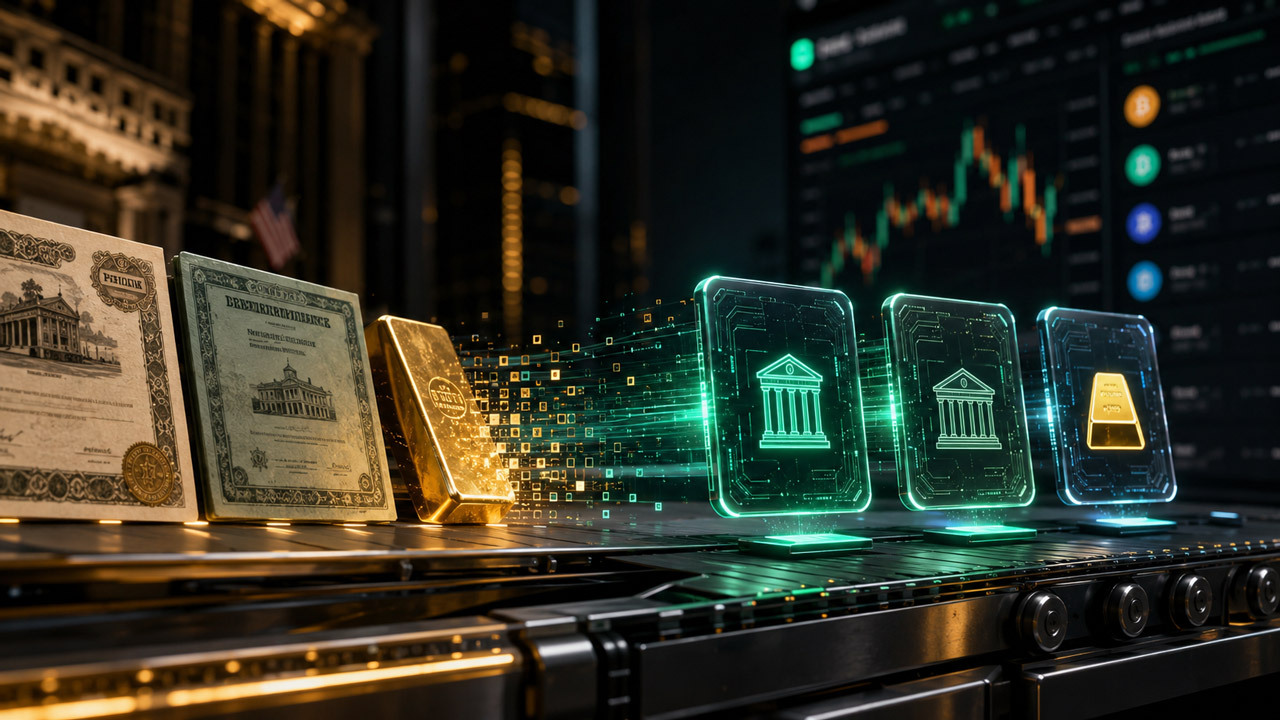
Cryptocurrency exchanges are rapidly evolving into the primary distribution centers for traditional Wall Street financial products through the use of blockchain-based tokenization.
Major cryptocurrency exchanges are transforming into primary distribution hubs for boutique Wall Street assets through tokenization and real-world asset (RWA) derivatives.
The financial landscape in 2026 has witnessed a massive shift as centralized exchanges (CEXs) move beyond just Bitcoin and Ethereum. According to the latest market data, nearly one out of every five new listings on major platforms now belongs to the category of Real-World Assets (RWAs). This trend represents a fundamental change in how Americans and global investors access private equity, treasury bills, and blue-chip stocks.
The Surge of Real-World Asset Tokenization
Tokenization is the process of converting ownership rights of a physical or traditional asset into a digital token on a blockchain. This year, the industry has seen an unprecedented acceleration in these offerings. Data from CoinGecko suggests that the market capitalization of tokenized assets is outperforming many speculative altcoin sectors as institutional interest grows.
For the average investor, this means that the wall between "crypto" and "traditional finance" is effectively crumbling. Instead of needing a specialized brokerage for gold or a different account for international stocks, users can manage these holdings directly from their crypto wallets. The liquidity provided by crypto markets allows for fractional ownership, where investors can buy small portions of expensive assets.
Why Wall Street Is Migrating to Blockchain
Traditional financial institutions are choosing crypto exchanges as distribution channels because of their global reach and efficiency. Traditional stock markets operate on a T+2 settlement cycle (taking two days to finalize a trade), whereas blockchain settlements can happen almost instantly. This speed reduces risk and lowers the costs associated with middleman fees.
"The migration of legacy assets onto blockchain rails is not just a trend; it is a total overhaul of the global financial infrastructure that brings transparency to previously opaque markets."
Furthermore, the 24/7 nature of crypto markets is a major draw. Unlike the New York Stock Exchange, which closes on weekends and holidays, tokenized versions of assets trade around the clock. This allows investors to react to global news in real-time, providing a level of agility that was previously impossible in the legacy system.
Current Asset Categories on Exchanges
- Tokenized Treasury Bills: Digital versions of US government debt that pay yield directly to the holder's wallet.
- Fractionalized Real Estate: Tokens representing a share of rental income from commercial or residential properties.
- Commodity Tokens: Digital assets backed 1:1 by physical gold, silver, or oil reserves.
- Tokenized Equities: Synthetic or backed versions of popular US stocks like Apple or Tesla.
Understanding the Distribution Shift
Historically, if a company wanted to distribute a new financial product, they relied on investment banks and retail brokerages. Today, crypto exchanges provide a ready-made ecosystem of millions of verified users. This shift has made tokenized assets the most-listed category across major exchanges in the first half of 2026.
- Onboarding: Users pass KYC (Know Your Customer) identity verification once on an exchange.
- Access: They can immediately swap stablecoins (cryptocurrencies pegged to the US Dollar) for tokenized assets.
- Yield: Many RWA tokens provide automated distributions, simplifying the dividend process.
What This Means for USA Investors
For investors based in the United States, the rise of tokenized assets brings both opportunity and complexity. The SEC (Securities and Exchange Commission) and CFTC (Commodity Futures Trading Commission) maintain a strict posture regarding what constitutes a security. This means that while global exchanges are booming with tokenized stocks, US-regulated exchanges like Coinbase, Kraken, or Gemini often have more limited selections to ensure compliance.
From a tax perspective, the IRS treats the sale of RWA tokens similarly to other crypto transactions. Every swap is a taxable event, and capital gains taxes apply based on the USD value at the time of the trade. US investors should be cautious about accessing "offshore" tokenized products via VPNs, as this can lead to legal complications and frozen accounts. Always ensure that the RWA provider is registered to offer services within your specific state, as some states have unique digital asset protections.
The Future of Desktop Trading
As we move deeper into 2026, the distinction between a "crypto exchange" and a "digital investment bank" will continue to blur. The convenience of having a unified portfolio—where one can hold Bitcoin, a tokenized rental property, and a piece of a US Treasury bond side-by-side—is becoming the new standard for intermediate investors. The goal for any US investor should be to stay informed on which platforms offer the most transparent proof-of-reserves for these backed assets.
Key Takeaways
- Monitor the rise of tokenized assets, which now account for 20% of new exchange listings.
- Understand how blockchain technology is replacing traditional brokerage distribution channels.
- Evaluate the efficiency of 24/7 trading for traditional stocks and bonds via crypto rails.
- Identify the regulatory hurdles facing US investors looking to access overseas tokenized markets.