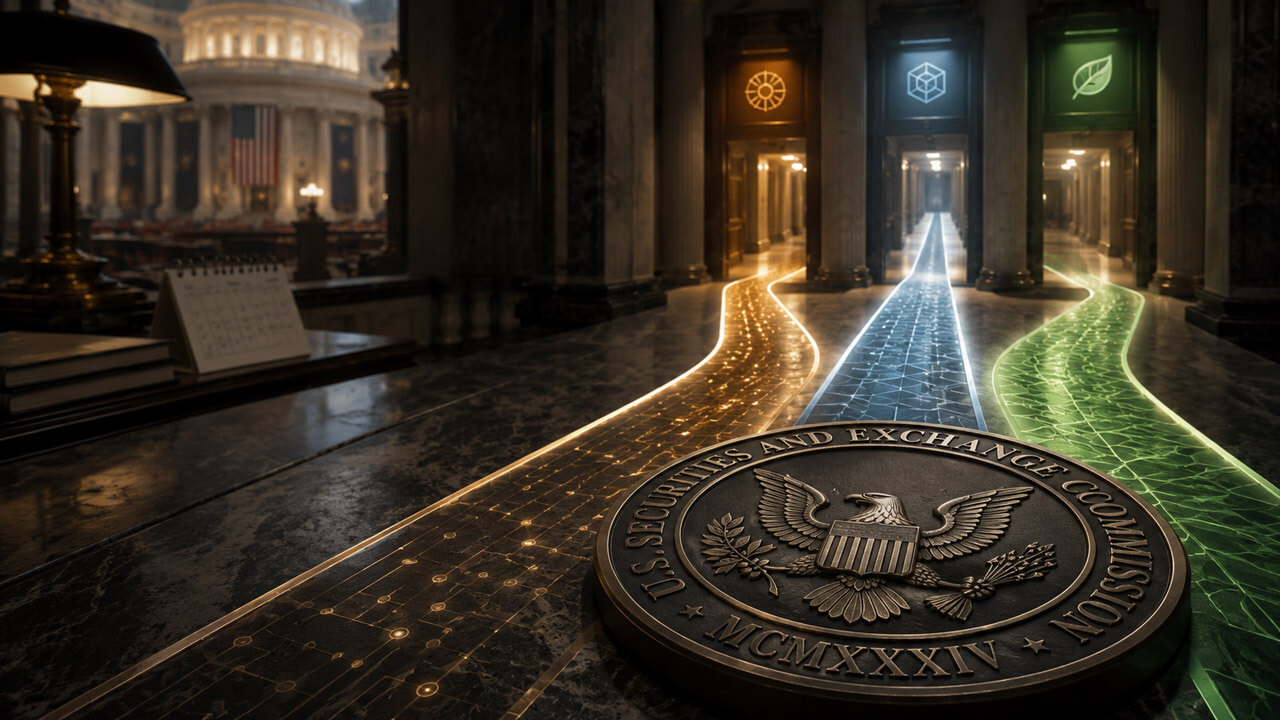
The SEC is accelerating its internal rulemaking process to regulate crypto issuers and trading platforms, likely finalizing standards before the U.S. Senate votes on the critical CLARITY Act.
The Securities and Exchange Commission (SEC) is moving forward with independent rulemaking for crypto issuers and brokers, potentially preempting the Senate's upcoming vote on the CLARITY Act.
Wall Street's top regulator is not waiting for Congress to act. As the Senate prepares for a pivotal August 7 deadline regarding the CLARITY Act—a bill designed to provide legal definitions for digital assets—the SEC is moving ahead with its own agenda. This move signals a race between legislative and regulatory bodies to control the trillion-dollar crypto market.
The SEC's Multichannel Regulatory Push
The Securities and Exchange Commission (SEC) has laid out a comprehensive agenda that splits the crypto industry into three distinct buckets. By fast-tracking Notice of Proposed Rulemaking (NPRM) tracks, the agency aims to set standards for issuers (entities that create tokens), broker-dealers (intermediaries who execute trades), and trading venues (exchanges where assets are bought and sold).
This decentralized approach allows the SEC to apply traditional financial standards to modern technology. For American investors, this means the rules governing your favorite tokens might change before the year ends. The focus remains on investor protection and ensuring that digital assets meet the same disclosure standards as stocks or bonds.
Understanding the CLARITY Act Timing
The Senate is currently racing toward an August 7 milestone for the CLARITY Act. This bill is significant because it seeks to distinguish between securities (investment contracts) and commodities (raw materials or goods like gold). If passed, it could limit the SEC's authority over certain digital assets.
"The regulatory landscape is shifting from enforcement-only to a structured rule-based environment, but the friction between the SEC and Congress creates temporary uncertainty for US markets."
However, by initiating the rulemaking process now, the SEC creates a regulatory framework that may already be in motion regardless of the Senate's final vote. This ensures that the agency maintains its oversight role over centralized exchanges and custodial services.
Impact on Crypto Issuers and Brokers
The SEC’s upcoming rules will likely require issuers to provide more transparent financial disclosures. According to data from CoinGecko, there are thousands of active digital assets, many of which the SEC believes are unregistered securities.
Key areas of focus for the SEC:
- Registration Requirements: Forcing token creators to register with the SEC similarly to public companies.
- Custody Rules: Ensuring that brokers keep client funds separate from company assets.
- Market Integrity: Preventing wash trading and price manipulation on digital asset platforms.
The Legislative vs. Regulatory Race
Why is the SEC moving so quickly? The agency likely wants to establish its territory before Congress can pass laws that might narrow the SEC's jurisdiction. This creates a complex environment for U.S. companies like Coinbase or Gemini, who must now navigate both potential new laws and strict SEC mandates simultaneously.
- The SEC issues a Notice of Proposed Rulemaking (NPRM).
- A public comment period allows industry leaders to voice concerns.
- The SEC reviews comments and issues a final rule.
- Compliance becomes mandatory for all U.S. operating firms.
What This Means for USA Investors
For the average American crypto hodler (someone who holds their assets long-term), this news impacts your day-to-day investing experience. If the SEC classifies more tokens as securities, U.S. exchanges like Coinbase, Kraken, and Gemini may be forced to delist certain assets to remain compliant. This could lead to USD price volatility as liquidity shifts.
From an IRS tax perspective, clearer rules from the SEC often lead to better reporting tools for investors. However, it also means the taxman has a clearer view of your transactions. Currently, the SEC and CFTC (Commodity Futures Trading Commission) are in a tug-of-war, but the outcome will ultimately dictate which state-level protections apply to you in places like New York or Wyoming.
Navigating the Path Forward
Investors should prepare for a period of transition. As the SEC and Senate both vie for control, the "wild west" era of crypto is rapidly ending. For intermediate investors, this means focusing on assets that have already demonstrated a commitment to transparency and compliance.
Stay tuned as the August 7 deadline approaches. Whether the CLARITY Act passes or the SEC's rules take flight first, the American crypto market is entering a new era of legal legitimacy and oversight.
Key Takeaways
- Recognize the SEC is drafting new rules for crypto issuers and trading venues separately from Congress.
- Monitor the U.S. Senate's August 7 deadline for the CLARITY Act which aims to define digital assets.
- Expect tighter compliance requirements for U.S.-based exchanges like Coinbase and Kraken.
- Watch for potential shifts in how 'broker-dealers' are defined within the decentralized finance space.