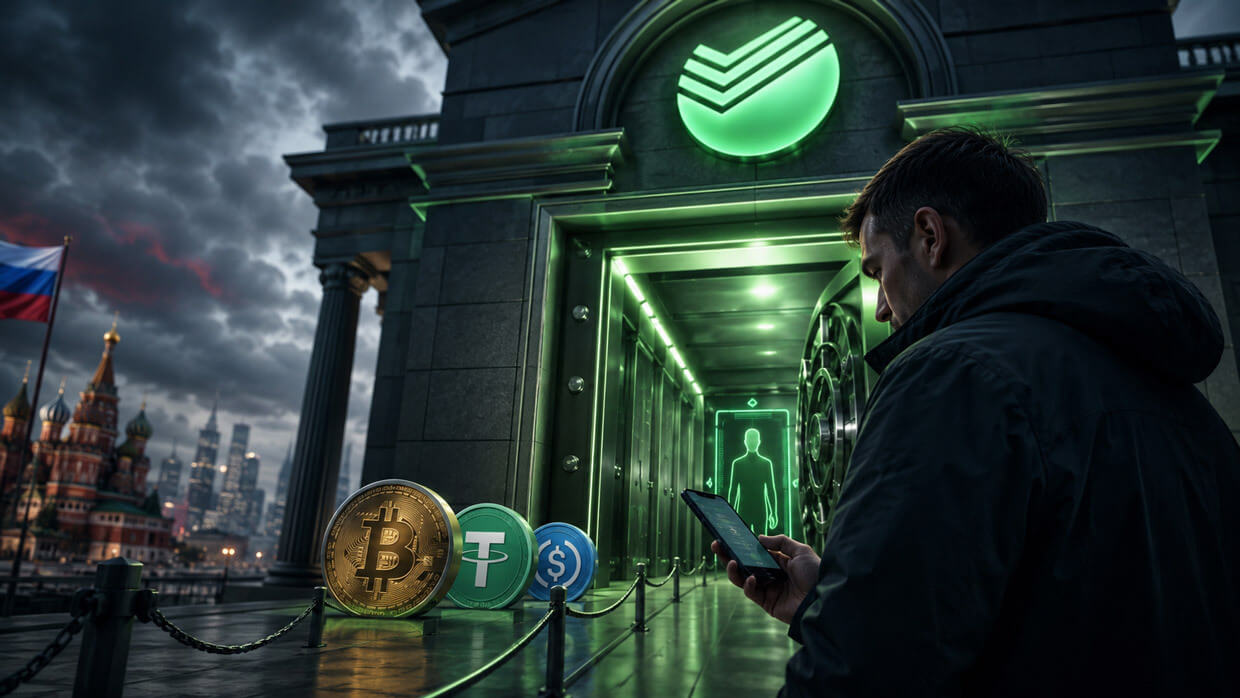
Russia is preparing to launch its first official crypto on-ramp this December, using state-owned Sberbank to provide a regulated gateway for digital asset custody and trading.
Russia is set to launch its first state-backed crypto on-ramp in December 2024 through Sberbank, marking a shift toward strictly regulated, bank-controlled digital asset access.
The Russian government is shifting its stance on digital finance by introducing a centralized infrastructure for cryptocurrency. Sberbank, the nation's largest lender, is expected to debut a crypto wallet that integrates directly with traditional banking services. This move signifies a major pivot from previous restrictive policies to a heavily supervised legal framework. For American investors, this development highlights the growing trend of state-controlled digital finance and its potential effects on global liquidity.
The Sberbank Crypto Integration
The new initiative allows Russian citizens to move funds between traditional bank accounts and digital assets through a controlled environment. By positioning a state-owned bank as the primary custodian (a party responsible for safeguarding assets), the Russian government ensures full visibility into every transaction. This centralized model is a direct contrast to the decentralized nature of early cryptocurrency adoption.
The expected December launch specifically targets retail users who have previously operated in a regulatory gray area. These users will now face strict limits and mandatory compliance (adherence to government rules) in exchange for legal protections. While this increases the security of the funds against common scams, it also eliminates the privacy that many crypto users value.
Regulated On-Ramps vs. Decentralization
In Russia, the price of legal access is now custody by the state. An on-ramp is the process of converting fiat currency (government-issued money like the US Dollar or Ruble) into digital assets. When this process is managed by a state entity, the government can effectively "freeze" or "throttle" access at will. Sberbank's role is not just as a provider, but as a gatekeeper.
- User Monitoring: Every wallet will be linked to a verified national identity.
- Transaction Limits: The state will likely cap how much value can be moved daily.
- Tax Collection: Automated reporting ensures the tax authorities receive their share.
Global Market Implications
As one of the world's largest economies integrates crypto, the impact on global data is substantial. Investors often look at CoinGecko to track how regional adoption affects total market capitalization and trading volume. If a significant portion of Russia's capital flows into regulated channels, we may see a shift in how Bitcoin and stablecoins (cryptocurrencies pegged to a stable asset like the US Dollar) are traded globally.
"The transition from an underground crypto economy to a state-managed one is a double-edged sword that provides legitimacy at the cost of total surveillance."
Observers note that this move is also a strategic attempt to bypass international sanctions. By creating internal digital asset rails, Russia aims to settle international trades without relying on the SWIFT banking system, which is currently dominated by the US Dollar.
What This Means for USA Investors
For investors in the United States, Russia's bank-controlled crypto model serves as a stark contrast to the American market's current trajectory. In the US, retail investors primarily use private platforms like Coinbase, Kraken, or Gemini to manage their holdings. While the SEC (Securities and Exchange Commission) and CFTC (Commodity Futures Trading Commission) provide oversight, they do not currently operate a state-owned exchange.
- Sanctions Compliance: US users must be extremely careful not to interact with Russian state-owned wallets, as this could lead to heavy IRS penalties or OFAC (Office of Foreign Assets Control) violations.
- USD Dominance: The emergence of state-backed crypto in Russia highlights the urgent conversation in Washington regarding a potential US Central Bank Digital Currency (CBDC).
- Tax Reporting: Unlike the Russian automated model, US investors must manually report capital gains on Form 8949.
Security and Custody Lessons
The Russian model emphasizes the importance of knowing who holds your keys. If a bank holds your digital assets, they are essentially in control of your wealth. US investors are encouraged to explore self-custody (storing crypto in a private wallet) to maintain the permissionless advantages of blockchain technology. While centralized exchanges offer convenience, the Sberbank situation reminds us that state-controlled finance can pivot toward censorship at any time.
Key Takeaways
- Monitor the December rollout of Sberbank's integrated crypto wallet for Russian citizens.
- Recognize that state-owned banks will now control the flow of retail crypto capital in Russia.
- Understand that legal access in Russia now requires strict compliance and government-monitored custody.
- Evaluate the impact of centralized state on-ramps on the broader decentralized ethos of crypto.
- Observe how this move aligns with Russia's broader strategy to bypass traditional western banking rails.