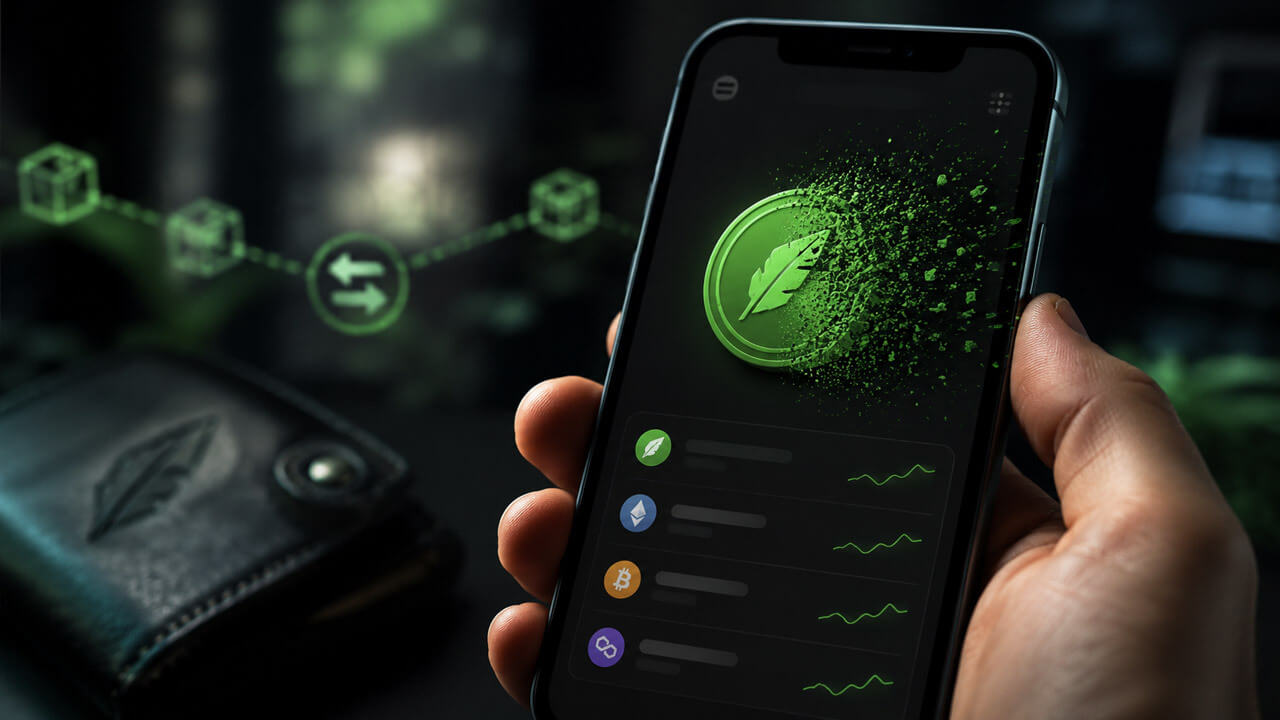
Users of the newly launched Robinhood Chain are reporting a technical anomaly where purchased tokens are vanishing from their digital wallets immediately after acquisition.
A critical technical glitch in the Robinhood Chain ecosystem is causing purchased tokens to vanish from user wallets, though private keys and other balances remain secure.
Early adopters of the Robinhood Chain (a new blockchain infrastructure) are facing a frustrating reality this week. Reports suggest that liquidity provided to certain token pairs is leadings to assets essentially "de-spawning" from user views. For American investors used to the seamless experience of the Robinhood stock app, this serves as a stark reminder of the risks inherent in experimental Web3 technology.
The Technical Glitch Behind the Vanishing Act
The issue appears rooted in the Relay system, which facilitates bridge transfers and token visibility across different networks. When users swap their assets for new Robinhood Chain tokens, the transaction records show success on the ledger, but the tokens do not appear in the wallet interface. This creates a state of panic for investors who see their balances drop to zero despite executing a valid trade.
Technical experts suggest this is a metadata or indexing error rather than a malicious hack. In simple terms, the wallet cannot "see" the tokens even though the blockchain says they are there. This is a common growing pain for new chains, but it is particularly high-profile given the Robinhood brand association.
"The money spent is effectively gone from the user's immediate control, even if the private keys remain untouched and secure."
Wallet Security and Private Key Integrity
The most important distinction for US investors to understand is the safety of their private keys (the secret codes that prove ownership of crypto). Early audits of the situation indicate that the glitch has not compromised the security of the wallets themselves. Unrelated assets, such as Bitcoin or Ethereum held in the same wallet, remain safe and visible.
Investors are currently being advised to avoid further swaps on the Robinhood Chain until a patch is deployed. Data from CoinGecko shows that market volatility often spikes during these technical outages, as fear-uncertainty-and-doubt (FUD) spreads through social media channels like X and Discord.
How to Protect Your Assets
If you are exploring new blockchain frontiers, following a strict security protocol is essential. Here are the steps recommended by security researchers:
- Use a burner wallet: Never test a new chain with your primary savings.
- Verify contract addresses: Ensure you are interacting with the official token contract.
- Check network status: Look for official announcements from the Relay team.
- Export transaction logs: Keep a record of your hashes in case of a manual refund.
Steps to Take if Your Funds Are Missing
- Do not attempt to re-send the transaction, as this may double your loss.
- Check a block explorer (a public website to search blockchain records) to see if the transaction was successful.
- Wait for the Relay network to sync their indexers.
- Contact formal support channels—never give your seed phrase to someone in a comment section.
What This Means for USA Investors
For investors in the United States, this incident highlights the regulatory gray area of decentralized finance (DeFi). While Robinhood's main brokerage is heavily regulated by the SEC and FINRA, their foray into self-custodial chains operates under different rules. These assets are generally treated as property by the IRS, meaning a permanent loss could potentially be framed as a capital loss, though you should consult a tax professional.
Most major US exchanges like Coinbase, Kraken, and Gemini are slow to list tokens from experimental chains exactly because of these technical risks. If you are using a self-custody wallet in the US, you are the "sole guardian" of your funds. There is no "Undo" button or customer service hotline to call when a decentralized protocol glitches, making early-stage participation high-risk.
The Future of Robinhood Chain Stability
Moving forward, the developers behind the Robinhood Chain and the Relay bridge must improve transparency. Reliability is the cornerstone of mass adoption. For now, the vanishing token issue serves as a cautionary tale for those chasing the "next big thing" in the altcoin space. Always prioritize security over the fear of missing out (FOMO).
Key Takeaways
- Identify the specific Relay network bug causing assets to disappear from user dashboards.
- Recognize that while tokens are invisible, underlying private keys remain uncompromised.
- Monitor official communication from decentralized protocols involved in the Robinhood Chain launch.
- Exercise caution when interacting with new Layer 2 scaling solutions during early-stage deployment.