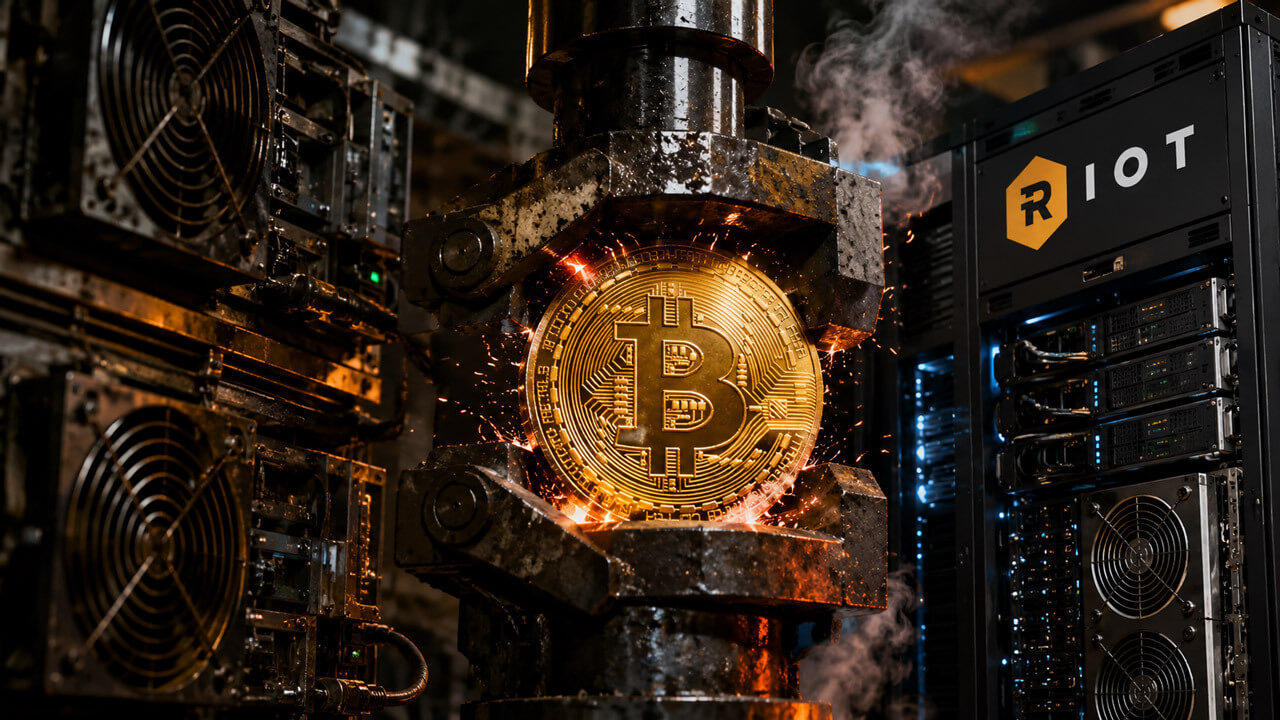
Riot Platforms has initiated a transfer of 500 Bitcoin (BTC) from its primary custody wallets, sparking concerns that public miners are selling assets to finance a massive shift into Artificial Intelligence (AI) infrastructure.
Riot Platforms recently moved 500 BTC from its cold storage, signaling that public Bitcoin miners may be liquidating assets to fund expensive transitions into Artificial Intelligence (AI) data centers.
On-chain data recently flagged a significant movement of 500 BTC by Riot Platforms, one of the largest publicly traded Bitcoin miners in the United States. While not a confirmed sale on the open market, this reallocation of capital comes at a critical time for the industry. As miners face thinner margins following the 2024 halving (the every-four-year event that cuts BTC rewards in half), the race to diversify into AI is heating up.
The Multi-Million Dollar Capital Shift
For US investors tracking mining stocks on the NASDAQ, the movement of 500 BTC—valued at approximately $30 million depending on market volatility—is more than just a routine transfer. It represents a potential pivot in treasury management strategies. Publicly traded miners have traditionally bragged about their "HODL" (Hold On for Dear Life) strategies, keeping every coin they mint.
However, the cost of staying competitive is rising. To maintain profitability, these companies are looking toward High-Performance Computing (HPC). This involves using their massive data centers to host chips for AI companies rather than just mining cryptocurrency. These upgrades require substantial cash, which often comes from selling the very Bitcoin they have spent years accumulating.
"The industry is reaching an inflection point where the cost of electricity and specialized hardware for AI is forcing even the largest miners to rethink their balance sheets."
Why Miners Are Pivoting to AI
The transition to AI isn't just a trend; it's a survival mechanism for US-based miners. Since the halving, the cost to produce one Bitcoin has nearly doubled for some operators. According to data provided by CoinGecko, Bitcoin's price volatility remains a risk, whereas AI computing contracts often provide stable, long-term revenue in USD.
- Revenue Diversification: AI hosting provides a steady monthly income that is not dependent on the price of BTC.
- Asset Utilization: Miners already have the land, power permits, and cooling systems needed for AI data centers.
- Shareholder Demand: Institutional investors in the US are currently favoring companies with exposure to the AI boom.
The Logistics of On-Chain Movements
It is important to understand what a "custody transfer" means for the average crypto user. In most cases, large firms use Cold Storage (offline digital wallets that are highly secure) to hold their Bitcoin. When 500 BTC moves, it typically goes to a Hot Wallet (a wallet connected to the internet) or directly to an exchange like Coinbase Pro or Kraken.
- The miner identifies a need for liquidity to pay for operational expenses or hardware.
- A small portion of the "HODL" reserve is moved to a liquid wallet.
- The assets are either sold for USD or used as collateral for a loan.
What This Means for USA Investors
For American investors, the financial health of companies like Riot is closely tied to the regulatory environment in the United States. The Internal Revenue Service (IRS) treats every sale of Bitcoin by a corporation as a taxable event, meaning Riot will likely realize capital gains or losses on this 500 BTC transfer if it is sold.
Furthermore, the Securities and Exchange Commission (SEC) closely monitors the disclosures of public miners. If Riot is shifting its business model from "crypto mining" to "AI data centers," it must communicate these risks to shareholders. Currently, most US-based miners are accessible via mainstream brokerage apps like Robinhood and Fidelity, making their Bitcoin reserve levels a key metric for retail sentiment.
Stock Price vs. Bitcoin Price
Interestingly, the correlation between mining stocks and Bitcoin's price has weakened. When miners sell BTC to fund AI, they might see their stock price rise due to AI hype, even if the price of Bitcoin remains stagnant. This creates a unique opportunity for US investors to hedge their crypto bets by owning the miners rather than the underlying coin.
Future Outlook for Public Miners
Will other miners follow Riot’s lead? Experts suggest that the "Great AI Pivot" is only beginning. We may see a split in the industry between "Pure Play" miners who only focus on Bitcoin and "Hybrid" firms that split their power capacity between SHA-256 (the algorithm used to mine Bitcoin) and AI workloads.
As the year progresses, keep a close eye on the quarterly earnings reports of US miners. These documents will confirm whether transferred coins were sold to buy Nvidia H100 GPUs or if they were simply moved to a new institutional custodian for security reasons.
Key Takeaways
- Identify that Riot Platforms moved roughly $30 million in BTC to a new custody wallet.
- Recognize the shift from pure Bitcoin mining to high-performance computing and AI hosting.
- Understand the impact of the 2024 halving on miner profit margins and liquidity needs.
- Evaluate the market signaling of public miners selling their long-term holdings.