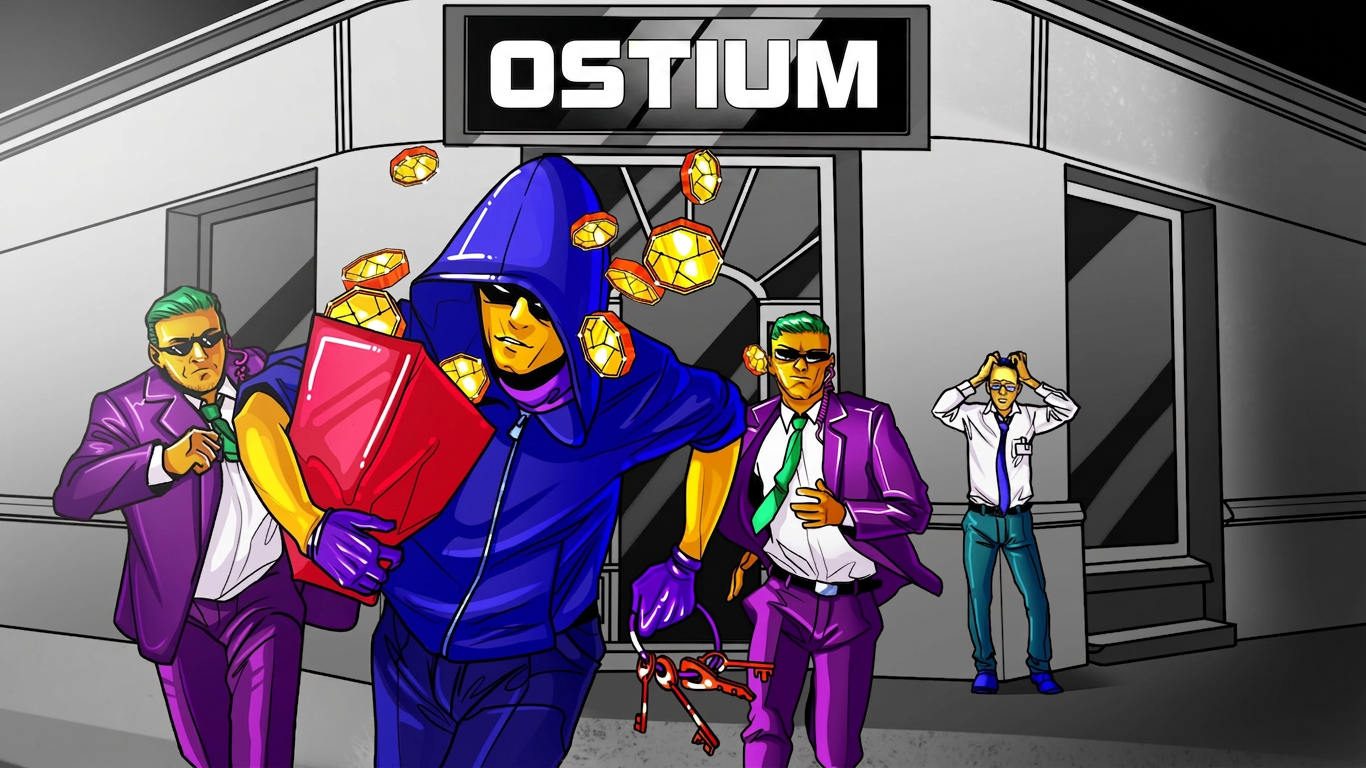
Ostium trading has been officially suspended following a major security breach that resulted in more than $18 million being drained from its liquidity vaults.
Ostium has officially halted trading after an oracle-related exploit on its OLP liquidity vault led to an estimated loss of $18 million to $22 million.
On Tuesday, the decentralized finance (DeFi) protocol Ostium alerted the crypto community that it was pausing all operations. This decision came after multiple blockchain security firms identified a critical vulnerability in the project's OLP liquidity vault. For American investors, this incident serves as a stark reminder of the technical risks inherent in mid-sized DeFi platforms.
The Mechanics of the Ostium Oracle Exploit
The core of the issue lies in an oracle exploit (a manipulation of the external data feeds that provide price information to smart contracts). In the DeFi world, an oracle acts as a bridge between the blockchain and the outside world. When an oracle is compromised, attackers can trick the protocol into thinking a token is worth much more or less than its actual market value.
Security researchers noted that the attacker targeted the OLP vault (a pool of funds that provides liquidity for traders). By manipulating the price feed, the exploiter was able to withdraw significantly more funds than they were entitled to. Such exploits often occur when a protocol relies on a single source of data rather than a decentralized network like Chainlink.
Immediate Actions for Impacted Users
If you have interacted with the Ostium protocol, your wallet may still have "approvals" active. An approval (a permission given to a smart contract to spend tokens on your behalf) can be dangerous if the underlying contract is compromised. Users are advised to use tools like Revoke.cash to clear these permissions immediately.
- Revoke permissions for all Ostium-related contracts.
- Move assets to a hardware wallet or a major US-based exchange.
- Monitor official channels for potential compensation or recovery updates.
"The speed at which these funds disappeared highlights the necessity of real-time monitoring and circuit breakers in DeFi architecture."
Assessing the Total Financial Impact
Initial estimates regarding the loss have fluctuated. While early reports suggested roughly $18 million was missing, updated forensic data suggests the figure is closer to $22 million. Tracking these losses is vital for anyone who contributed liquidity to the OLP vault. You can track broader market movements and liquidity trends through CoinGecko to see how this event impacts the wider DeFi ecosystem.
The protocol's development team is currently working with external security auditors to trace the stolen funds. In many cases, hackers move stolen assets through mixers (services that hide the origin of crypto transactions) to evade law enforcement. However, since the blockchain is public, US-based firms often assist in blacklisting these addresses.
What This Means for USA Investors
For investors in the United States, this exploit carries heavy IRS tax implications. Typically, the IRS views stolen cryptocurrency as a loss; however, the Tax Cuts and Jobs Act of 2017 limited personal casualty and theft loss deductions. Most US taxpayers can no longer deduct crypto theft losses unless they were incurred in a trade or business.
Furthermore, major US exchanges like Coinbase, Kraken, and Gemini maintain strict listing standards. Ostium’s native tokens were primarily traded on decentralized platforms, which do not offer the same regulatory protections as centralized US entities. If you used USD to buy these assets, you likely transferred them through a bridge, a process that adds another layer of security risk.
- Check Exchange Balances: Ensure you haven't linked your primary exchange account to risky third-party dApps (decentralized applications).
- Document Transfers: Keep records of all transactions for potential tax-loss harvesting if the funds are never recovered.
- Regulatory Watch: This incident may prompt further SEC (Securities and Exchange Commission) scrutiny regarding how DeFi protocols handle user funds.
Lessons in DeFi Risk Management
This event highlights why smart contract risk is the biggest hurdle for intermediate investors. While high yields attract many, the underlying code must be flawless. Always check if a project has undergone multiple third-party audits and look for a "bug bounty" program, which pays ethical hackers to find vulnerabilities before the bad actors do.
As the investigation continues, Ostium remains in a lockdown state. Investors should wait for a formal post-mortem report before attempting to interact with the platform again. For now, the priority is securing your private keys and ensuring no malicious permissions remain on your Ethereum or Layer-2 wallets.
Key Takeaways
- Revoke all contract approvals immediately to protect your remaining digital assets from further risk.
- Monitor security reports regarding the OLP liquidity vault vulnerability involving oracle price feeds.
- Expect trading pauses to continue as the development team works with security firms on a recovery plan.
- Analyze your DeFi exposure to smaller protocols that lack multi-layered price verification systems.