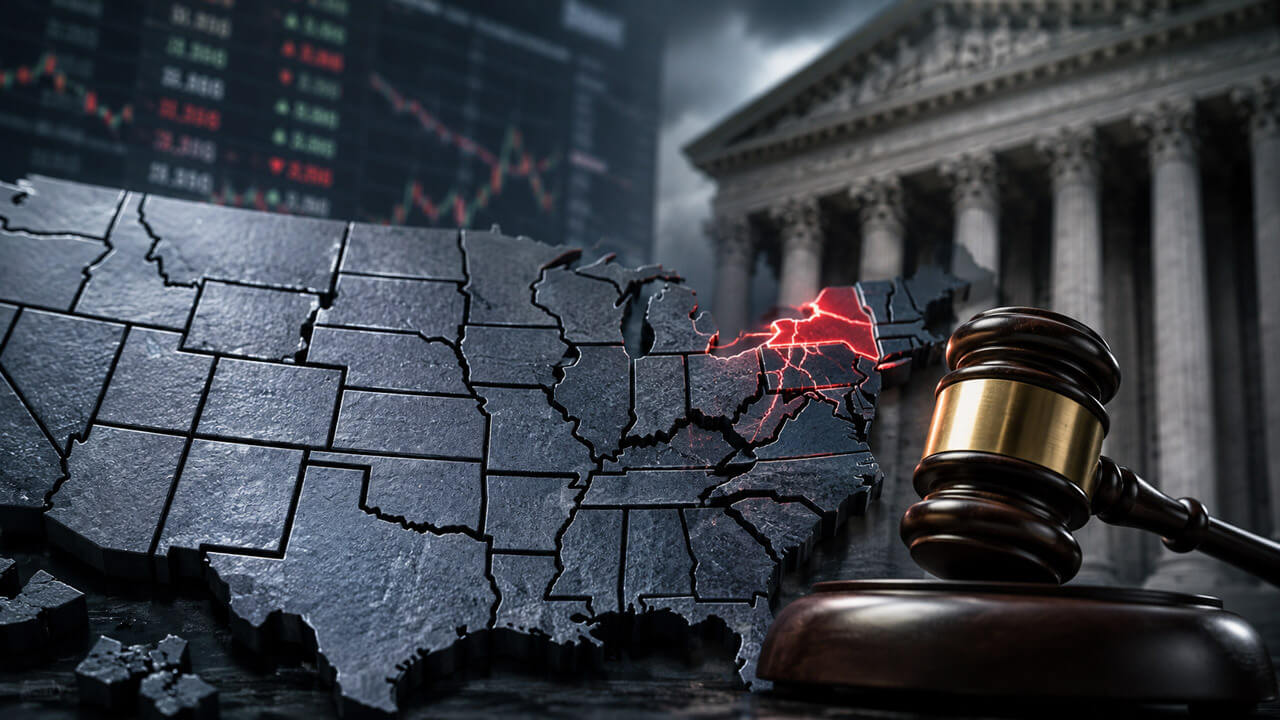
The recent legal setback for Kalshi in New York demonstrates that federal approval for prediction markets does not prevent individual states from enforcing their own strict anti-gambling statutes.
A recent New York court ruling indicates that even if federal regulators like the CFTC approve prediction markets, individual states can still block them using local gambling laws.
While the Commodity Futures Trading Commission (CFTC), the federal agency overseeing derivatives, is still drafting national rules, a New York court has ruled that the state can continue its own enforcement. This decision matters to American investors because it creates a "patchwork" of legality where a trade might be legal in one state but prohibited in another.
The Conflict Between Federal and State Law
The core of the issue lies in the dual-sovereignty system of the United States. Even if a platform like Kalshi receives a green light at the federal level to host contracts on political elections or sports, states like New York maintain the right to protect their citizens under local gambling regulations.
For many US-based users, prediction markets (platforms where you trade on the outcome of future events) represent a new way to hedge risk or speculate on news. However, this ruling suggests that the "federal shield" many hoped for is thinner than expected. State attorneys general now have a confirmed pathway to block these markets regardless of what happens in Washington D.C.
Why New York’s Decision Impacts the Crypto Industry
New York is often seen as a bellwether for financial regulation in the United States. When the state takes a hardline stance against event contracts (financial products that pay out based on a specific event happening), other states often follow suit. This creates a hurdle for liquidity—the total amount of money available for trading—since large portions of the US population may be legally barred from participating.
According to data tracked by CoinGecko, global interest in decentralized prediction markets has surged, but US platforms face much tighter scrutiny. If more states adopt the New York model, the growth of regulated US markets could be significantly stunted compared to their offshore, unregulated counterparts.
"The intersection of federal commodities law and state gambling law is the next major legal battlefield for the American digital asset and prediction market sectors."
What This Means for USA Investors
For the average US-based investor, this ruling brings several practical concerns to the forefront. Navigating these markets requires more than just a Coinbase or Kraken account; it requires an understanding of where you are physically located when you place a trade.
- IRS Tax Treatment: The IRS generally treats gains from prediction markets as capital gains or losses, but if a state deems the activity illegal gambling, tax reporting can become significantly more complex.
- Geofencing: Expect more platforms to implement strict IP-based blocking to prevent users in states like New York or Nevada from accessing certain contracts.
- Exchange Availability: Regulated US exchanges like Gemini or Kalshi must comply with State Money Transmitter Licenses, which means your ability to deposit USD depends on your state of residence.
Comparing Centralized and Decentralized Markets
The ruling specifically targets centralized platforms that seek federal registration. In contrast, decentralized prediction markets (platforms running on blockchain code without a central authority) often try to bypass these rules, though the SEC and CFTC are increasingly targeting them as well.
- Centralized (Kalshi): Registered with the CFTC, follows US laws, but is subject to state-by-state bans.
- Decentralized (Polymarket): Generally blocked for US IP addresses due to a 2022 settlement with the CFTC.
- State-Regulated: Traditional sportsbooks that have specific licenses to operate in certain US states.
Future Outlook for Event Contracts
The path forward remains murky as the CFTC continues to refine its definitions of what constitutes a public interest threat. If the commission decides that election betting is contrary to the public interest, they may issue a blanket ban that would make the state-level debate moot. However, until then, the legal tug-of-war between state capitals and federal agencies will continue to define the market.
Investors should remain cautiously optimistic but prioritize platforms that demonstrate a clear commitment to US compliance. As we approach major election cycles, the demand for these markets will likely hit record highs, putting even more pressure on the courts to provide regulatory clarity.
Key Takeaways
- Recognize that federal CFTC approval does not automatically override strict state-level gambling bans.
- Monitor New York's aggressive stance against sports and political event betting on private platforms.
- Understand that prediction markets face a fragmented legal landscape across different US jurisdictions.
- Expect ongoing volatility in prediction market volume as legal challenges move through the court system.
- Verify state-specific availability before attempting to fund accounts on regulated US exchanges.