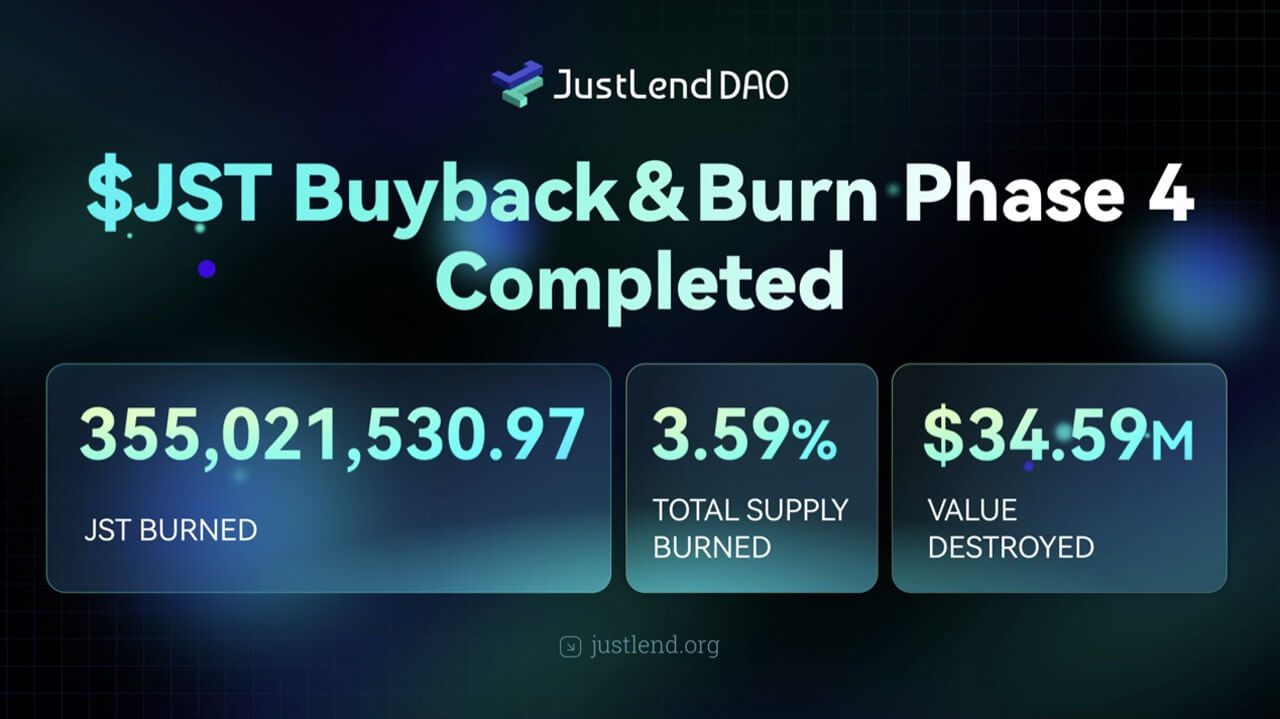
JustLend DAO has successfully removed 355 million JST tokens from the market, representing a record-breaking $34.59 million deflationary event designed to boost long-term asset value.
JustLend DAO has completed its fourth and largest token burn to date, removing over 355 million JST tokens worth approximately $34.59 million from circulation to increase scarcity.
The JUST ecosystem, a major Decentralized Finance (DeFi) hub on the TRON network, recently finalized its fourth major buyback and burn. For American investors, this process—where a project uses its profits to buy its own tokens and permanently destroy them—serves as a critical indicator of a protocol's financial health. This specific event saw more tokens removed than any previous round, suggesting that the platform's revenue-generating mechanics are accelerating.
Understanding the $34 Million Deflationary Mechanics
The core of this milestone is 'token burning,' a process where tokens are sent to a 'dead' wallet address from which they can never be recovered. This effectively reduces the total circulating supply (the number of tokens currently available to the public). Much like a stock buyback in the traditional finance world, reducing supply while demand stays the same or grows can exert upward pressure on the price.
This fourth round used revenue generated by JustLend DAO, the primary lending and borrowing platform within the ecosystem. By converting protocol fees into JST and then destroying them, the project aligns its success with the interests of its token holders. According to market data from CoinGecko, these large-scale burns often precede periods of increased market volatility as liquidity adjusts to the new supply dynamics.
Why This Token Burn Broke Local Records
While previous burns were significant, this round represents a massive jump in scale. The $34.59 million valuation of the burned tokens sets a new high-water mark for the project. This suggests that JustLend DAO revenue—the money the protocol makes from users borrowing assets—is growing faster than many analysts initially expected.
"A successful token burn is a direct reflection of a protocol's ability to generate real-world revenue rather than relying solely on speculative hype."
The process follows a specific two-step sequence:
- Buyback: The DAO (Decentralized Autonomous Organization) uses its accumulated earnings to purchase JST from the open market.
- Permanent Removal: These purchased tokens are sent to a verifiable null address, ensuring they can never re-enter the market.
The Role of JUST in the DeFi Ecosystem
For those new to the space, JUST is a suite of DeFi (financial tools without middlemen like banks) services built on the TRON blockchain. It includes several key components that US investors should be aware of:
- JustLend: An automated liquidity protocol where users earn interest on deposits and can take out loans using crypto as collateral.
- JustStable: The system used to mint stablecoins (cryptocurrencies pegged to the value of the US Dollar).
- Governance: JST holders have the right to vote on changes to the system, including fee structures and future token burns.
Long-Term Value Appreciation
By making JST a deflationary asset (one where the supply decreases over time), the developers are attempting to solve the problem of 'inflationary rot' found in many newer crypto projects. When supply is constantly increasing through new token rewards, the value of each individual token often drops. JustLend’s strategy is the exact opposite.
What This Means for USA Investors
American crypto participants face a unique regulatory and tax environment that changes how they should interpret events like the JST burn. While the SEC (Securities and Exchange Commission) continues to scrutinize DeFi platforms, the success of a DAO's revenue model is often seen as a sign of protocol maturity.
From a tax perspective, the IRS generally views the burning of tokens as a non-taxable event for individual holders since you are not selling your own assets. However, any subsequent increase in the value of your remaining JST will be subject to capital gains tax when you eventually sell on platforms like Coinbase or Kraken. US-based traders should note that while JST is available on several international exchanges, liquidity within the US sometimes requires using decentralized exchanges (DEXs).
Current Market Context
With the US Dollar (USD) experiencing its own inflationary pressures, 'hard' assets with decreasing supplies are becoming increasingly attractive to intermediate investors. The JST burn provides a transparent, on-chain record of scarcity that traditional fiat currencies cannot replicate. Always ensure you are tracking your cost basis if the token's price reacts positively to this news.
Key Takeaways
- Eliminated 355 million JST tokens in the largest single-round burn by dollar value.
- Utilized $34.59 million in revenue from the JustLend DAO protocol to fund the buyback.
- Strengthened the deflationary model of the TRON-based decentralized lending platform.
- Sparked renewed interest from liquidity providers looking for long-term value appreciation.
- Demonstrated how platform earnings can be directly returned to token holders via scarcity.