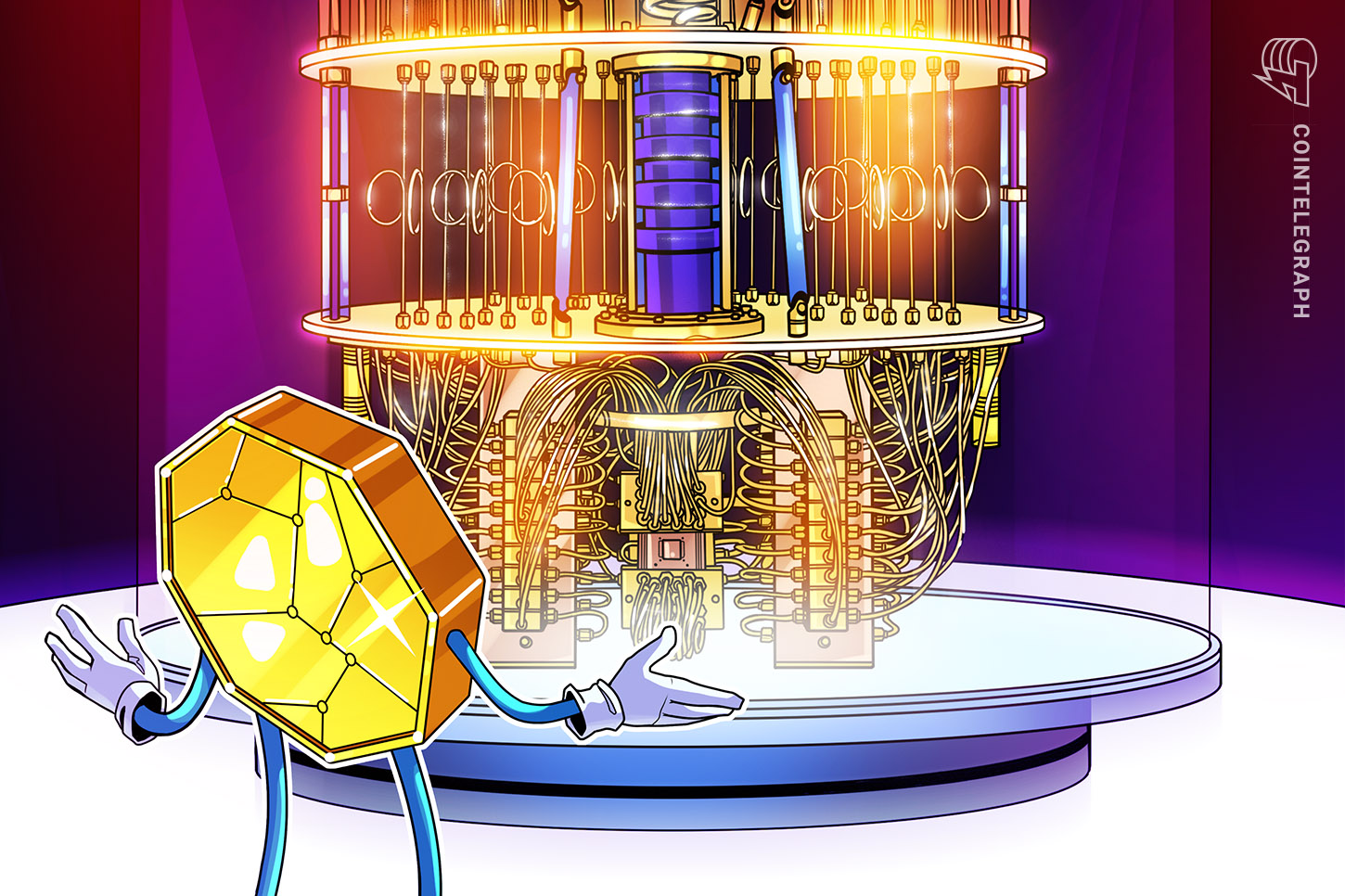
Starknet is rolling out a proactive technical roadmap to ensure its blockchain network remains secure against the looming threat of quantum computing attacks.
Starknet is implementing a multi-stage roadmap to protect its network against future quantum computing attacks by utilizing advanced STARK cryptography.
As digital assets become a staple of the American financial landscape, the underlying security of these networks is facing a theoretical but catastrophic threat: quantum computing. StarkWare, the primary developer behind the Starknet ecosystem, recently declared that the industry must modernize its defenses immediately. For U.S. investors holding Ethereum-based assets, this shift represents a critical move to future-proof their digital wealth against high-speed computers that could eventually crack current encryption standards.
Understanding the Quantum Threat to Cryptography
Most modern blockchains rely on Elliptic Curve Cryptography (a mathematical system used to secure digital signatures). While this is currently unhackable by today's most powerful supercomputers, quantum computers operate on different physical principles that could technically bypass these locks. If a quantum computer can derive a private key (your secret digital password) from a public key (your visible wallet address), the entire security model of crypto collapses.
StarkWare leadership argues that the industry cannot afford to wait for a "wake-up call" from the White House or federal regulators. By integrating post-quantum cryptography today, developers aim to create a "quantum shield" before the technology falls into the wrong hands. According to data from CoinGecko, Starknet is currently one of the leading Layer 2 solutions attempting to address these fundamental cryptographic vulnerabilities at scale.
How the Starknet Roadmap Protects Assets
The roadmap focuses on transitioning the network to exclusively use STARKs (Scalable Transparent Arguments of Knowledge). This is a specific type of Zero-Knowledge proof (a way to prove you know a secret without revealing the secret itself) that is mathematically resistant to quantum attacks. Unlike other systems, STARKs do not require a "trusted setup," making them more transparent and secure for the end-user.
Key Phases of Implementation
- Integration of Circle STARKs: Improving the efficiency and speed of the network's cryptographic proofs.
- Verification Scaling: Allowing nodes (computers that run the network) to verify transactions without needing massive hardware.
- Signature Migration: Moving user accounts from old encryption styles to new, quantum-hardened signatures.
The Industry's Responsibility to Innovate
There is a growing sentiment that the crypto sector has become complacent regarding security. While many projects focus on marketing and user acquisition, the foundational math of web3 (the decentralized internet) is often ignored. StarkWare's new initiative serves as a challenge to other major networks like Bitcoin and Ethereum to begin their own migrations toward quantum resistance.
"The crypto industry shouldn’t need wake-up calls from the White House or anyone else to address the risks that could compromise the sovereignty of digital assets."
By taking the lead, Starknet seeks to prove that Layer 2 solutions (secondary frameworks built on top of a main blockchain to improve speed) are the optimal testing ground for these high-stakes upgrades. This proactive stance is designed to prevent a future where the government has to step in to rescue compromised financial protocols.
What This Means for USA Investors
For American investors, the transition to quantum-secure networks has several immediate implications for both security and compliance. While the technology is still evolving, the proactive approach taken by developers helps mitigate long-term risk for those holding tokens on major U.S. platforms.
- Exchange Availability: Assets like STRK are currently available on various global platforms, though U.S. users primarily interact with the technology via decentralized wallets or through compatible services on Coinbase or Kraken.
- IRS Implications: Upgrading a network to be quantum-resistant does not typically trigger a "taxable event" (a transaction the IRS counts as a sale). However, if an upgrade requires a token swap, investors should track their cost basis carefully.
- Regulatory Posture: The SEC (Securities and Exchange Commission) and CFTC (Commodities Futures Trading Commission) often look favorably on projects that prioritize robust security and consumer protection.
Ultimately, a quantum-secure Starknet means that your USD-pegged stablecoins and digital assets are less likely to be stolen by state-sponsored actors using next-generation technology. For the average American HODLer (someone who holds crypto long-term), this is a significant win for peace of mind.
Preparing for the Future of Decentralized Finance
As the U.S. continues to debate the FIT21 Act and other crypto-specific legislation, the technical resilience of these networks will remain a focal point. If a network is not quantum-secure, it may eventually be labeled as "high risk" by financial institutions or insurance providers. StarkWare's roadmap is not just a technical update; it is a business strategy aimed at making Starknet the safest place for institutional capital in the United States.
Key Takeaways
- Identify quantum computing as a future existential threat to traditional blockchain encryption methods.
- Adopt STARK-based cryptography to ensure long-term network resilience against high-powered computers.
- Urge the crypto industry to act proactively rather than waiting for government-mandated security warnings.
- Highlight the role of Layer 2 scaling solutions in pioneering advanced security standards for Ethereum.