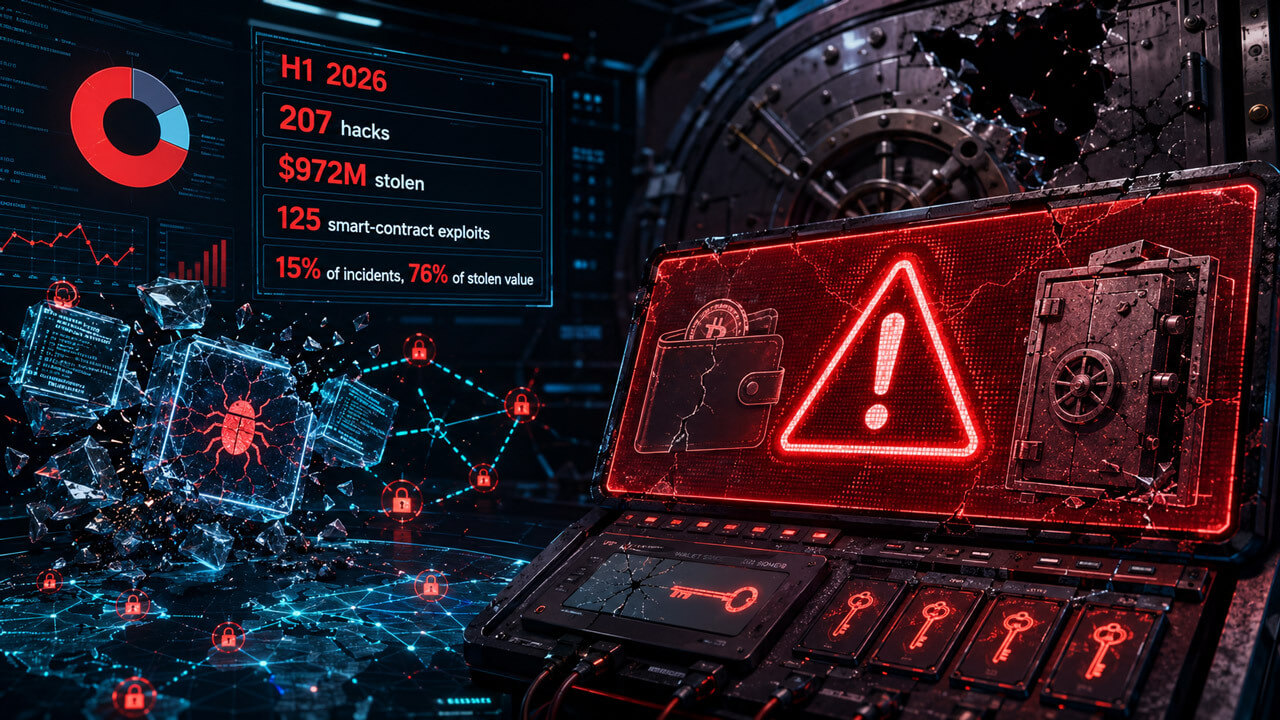
As the total number of cryptocurrency security breaches hits record levels in 2024, the primary threat to investor funds has shifted away from software bugs toward foundational infrastructure failures.
While the total number of crypto hacks has reached an all-time high, the primary threat has shifted from smart contract bugs to large-scale infrastructure and private key compromises.
For American investors, the threat landscape is evolving rapidly. While the media often focuses on smart contract loopholes (automated self-executing code), recent data indicates that hackers are finding more success targeting the pipes and bridges that connect the crypto ecosystem. This shift underscores a critical need for enhanced personal and institutional security measures across the USA.
The Record Surge in Security Incidents
Recent industry reports highlight a startling trend: the frequency of attacks is rising, even if the individual payout per attack is fluctuating. We are seeing more frequent, smaller-scale attempts to infiltrate protocols, suggesting that hackers are casting a wider net than ever before.
For the average holder on U.S. platforms like Coinbase or Kraken, this means that "quiet" periods in the market do not equate to safety. Bad actors are constantly probing for weaknesses in liquidity pools (reservoirs of tokens locked in a smart contract) and cross-chain bridges.
"The technical sophistication of hackers is now being matched by their persistence, moving from opportunistic bugs to strategic infrastructure infiltration."
Why Smart Contracts Are Becoming Safer
Interestingly, the median loss from a smart contract exploit is actually trending downward. This is largely due to the maturation of the decentralized finance (DeFi) sector. Developers are increasingly utilizing third-party audits and bug bounty programs to catch errors before they are exploited.
According to data from CoinGecko, the market capitalization of major protocols continues to grow, yet the percentage of funds lost to simple code errors is shrinking relative to total value. This suggests that the "building blocks" of crypto are getting stronger.
The New Frontier: Infrastructure Compromise
The real danger in 2024 lies in infrastructure compromise. This occurs when a hacker gains access to the underlying systems that manage a project, such as its servers, domain names, or most commonly, its private keys (the digital passwords that allow movement of funds). When a key is stolen, even the most secure smart contract cannot prevent a theft.
Common Infrastructure Targets
- Centralized Exchanges: Storage systems that hold billions in customer assets.
- Cross-Chain Bridges: Tools that move assets between different blockchains.
- Cloud Service Providers: The servers where many crypto projects host their front-end websites.
What This Means for USA Investors
For US-based investors, security is not just a technical issue; it is a financial and legal one. The Internal Revenue Service (IRS) has specific rules regarding the deduction of losses from thefts, which have become much stricter since the 2017 Tax Cuts and Jobs Act. Generally, personal casualty losses from crypto hacks are no longer deductible unless they are attributed to a federally declared disaster.
Furthermore, the Securities and Exchange Commission (SEC) and the Commodity Futures Trading Commission (CFTC) are closely monitoring how exchanges protect user data. If you use a US-regulated exchange, you benefit from certain institutional safeguards, but these do not cover many DeFi-related bridge hacks.
- Check if your exchange offers "Vault" services with time-delayed withdrawals.
- Enable Multi-Factor Authentication (MFA) using hardware keys rather than SMS.
- Diversify your holdings across multiple cold storage (offline) devices to mitigate infrastructure risk.
Moving Forward: A Defensive Mindset
As we navigate the remainder of the year, the "record count" of hacks should serve as a wake-up call for beginner and intermediate investors alike. Security is no longer a "set it and forget it" process. It requires constant vigilance and an understanding of where your assets are actually stored.
By focusing on infrastructure security and private key management, American investors can protect their digital wealth from the most prevalent threats in today's market. Staying informed and utilizing U.S. regulated platforms for the majority of your trades remains one of the best defenses against the rising tide of global crypto crime.
Key Takeaways
- Recognize that infrastructure exploitation accounts for the majority of stolen funds in 2024.
- Observe the decreasing median loss per smart contract hack as security auditing improves.
- Prioritize hardware wallets and multi-signature security to prevent private key theft.
- Monitor centralized exchange security protocols as hackers pivot toward larger, structural targets.