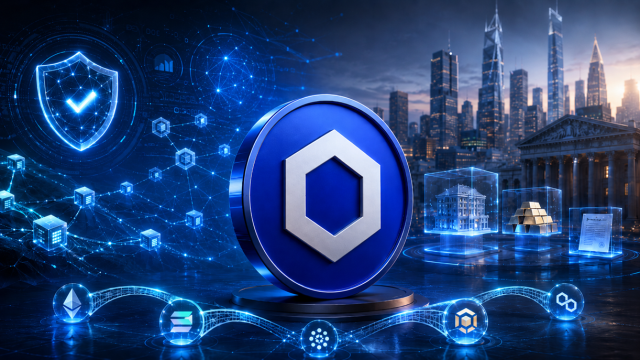
Chainlink has officially launched its Cross-Chain Interoperability Protocol (CCIP) on the Solana network, allowing users to transfer data and value between Solana and other blockchains with bank-grade security.
Chainlink has officially integrated its Cross-Chain Interoperability Protocol (CCIP) v1.6 with the Solana blockchain, enabling seamless data and asset transfers between Solana and other major networks like Ethereum.
The highly anticipated CCIP v1.6 upgrade bridges the gap between the high-speed Solana ecosystem and established networks like Ethereum and Polygon. For US-based investors, this move marks a significant milestone in the "Interoperability Era," where the choice of blockchain becomes less of a barrier to entry. As Solana continues to capture massive retail interest in California and New York, this integration ensures that liquidity can flow freely into its decentralized finance applications.
Breaking Down Chainlink CCIP and Solana Integration
Chainlink CCIP is a standardized communication layer that acts like a universal translator for blockchains. Previously, moving assets between Solana (which uses a unique programming language) and Ethereum was complex and often risky. With this upgrade, developers can now build applications that trigger actions on Solana based on events happening on different chains.
This integration uses a "Lock and Mint" or "Burn and Mint" mechanism to ensure that coins aren't just copied, but genuinely moved. This reduces the risk of inflation or double-spending across networks. The protocol is backed by the Risk Management Network, a separate security layer that monitors for suspicious activity 24/7.
"Interoperability is the final frontier for blockchain adoption; without it, we are just building isolated digital islands that cannot talk to one another."
Why Cross-Chain Infrastructure Matters for LINK
For those holding LINK (the native token of the Chainlink network), this upgrade is a direct boost to utility. Every time a message or asset is sent across the CCIP bridge, the transaction requires a fee. These fees are typically paid in LINK, creating a consistent demand sink for the token as more developers adopt the standard.
As Solana hosts some of the most popular CoinGecko top altcoins, the volume of cross-chain traffic is expected to rise. The infrastructure narrative suggests that Chainlink is positioning itself as the "TCP/IP of blockchains," referring to the underlying protocol that makes the modern internet possible.
- Reduced Friction: Users no longer need to use high-risk third-party bridges.
- Enhanced Security: Chainlink's decentralized oracle networks are widely considered the gold standard.
- Asset Programmability: Tokens can now carry instructions across chains, not just value.
The Technical Leap in CCIP v1.6
The v1.6 upgrade is not just a minor patch; it introduces a new architecture specifically designed to handle Solana’s high throughput. Solana uses a Proof of History (a method to prove the passage of time between two events) mechanism, which had previously made it difficult for external oracles to sync efficiently.
Chainlink solved this by creating a specialized adapter that allows Solana’s Rust-based environment to communicate with the Solidity-based environment of Ethereum. This technical feat lowers the barrier for US software engineers who want to migrate their projects or launch multi-chain versions of their current decentralized apps.
- Initialization: A user initiates a transfer on the source chain.
- Verification: The Risk Management Network confirms the transaction is valid.
- Execution: The assets are minted or released on the destination chain (Solana).
What This Means for USA Investors
For investors in the United States, the integration of Chainlink CCIP and Solana provides a more stable environment for managing digital assets. Major US exchanges like Coinbase, Kraken, and Gemini already list both Solana (SOL) and Chainlink (LINK), making it easy to trade based on this news.
From a regulatory perspective, the SEC (Securities and Exchange Commission) continues to scrutinize the crypto space, but infrastructure plays like Chainlink often face less direct pressure than speculative meme coins. However, Americans should remember that the IRS (Internal Revenue Service) treats every cross-chain swap or bridge event as a taxable transaction. If you move ETH to Solana via CCIP, the IRS may view the disposal of ETH as a capital gains event based on its USD value at that moment.
Key US Investor Considerations:
Keep a close eye on your Form 8949 reporting when using bridges. While CCIP makes the technology easier, it doesn't simplify the tax math. As institutional interest grows, expect more regulated US financial entities to use CCIP for "Real World Asset" (RWA) tokenization, further solidifying LINK's role in the American fintech landscape.
Key Takeaways
- Connects Solana to the broader blockchain ecosystem through a unified cross-chain standard.
- Introduces high-security bridging for institutional and retail assets moving into Solana.
- Increases the fundamental utility of the LINK token as the gas for cross-chain transactions.
- Enables US-based developers to build decentralized apps that span multiple blockchain networks.