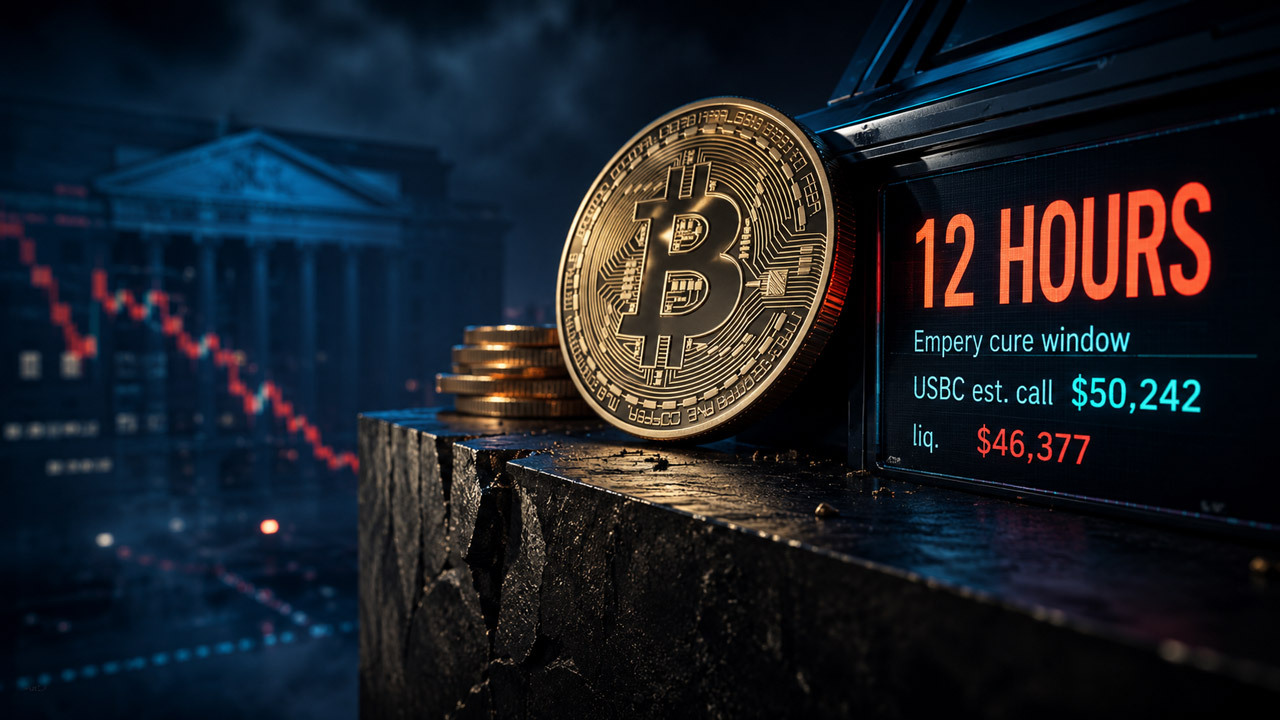
Institutional Bitcoin treasuries are currently operating under high-stress conditions, with recent data showing that some collateralized loans can face forced liquidations in as little as 12 hours following a margin call.
Institutional Bitcoin treasuries are facing urgent collateral calls that could force liquidations in as little as 12 hours, potentially triggering significant market volatility for US investors.
Early 2026 has already tested the resilience of institutional holders. Reports indicate that at least two significant collateral calls (demands for more assets to back a loan) occurred in February alone. For American investors, this signals a shift in market dynamics where institutional pressure could cause rapid, unexpected sell-offs.
The 12-Hour Ticking Clock for Crypto Loans
In the world of institutional finance, Bitcoin is often used as collateral (an asset pledged as security for a loan). When the price of Bitcoin drops, the ratio between the loan value and the asset value narrows. If it hits a certain threshold, a margin call is triggered.
Unlike traditional mortgage or auto loans, these crypto-backed facilities move at light speed. Some agreements now stipulate a 12-hour window to provide additional capital. If the treasury fails to meet this deadline, the lender can automatically liquidate (forcibly sell) the Bitcoin to recover the loan balance. This creates a feedback loop that can drive prices down further.
Transparency Issues in Treasury Data
While the market is aware that two major calls occurred in February, deep transparency is lacking. We currently do not have specific data on which treasuries are closest to their breaking points. This "hidden risk" makes it difficult for retail investors to gauge when a major dump might occur.
"The speed of modern crypto liquidations means that market sentiment can shift from bullish to bearish in a single overnight session, leaving unprepared investors in the dust."
Using tools like CoinGecko to track real-level price action is essential, but it does not show the private loan terms behind the scenes. The lack of public disclosure regarding specific treasury health remains a primary concern for market analysts.
Why Liquidation Speed Matters to You
When a large institution faces a 12-hour deadline, they have three main choices:
- Deposit more USD to lower their loan-to-value ratio.
- Transfer more Bitcoin from cold storage to the lender.
- Sell other assets to raise cash quickly, potentially impacting altcoins.
If they cannot do any of the above, the lender sells their Bitcoin on the open market. For a US investor holding Bitcoin on an exchange, this looks like a sudden "flash crash" where prices drop 5-10% in minutes without any clear news catalyst.
What This Means for USA Investors
US-based investors must navigate this volatility through the lens of local regulations and tax laws. The Internal Revenue Service (IRS) treats every crypto sale—including forced liquidations—as a taxable event. If your assets are caught in a broader market downturn triggered by these treasuries, you may face capital gains or losses that must be reported on Form 8949.
Furthermore, the Securities and Exchange Commission (SEC) continues to scrutinize the transparency of crypto lending platforms. Investors using US-regulated exchanges like Coinbase, Kraken, or Gemini should be aware that while their funds are generally safer than on offshore platforms, they are not immune to the price volatility caused by global treasury liquidations.
Steps for American Portfolio Protection
- Avoid High Leverage: Use modest leverage (borrowed funds) to prevent being liquidated alongside the big players.
- Maintain Cash Reserves: Keep USD in your brokerage account to buy dips caused by institutional sell-offs.
- Monitor SEC Updates: Stay informed on new rules regarding institutional custody and lending.
The Outlook for 2026 Stability
As the year progresses, the focus will remain on how these treasuries manage their debt. The two calls in February served as a warning shot. If Bitcoin stays above key support levels, the risk remains manageable. However, if macroeconomic factors in the US—such as inflation or interest rate hikes—put pressure on the dollar, the 12-hour liquidation clock will become the most watched metric in the industry.
Key Takeaways
- Identify the 12-hour liquidation window that institutional Bitcoin loans currently operate under.
- Monitor the impact of February's two major collateral calls on broader market stability.
- Recognize the lack of transparency in current treasury data regarding specific entity risk.
- Assess how institutional sell-offs could impact retail prices on US exchanges like Coinbase.
- Prepare for potential price swings as treasuries scramble to meet margin requirements.