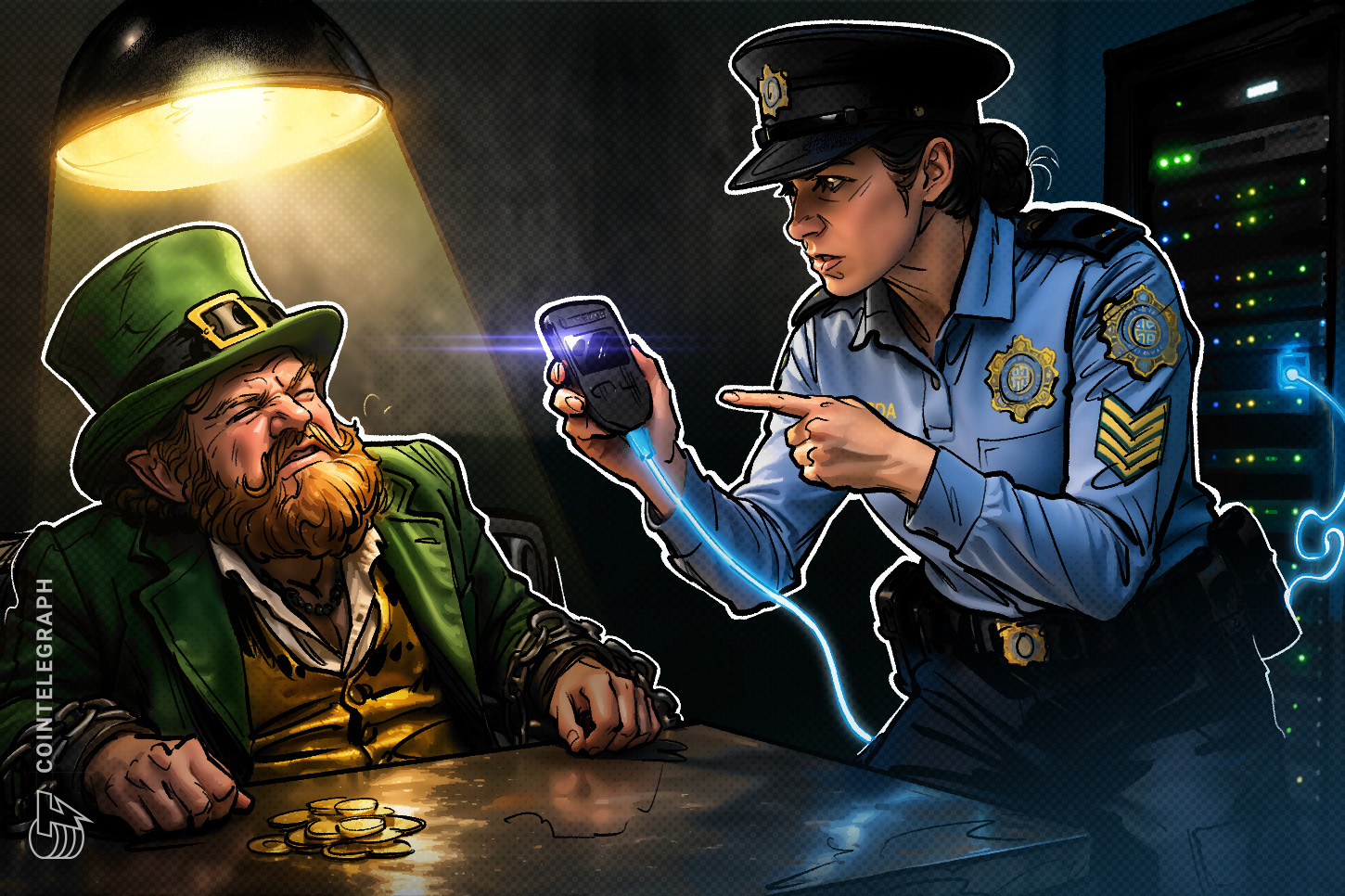
Irish law enforcement has successfully recovered 500 Bitcoin (BTC) linked to criminal activity, bringing the country's total 2026 seizures to 1,500 BTC valued at approximately $92 million.
Irish law enforcement successfully recovered 500 Bitcoin (BTC) linked to criminal activity, bringing the country's total 2026 seizures to 1,500 BTC valued at approximately $92 million.
The Criminal Assets Bureau (CAB) in Ireland recently announced its latest victory in the fight against digital financial crime. By securing an additional 500 tokens, the agency has demonstrated the growing capability of European regulators to track and freeze decentralized assets. For USA investors, this signals a global tightening of the net around illicit actors using Bitcoin (the first and largest cryptocurrency by market value).
The Rising Tide of Global Crypto Seizures
Law enforcement agencies worldwide are no longer baffled by the blockchain (a digital, public ledger that records all transactions). In Ireland, the CAB has refined its forensic techniques to identify addresses linked to money laundering and drug trafficking. The seizure of 500 BTC is not an isolated event but part of a broader trend of asset recovery.
This year alone, Ireland has moved 1,500 BTC into government-controlled wallets. While this is a small fraction of the total supply, it represents a significant dollar value. As seen on CoinGecko, the market capitalization of Bitcoin remains sensitive to news regarding large government-held stashes, as these coins eventually return to the market.
How Authorities Track "Untraceable" Bitcoin
Many beginners mistakenly believe that Bitcoin is completely anonymous. In reality, it is pseudonymous (identities are hidden, but transaction histories are public). Authorities use sophisticated software to map out the flow of funds from illegal marketplaces to regulated off-ramps.
The Role of KYC Procedures
Most seizures occur when criminals attempt to move their loot into the traditional banking system. Know Your Customer (KYC) rules—the mandatory verification of a user's identity—allow agencies to link a digital wallet to a real-world person. Once a link is established, legal warrants can be used to compel exchanges to freeze accounts.
Collaboration Across Borders
The Irish CAB often works in tandem with Europol and occasionally the FBI. This international cooperation ensures that even if a criminal moves funds between different countries, the paper trail remains visible to investigators. This trend is discouraging large-scale criminal enterprise within the crypto ecosystem.
The Logistics of Storing Seized Crypto
When a government seizes Bitcoin, they don't just leave it on an exchange. They use cold storage (offline hardware devices that are not connected to the internet) to ensure the funds cannot be hacked or moved. The 1,500 BTC currently held by Ireland are likely secured in high-security facilities managed by the state.
- Individual wallets are identified via forensic analysis.
- Private keys (digital passwords) are obtained through legal search and seizure.
- The BTC is moved to a consolidated government-controlled address.
- Final disposal of the assets is determined by high court rulings.
"The recovery of these assets highlights that the perceived anonymity of the blockchain is a myth when faced with modern digital forensics."
What This Means for USA Investors
For investors in the United States, Irish seizures may seem distant, but they directly affect the domestic market. The U.S. Marshals Service is famous for similar actions, having auctioned off thousands of Bitcoins seized from the Silk Road years ago. When a foreign government seizes 1,500 BTC, U.S. traders watch closely for signs of a "dump" (a large sale that could lower prices).
- Market Sentiment: News of seizures reinforces the narrative that crypto is becoming a regulated, safer asset class for institutional money.
- Tax Implications: While these are Irish seizures, the IRS reminds US citizens that they must report all crypto gains, even those earned on foreign platforms.
- Exchange Safety: Major US exchanges like Coinbase and Kraken cooperate with global authorities, meaning US users are part of a transparent financial network.
Currently, the SEC (Securities and Exchange Commission) continues to monitor how global enforcement impacts the volatility of Bitcoin. As more countries like Ireland successfully regulate the space, the likelihood of a US Bitcoin spot ETF (Exchange Traded Fund) remaining a stable investment increases.
The Future of Digital Asset Recovery
As we move through 2026, we expect to see more "mega-seizures." The goal for regulators is not to destroy Bitcoin, but to purge it of criminal influence. For the average American HODLer (a slang term for a long-term investor), this is generally bullish (positive for the price) because it reduces the "risk premium" associated with the technology. A cleaner market is a more valuable market.
Key Takeaways
- Monitor global law enforcement actions as they increase transparency and legitimacy in the crypto market.
- Understand that large-scale BTC seizures by governments often lead to public auctions or long-term hodling.
- Recognize the growing sophistication of international agencies in tracking blockchain transactions.
- Assess how increased regulatory pressure in Europe mirrors the SEC and DOJ tactics in the United States.