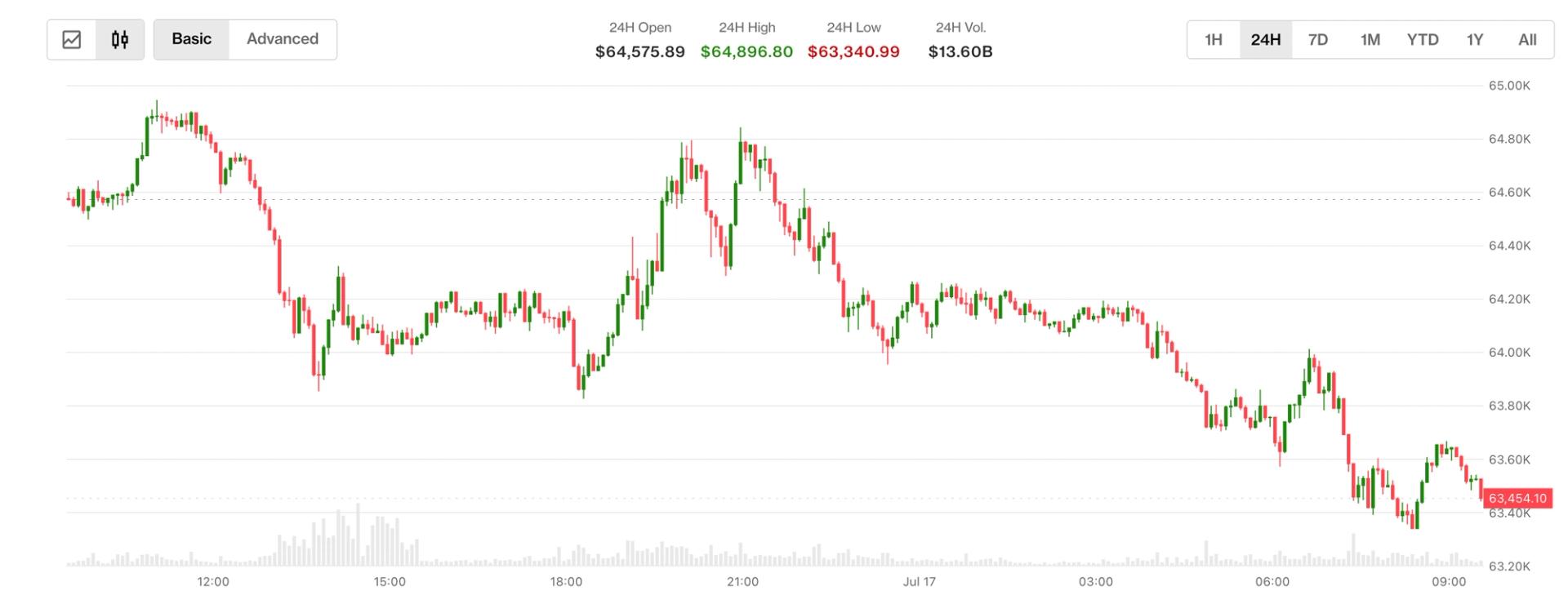
Bitcoin has retreated below the $63,000 mark as global geopolitical tensions and renewed concerns over U.S.-China trade relations weigh heavily on investor sentiment.
Bitcoin has dipped below the $63,000 level following a U.S. military strike in Iran and fresh political commentary regarding U.S.-China trade relations.
The cryptocurrency market faced a sharp correction over the last 24 hours following news of a U.S. military strike on Iran. For American investors, this move highlights how Bitcoin price volatility is increasingly tied to traditional global events rather than just internal blockchain metrics. When uncertainty rises in the Middle East, high-risk assets like crypto often see immediate liquidations as traders move toward cash or Treasuries.
The Impact of Global Conflict on Crypto Markets
Geopolitical instability creates a "risk-off" environment. In this scenario, investors sell assets perceived as volatile, including stocks and cryptocurrencies. The recent military action across the globe has prompted a flight to safety, momentarily hurting Bitcoin's valuation.
While some enthusiasts view Bitcoin as a "safe haven," current market behavior suggests it is still trading in tandem with the Nasdaq and other tech-heavy indices. As news of the strike broke, liquidated long positions (bets that the price would go up) flooded the market, pushing the price further down.
"Institutional desks often have automated triggers that sell risk assets during sudden military escalations to shield their portfolios from overnight gaps in price."
Trump, China, and Trade Uncertainty
Compounding the geopolitical tension are recent comments from former President Donald Trump regarding China. His remarks suggested a potential return to aggressive tariff structures and heightened trade friction. Since many large-scale Bitcoin mining operations and hardware manufacturers have roots in the Asia-Pacific region, trade talk directly affects the supply side of the industry.
Furthermore, American institutional investors who have entered the market through Spot ETFs (Exchange Traded Funds) are sensitive to any news that might destabilize the USD or international trade. Uncertainty is the enemy of the market, and the combination of kinetic warfare and trade wars is a double-whammy for crypto prices.
Technical Support Levels to Watch
Analysts are now looking at key technical levels to see if the dip is a temporary correction or a longer-term trend. According to data tracked by CoinGecko, the total crypto market cap has retreated alongside Bitcoin's slide. Here are the levels US traders are monitoring:
- $62,500: The immediate support level that must hold to prevent further sliding.
- $60,000: A major psychological barrier where significant buying interest is expected.
- $65,000: The resistance level Bitcoin needs to break to reclaim its bullish momentum.
What This Means for USA Investors
For those holding crypto in the United States, this volatility carries several specific implications. First, the IRS (Internal Revenue Service) treats every crypto-to-fiat sale as a taxable event. If you panic-sell during this dip, you may realize capital gains or losses that must be reported on your next tax return.
- Exchange Accessibility: Domestic platforms like Coinbase, Kraken, and Gemini remain the safest routes for US users to manage liquidity during high-volatility events.
- SEC Posture: High volatility often brings increased scrutiny from the SEC (Securities and Exchange Commission), which may use market swings to argue for stricter consumer protections.
- USD Strength: A stronger Dollar usually puts downward pressure on Bitcoin. If conflict drives investors into the USD, Bitcoin may face a longer recovery period.
Is the Bull Run Over?
It is important to remember that Bitcoin has historically faced 10-20% pullbacks during even the strongest bull markets. Many intermediate investors use these "geopolitical dips" as an opportunity to DCA (Dollar Cost Average)—the practice of buying fixed amounts at regular intervals to lower your average entry price.
While the headlines are focused on conflict and trade wars, the underlying fundamentals of the Bitcoin network—such as the Hash Rate (the total computational power securing the network)—remain at or near all-time highs. This suggests that while the price is fluctuating, the network itself is as healthy as ever.
Long-term Outlook for the 2024-2026 Cycle
In the coming weeks, keep an eye on the Federal Reserve. If geopolitical tensions lead to higher oil prices and a spike in inflation, the Fed may delay interest rate cuts. High interest rates generally make "riskier" assets like Bitcoin less attractive compared to savings accounts or bonds. However, if the market stabilizes and trade rhetoric cools, $63,000 could quickly become the floor for the next leg up.
Key Takeaways
- Monitor how geopolitical instability in the Middle East often triggers immediate sell-offs in risk assets.
- Recognize that political rhetoric regarding China can impact institutional investor confidence in the US.
- Watch the $60,000 support level as a critical psychological floor for Bitcoin in the coming days.
- Understand that Bitcoin's 'digital gold' status is currently being tested by traditional safe-haven assets.
- Stay informed on how Federal Reserve policy might shift in response to sudden global instability.