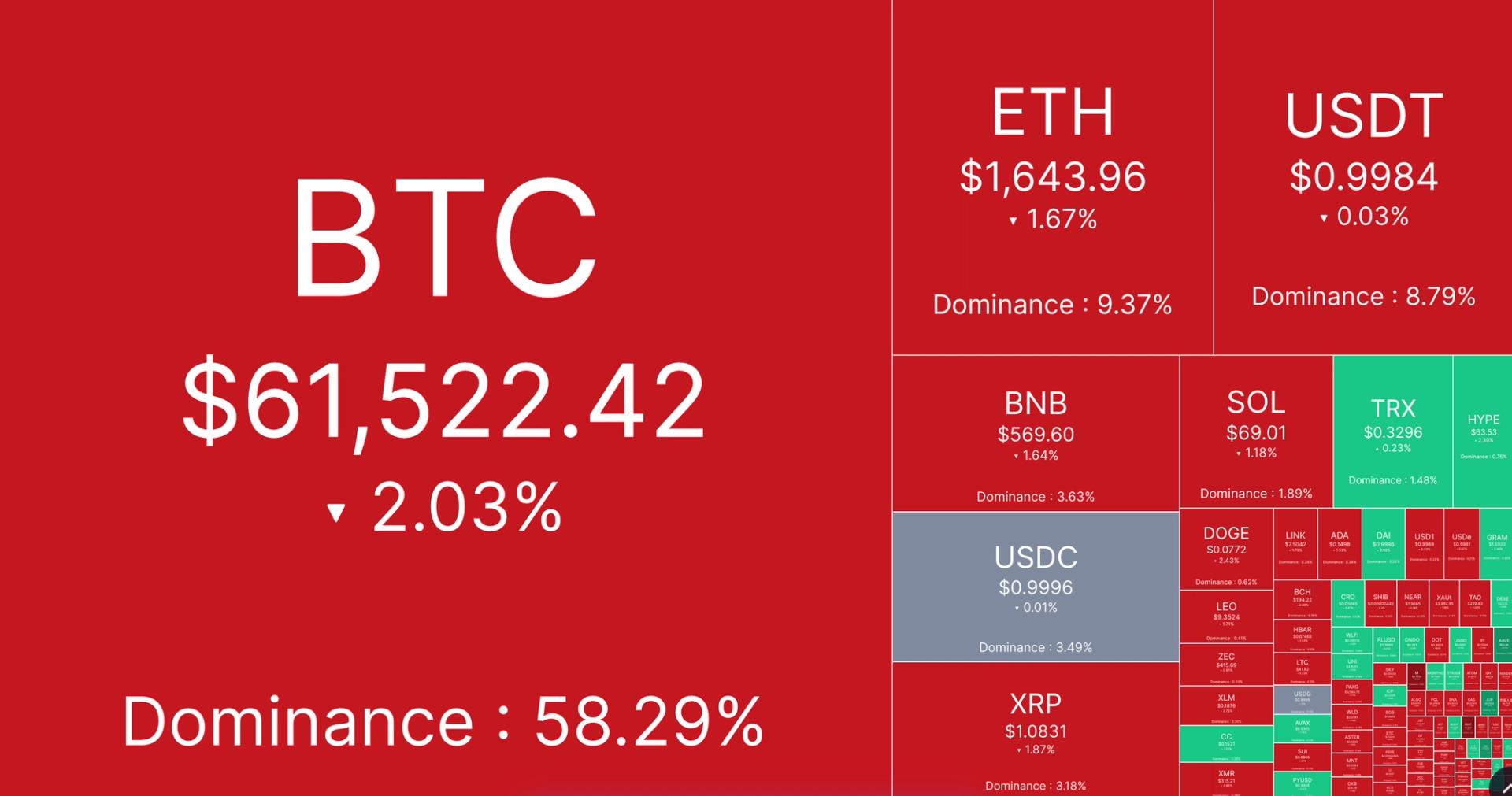
The crypto market faced a sudden deleveraging event today, resulting in over $1 billion in liquidated positions as Bitcoin and Ethereum prices dipped to monthly lows.
A massive sell-off triggered over $1 billion in liquidations across Bitcoin and Ethereum markets, briefly pushing prices to four-week lows before U.S. chipmakers stabilized investor sentiment.
Early trading sessions across the United States saw a wave of selling pressure that caught many leveraged traders off guard. For investors in New York and California, this move marked the lowest price point for Bitcoin (the original digital currency) since early June.
While the initial slide caused panic, the market found an unexpected savior in the artificial intelligence (AI) sector. Positive earnings reports from U.S. tech giants helped steady the broader financial markets, illustrating how closely crypto is now tied to the NASDAQ and major American tech stocks.
The $1 Billion Liquidation Flush Explained
A liquidation (when an exchange forcibly closes a trader's position due to lack of funds) often happens in a chain reaction. Today, as Bitcoin dropped, it triggered a series of stop-loss orders (automated sell instructions set at specific prices), which pushed the price down further.
Data tracked on CoinGecko shows that while Bitcoin and Ether led the losses, dozens of smaller altcoins (any cryptocurrency other than Bitcoin) also saw double-digit percentage drops. This "flush" effectively wiped out many "long" positions—traders betting that the price would go up.
"Volatility isn't just a bug in crypto trading; it is a feature that tends to punish high leverage during periods of macroeconomic uncertainty in the U.S. markets."
The AI Connection: Micron and SK Hynix
The stabilization of the crypto market today was largely attributed to the AI trade. Micron Technology, a major American memory chip manufacturer, released "blowout" earnings that exceeded Wall Street expectations. This positive news bolstered investor sentiment (the general mood of the market).
Additionally, news that SK Hynix, another semiconductor giant, plans a U.S. listing provided further support. Since many crypto investors also trade AI-related stocks, the recovery in tech helped stop the bleeding in digital assets. This suggests that crypto is currently acting more like a "risk-on" tech asset than a standalone safe haven.
Market Trends to Watch This Week
Investors should keep an eye on these specific factors that contributed to the current environment:
- Exchange Outflows: Whether investors are moving stablecoins (crypto pegged to the USD) onto exchanges to buy the dip.
- Funding Rates: The cost of holding a leveraged position, which has normalized after the liquidations.
- Fed Sentiment: Ongoing comments from the Federal Reserve regarding interest rates, which impact both Bitcoin and the S&P 500.
Breaking Down the Ethereum Slide
Ethereum, the second-largest cryptocurrency, followed Bitcoin's lead but experienced slightly higher volatility (price swings). This suggests that some traders were liquidating Ether positions to cover their losses in Bitcoin. Despite the drop, institutional interest in Ethereum remain high due to potential U.S. regulatory approvals for new investment products.
What This Means for USA Investors
For those filing taxes in the United States, today’s volatility presents a unique situation regarding the IRS. If you sold your assets during the dip, you might be eligible for tax-loss harvesting, which allows you to use those losses to offset capital gains in other areas of your portfolio.
From a regulatory standpoint, the SEC (Securities and Exchange Commission) and CFTC (Commodities Futures Trading Commission) continue to monitor exchange liquidations to ensure consumer protection. Most major U.S. platforms like Coinbase, Kraken, and Gemini remained fully operational during the peak of the volatility, though users should always prepare for slippage during high-volume events.
- Check your USD cost basis to see if the current price is a strategic entry point.
- Review your security settings on U.S.-regulated exchanges.
- Consult with a tax professional regarding significant liquidation losses.
Managing Risk in a Volatile Environment
To survive market flushes like the one witnessed today, beginners should focus on spot trading (buying the actual asset) rather than using leverage (borrowing money to trade). By holding the asset directly on a reputable American exchange, you eliminate the risk of being liquidated during a temporary price spike.
As the AI trade continues to dominate the headlines, expect the correlation between Bitcoin and the NASDAQ to remain tight. For now, the $1 billion liquidation event serves as a stark reminder of the risks involved in high-frequency crypto trading.
Key Takeaways
- Monitor high-leverage positions which fueled over $1 billion in forced liquidations today.
- Observe the growing correlation between crypto prices and U.S. semiconductor stocks like Micron.
- Identify the early June price support levels that Bitcoin is currently testing during this volatility.
- Execute tax-loss harvesting strategies if these dips affect your long-term U.S. portfolio structure.