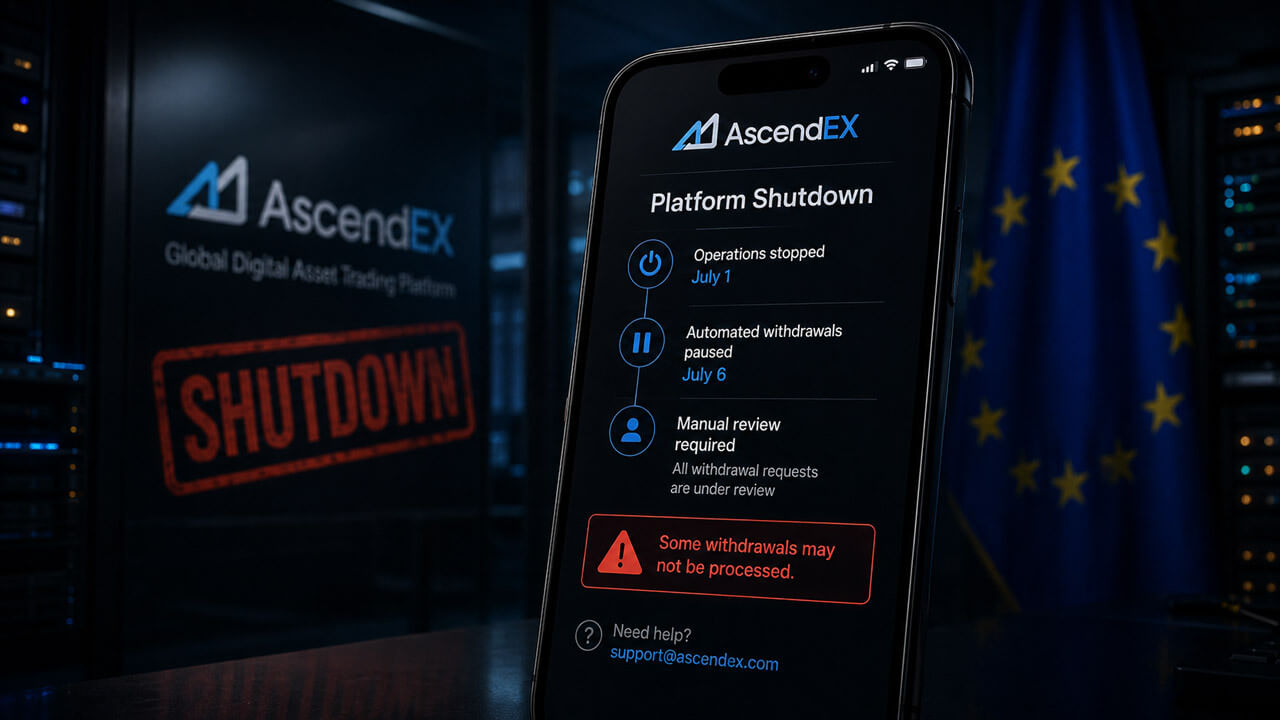
AscendEX is officially shutting down its cryptocurrency exchange operations after a critical liquidity deal fell through and the platform failed to meet the European Union's new MiCA regulatory standards.
AscendEX is shutting down its global operations after failing to secure a liquidity deal and missing European MiCA compliance deadlines, leaving some user withdrawals in limbo.
The Singapore-based platform announced this week that it would cease all trading services, citing a shift in the global regulatory landscape and a lack of necessary capital to continue operations. This move primarily affects international users, but the ripple effects are being felt by American investors who use offshore platforms to access specific digital assets not found on domestic exchanges.
Why the AscendEX Liquidity Deal Failed
The shutdown was triggered when a major strategic investment and liquidity deal (the ability to convert assets into cash easily) failed to materialize. Without this influx of cash, the exchange could no longer guarantee the processing of large-scale withdrawal requests from its users.
Management confirmed that automated payouts have been paused. This means human intervention is now required for every transaction, significantly slowing down the process of getting money off the platform. For many, this brings back memories of previous exchange collapses where pauses often preceded total loss.
The Impact of MiCA Regulations
A major factor in this exit is MiCA (Markets in Crypto-Assets), the EU's comprehensive framework for regulating digital assets. Companies that cannot meet these strict transparency and capital requirements are being forced out of the European market, which often renders their global business model unsustainable.
Compliance Pressure and Scaling Issues
Smaller exchanges are finding it increasingly difficult to compete with 100% compliant giants like Coinbase or Kraken. The cost of legal compliance and insurance now outweighs the revenue generated by lower-tier trading platforms. As a result, we are seeing a mass transition where only the largest, most transparent players survive.
"The era of the 'unregulated' global exchange is rapidly coming to an end as major jurisdictions synchronize their oversight of digital asset service providers."
Withdrawal Warnings and Potential Losses
In a direct warning to its user base, the platform stated that not all withdrawals may be processed. This usually suggests that the exchange's liabilities (what they owe users) may exceed their current liquid assets (the cash and crypto they actually have on hand).
Investors are urged to check their account balances and initiate manual withdrawal requests immediately. According to data from CoinGecko, trading volume on the platform has plummeted as users rush for the exits, further complicating the exchange's ability to fulfill orders.
- Manual processing may take several weeks to complete.
- Verification of identity (KYC) might be re-requested before funds are released.
- Withdrawal fees may be adjusted to cover final operational costs.
What This Means for USA Investors
While AscendEX was not officially licensed to serve US residents, many American traders often access such platforms via technical workarounds to find altcoins (alternative cryptocurrencies besides Bitcoin). If you are a US-based user with funds stuck on the platform, your primary concern is the IRS tax treatment of these assets.
- Capital Loss Deductions: If your funds are permanently lost, you may be able to claim a capital loss on your federal tax return to offset other gains.
- Platform Security: This serves as a reminder to move assets to self-custody (storing crypto in a private wallet you control) rather than keeping them on small exchanges.
- Regulatory Posture: The SEC and CFTC continue to warn US investors against using offshore entities that lack US consumer protections.
Protecting Your Portfolio Moving Forward
The closure of AscendEX is a signal that the market is consolidating. For safety, US investors should stick to regulated entities like Coinbase, Gemini, or Kraken, which are subject to rigorous audits and US state-level money transmitter laws. Always ensure your Two-Factor Authentication (2FA) is active and consider using hardware wallets for long-term holdings to avoid the risk of exchange insolvency.
Key Takeaways
- Confirm that automated payouts have been officially paused following a failed strategic liquidity deal.
- Recognize that European MiCA regulations are forcing unregulated exchanges to shutter or exit the market.
- Monitor specific withdrawal windows as the exchange warns some balances may not be fully processed.
- Prepare for potential tax loss harvesting if funds become permanently inaccessible on the platform.